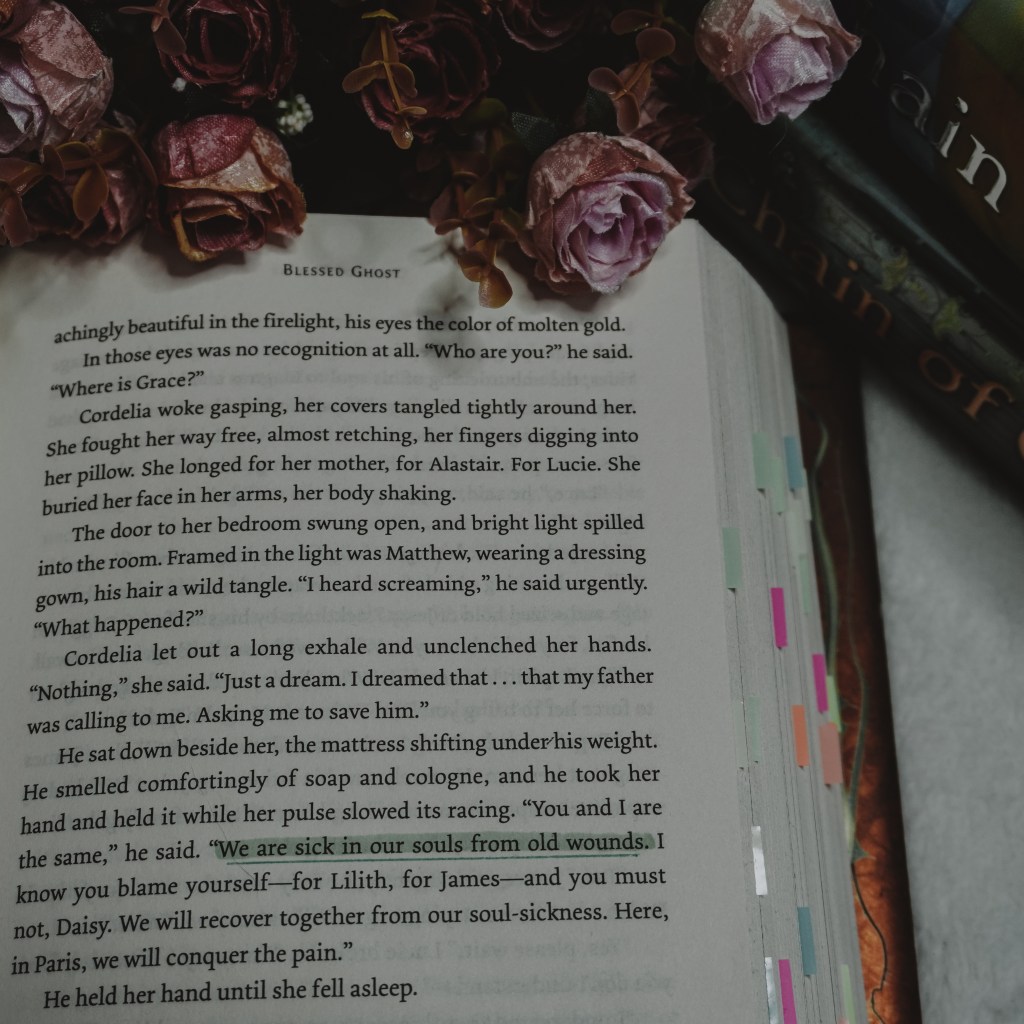
“You and I are the same. We are sick in our souls from old wounds.”
Matthew Fairchild, Chain of Thorns
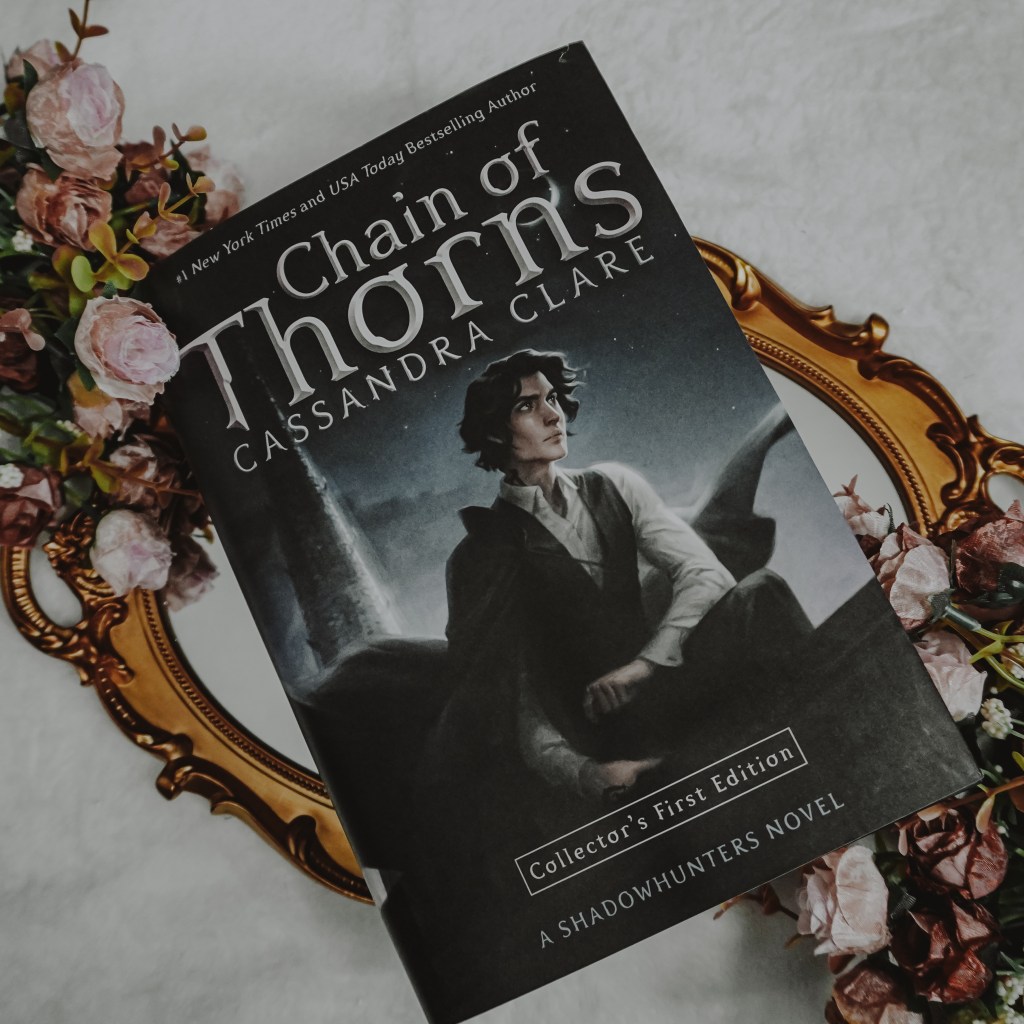

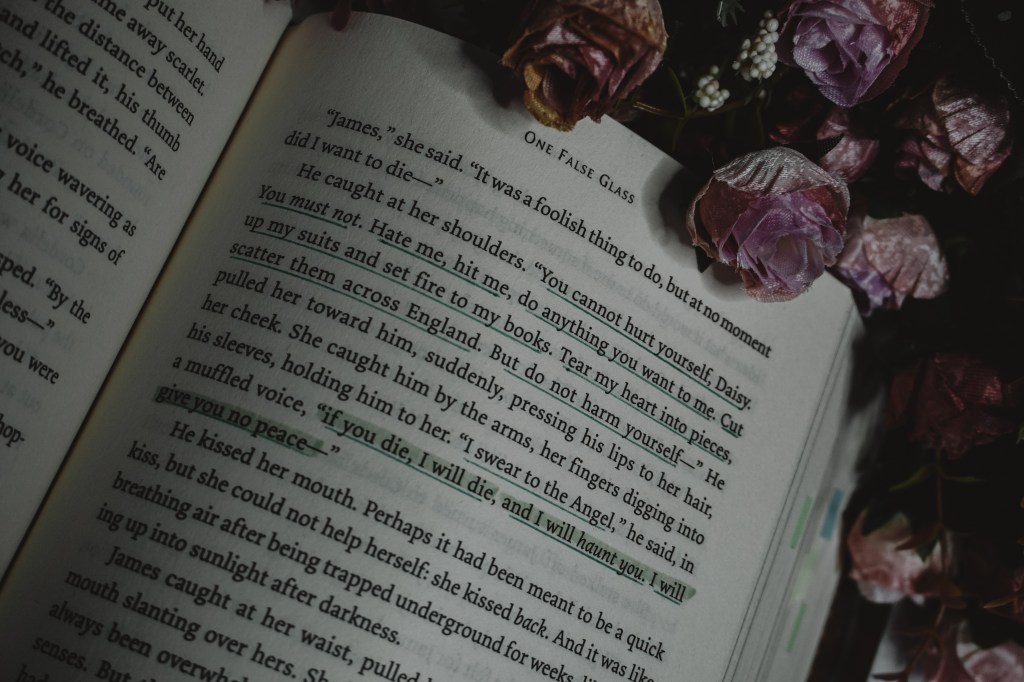

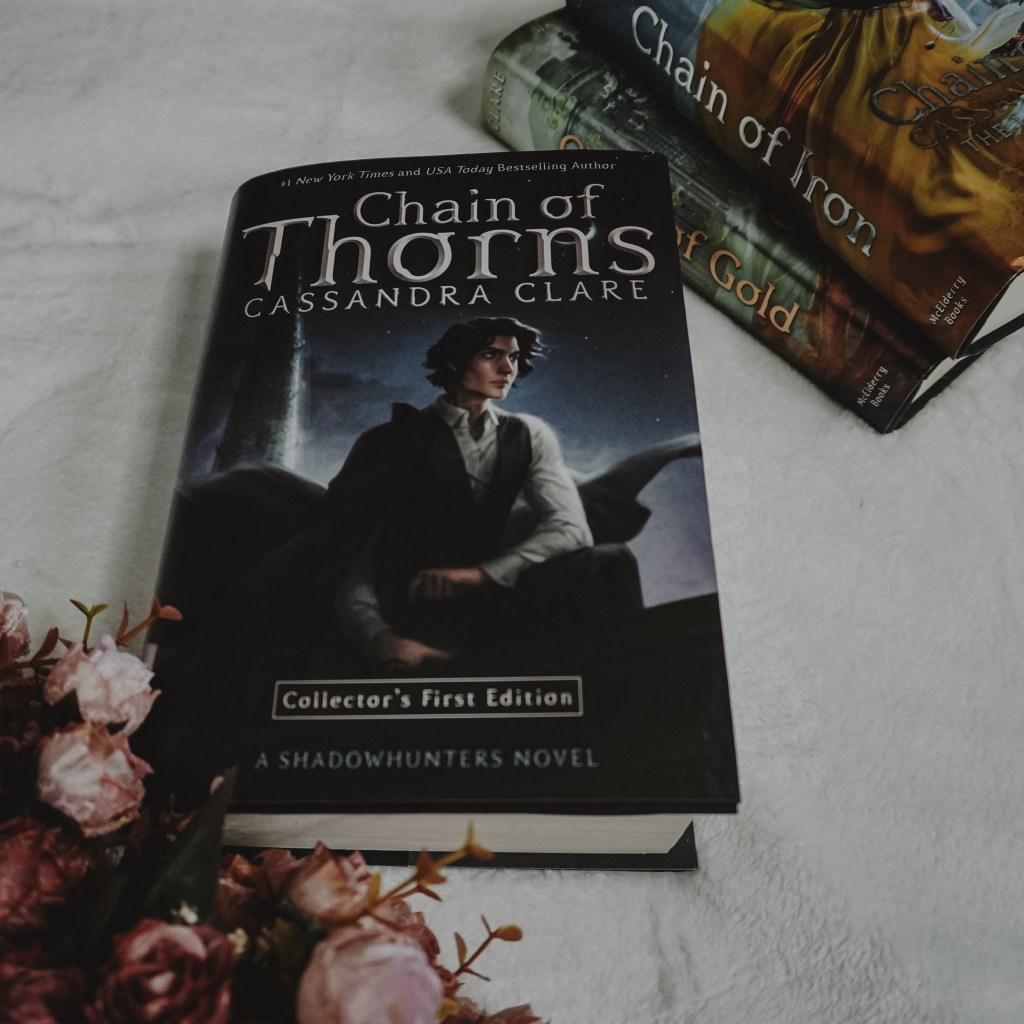
We’re back!
Chain of Thorns, the finale to Cassandra Clare’s The Last Hours trilogy, came out on Jan. 31, and it was a mixed bag of emotions for me … in not the best way. In part one, I hit on some of my major gripes with the writing and narrative, Jesse’s nonexistent storyline and how it affected Grace, and how Lucie definitely got away with necromancy. It was fairly negative, but this part hits on my positives — minus talking about the “major” death which meant nothing to me. We’re discussing the recurring theme of Cordelia running, James’ character arc, why the love triangle works and the glory that is Matthew Fairchild.
Here are the rest of my thoughts on Chain of Thorns …
Cordelia loves cardio
I actually think I’m in the minority when I say I loved the recurring theme of Cordelia running.
“Cordelia ran” is used throughout the book, and it’s interesting because it’s used in so many different ways. At the end of Chain of Iron, Cordelia ran from James. She ran away to Paris with Matthew to avoid their problems, and in Chain of Thorns, she learns she can’t run away forever. Sooner or later you have to face your problems head on, which she does in ChoT by running toward them.
She runs to Curzon Street to confess her love for James, she runs after Tatiana to avenge Christopher’s death and runs back to her friends after dealing the killing blow, Matthew tells her to run after James and she does, she takes James’ hand and runs toward their future.
I loved it.
There’s different connotations to running. It’s not all negative. Sometimes we have to run to find ourselves. Run toward whims, even if they aren’t the best for us. We don’t have to run alone.
It really suits Cordelia’s story arc. I thought she grew into herself so much in this book. She’s less passive, and we see her start to push back on people she cares about the most — James, Matthew, Lucie, etc.
Cordelia spent so long thinking she needed to please everyone, to be a dutiful daughter, to save her family name, to fit into the London Enclave, to be a good wife. She was so willing to sacrifice herself for the sake of everyone else. It was so satisfying to see her crack and really just say ‘fuck it’.
It also starts right away when she starts kissing Matthew in Paris:
“Who was this, she thought, this bold girl kissing a boy in a Parisian hotel? It couldn’t be her, Cordelia. It had to be someone else, someone carefree, someone brave, someone whose passions were not directed at a husband who did not love her back. Someone who was wanted, truly wanted …”
And when she snaps at James when he finds her and Math right after and delivers a truth to her husband that he may not have realized wounded her so much while he was trapped in his own victimhood:
“Does it not matter what I wish? Does it not matter, all the times we went to parties, to gatherings, and you stared at Grace instead of looking at me? That you kissed her while we were married? …”
Then again, when Lucie comes to Cordelia and tries to make her feel guilty for James being heartbroken, she stands up for her own feelings both on James and on Lucie working with Grace secretively:
“I don’t want to hurt James, but I don’t want to be hurt myself, either … Perhaps that is the distance between us. It is the same as the distance between myself and James. It has a name: Grace Blackthorn.”
I really enjoyed seeing Cordelia not tiptoe around her own feelings. Yes, she comes off harsh in some cases because she’s hurting, but I think she needed to just let herself have those moments of coldness to extinguish the fire she set inside of anger and frustration.
And in doing so, Cordelia takes initiative in allowing herself time to make choices based on her own feelings and wants. She gets to be selfish and get shit done through unconventional means.
She is the one who sends the note to James to meet at Curzon Street so they can reconcile, she tells Matthew that they can’t be a thing, she calls for the Merry Thieves to help Math through his withdrawals, she is the first to tell the demon in Edom a secret, she outsmarts Lilith to get out of the paladinship, etc.
More than that, Cordelia doesn’t just follow orders in this book. She sets off on her own plans, even if they are reckless. She summons the demons to get information, it’s her plan to go into Edom, she tosses Cortana to James so he can stab himself.
She makes decisions for herself for better or for worse.
Overall, I think Cassie did a decent job at working through Cordelia’s character from book No. 1 to book No. 3, which is something I hold pretty high in terms of determining the quality of a book/series.
I am feral for feral James
Like so many things in Chain of Thorns, I feel a bit conflicted about James. I was originally planning to write a full analysis of his character arc, but when I sat down to do that, I couldn’t find enough footing or interest to go forth with it. I don’t think he has much genuine development, to be honest. So I’m just going to ramble without looking back for quotes and evidence.
Don’t get me wrong, I adore James. He’s my second favorite Herondale (Kit takes the top spot, if anybody’s wondering), because he breaks the mold of our typical Herondale lead. He always felt more like Jem to me than Will. Less brash. Softer around the edges. But with Will’s incredibly tender heart. He’s a beautiful blend of Herongraystairs with none of the cockiness or over exaggerated personality that Will and Jace have that tends to make Herondales feel pretentious.
However a large part of this book I was annoyed with James’ character. There were so many times where he felt entitled or one-dimensional because he was so straight-laced — which once again was straying away from our typical Herondale and male TSC leads in general who have always had a darker twist.
James does have a dark side to him, and it was explored in the other two books as he had to give into his demon heritage to defeat evil (which were some of my favorite moments in the series). In Chain of Thorns, James does agree to allow Belial to possess him but with this unhinged degree of confidence masked by unexplored fear that he can fight his will against a Prince of Hell and that Cordelia will simply understand his plan.
I’m not even entirely sure why, but it didn’t hit me right. I didn’t like it. I guess I wanted James to be more accepting of his powers. This goes for Lucie, too. We spend so long in other series and even this one discussing how demon blood doesn’t make someone inherently evil, but in ChoT it seemed like Cassie was trying to push the message that the Herondale kids’ powers were evil and had to be gone for there to be a happy ending. Maybe I’m not thinking critically enough about it to understand what she was going for with that choice, but it made James’ character development stall out for me.
Because up until that moment, James is working through all the emotions that were suppressed for the better part of what … four or so years? … and piecing together who he is without the bracelet. I loved that process. I liked seeing a sloppy, semi-feral James.
James sitting menacingly in the hotel room holding a bottle of liquor? Him calling out Matthew for lying to Daisy about drinking? The shame he felt for being tricked into the bracelet and what it cost him? James’ desperate pleas for Cordelia not to hurt herself after summoning a demon? Him shooting the door because it was stuck? Obsessed.
That was really good development as James fumbles through those conflicting and overwhelming emotions.
However, there’s a point where James loses any dimension he had. He becomes complacent in the story as he gains confidence, which sounds weird now that I write it down but I can’t think of a better way to say it. He just doesn’t push against the narrative in any way. He just coasts through it. The story moves him rather than him moving the story.
He’s just … too … good. Clare focuses too much on the black and white story of good vs. evil, James vs. Belial. Belial is all-encompassing evil, and thus James has to be all-encompassing good. And good has to defeat evil. The Angels have to conquer the demons. There’s no gray area in this storyline because James’ character doesn’t allow for it.
His arc is about finding himself and becoming confident in his instincts, which means by the end he doesn’t have enough doubt to create suspense or tension. He was too sure of his ability to break Belial’s control on him. Too sure that Cordelia will just instinctively know what to do because of *love*. And because this series happens in between already written and established generations, we know that he must win out. He has too much faith, and the readers have too much faith in him. Everything is way too convenient and his mindset does the narrative no favors.
I wanted more conflict within James at the end, which I already talked about in part one. That would’ve been better to complete his arc, for him to still have lingering doubts and have to fight for his will rather than just know he could because he was taught well. He can still have that satisfying conclusion with his strength in who he is, by accepting this part of himself that Belial gave him and using it against evil.
It also would’ve been a way of showing that Tessa isn’t evil for her demon blood that she passed onto her children. That those powers were used as assets in helping the Clave. It would’ve wrapped both storylines together rather than have that background issue be only a plot device to remove authority figures from London.
So … yeah. I still love James, but he wasn’t utilized to his full potential and it wasn’t satisfying for me as a fan of his.
This is not me saying I think James is boring because he’s not a stereotypical Herondale. I love that James is a soft, sweet, sensitive boy. It’s those traits that would’ve made James accepting his powers even better. A quiet, deadly force — very similar to Julian. … I’m noticing a theme with my favorite TSC men. It’s time to move on.
I am definitely open to hearing other viewpoints (on everything but especially with James). At the moment, I’m honestly burnt out on thinking about ChoT, so if you loved James’ arc in this book or series, tell me why. I think I loved Matthew so much that it made me impartial to James.
Side note! One point I really loved about James’ story is that he doesn’t get tied down to the Institute at the end of ChoT. Both Will and Jace don’t get to explore the world after their stories close out — which genuinely hurts to think back on how much Jace just wanted to travel with Clary. They and their loves take on their respective Institutes and accept the responsibility of being a Herondale. James breaks the mold. He gets to travel with Cordelia, and I love the possibilities that presents them — so similar to Matthew going on his voyage to self discovery, and if I’m anything in this world, it’s a hoe for parallels.
Yet another love triangle
I am no fan of the dreaded love triangle, yet I’m not mad at what Clare delivered with Matthew, James and Cordelia. It didn’t overtake the narrative completely, it wasn’t identical to Herongraystairs in The Infernal Devices despite the parallels, and it left things messy.
I’m OK with it.
It’s probably because the way I saw it, Cordelia and Matthew never actually loved each other. They loved the romanticized idea of what the other was. For Cordelia, that was the freedom and self-confidence Matthew exudes. And for Matthew it was the idea Cordelia represented that he could be loved even with his secret out.
There’s love there, but it’s not that bone-deep love you felt between Will, Tessa and Jem.
And Paris really showcases that. They try to lose each other in these romanticized ideas but can’t. Cordelia has freedom but is bound by her feelings. Matthew can accept the love but it doesn’t mean he can quit drinking.
“But it seemed that one could not change oneself by changing one’s place, as much as one might dream of it; neither of them had left their troubles behind. They had only carried those troubles along with them.”
The pain then comes from letting go of the idea they created that their problems could be solved with the romanticized versions they created, and when you’re hurting, it’s so hard to tear yourself away from the thing that brings you even the slightest bit of comfort.
And Math says as much in Edom to James: “And that I loved her, loved being with her, because —”
“Because she is who she is.”
“But also because she never knew me, as you did, before I drank. Not really. …”
That’s why I didn’t mind this love triangle. It helps push Cordelia and Matthew’s individual character arcs forward through trial and error.
It also gave us one of those deliciously painful scenes when Cordelia tells Math they can’t be a couple because she’s still in love with James, and he tries telling her that he’ll wait for her.
“I can wait for you to change your mind.”
“No. I cannot and never will love you in the way you wish to be loved, Math. The way you deserve to be loved.”
This scene highlights the difference between Herongraystairs and whatever the fuck we’re calling this train wreck — Heronstairschild? Fairstairsdale? Heronfairstairs? Will and Jem never truly fought over Tessa. Never thought they were better for her than the other. Never tried their hand to win her over. They were very much, “no you can have her. I don’t deserve her.”
But James and Matthew do fight for Cordelia. They try to win her over. It’s her choice, but they believe they are the better option for her.
It’s what I really love about Matthew and James in particular. Will and Jem are too perfect, but James and Matthew are messy and more realistic.
But I’ll get into that later.
How this love triangle played out sort of shows the difference between this generation of Shadowhunters and the last. They are privileged kids who feel they deserve their love. They were swaddled in it. They grew up with fairy tale loves as the standard. And in James’ case, he suffered for his love as his father did and now he has a right to it. That’s how it’s supposed to work. Love saves all.
But it’s not smooth sailing, and we leave things still in a bit of an awkward transition. Cordelia mentions there’s still tension between her and Matthew in the epilogue, even though Math and James have gotten closer.
That is part of the reason Matthew must leave at the end. As I said earlier, I believe Math and Cordelia loved the romanticized versions of each other, and it’s most likely much harder for Matthew to let go of that than Daisy, who has the person she desired and a firm idea of the life ahead of her. Math needs to find something true and not that hopeless love that he’s always been attracted to. And in the wake of that, Cordelia will probably be on edge until Matthew’s more whole — because I think she’ll always feel partially responsible for his well-being and happiness.
The love triangle gave Herondaisy an obstacle to overcome that wasn’t the Gracelet and allowed for lingering tension to make the ending of Chain of Thorns not as clean cut. It served its purpose. Can’t be mad. Except I wish Cordelia and Matthew weren’t interrupted in Paris because that DRAMA would’ve been served on a silver platter and they both deserved to have a little fun.
Crying-over-Matthew-Fairchild hour
I probably should’ve written this part first to be honest, but it felt like if I wrote this section, it would be saying goodbye to a character I’ve grown to love way too intensely. That sounds stupid. But it’s true. Matthew was on my list of favorite book characters long before Chain of Thorns. I adored him in Tales from the Shadowhunter Academy and Ghosts of the Shadow Market.
For better or worse, he’s such a relatable character.
And I prepared to see him die in this finale. I expected it. I even wanted it. I selfishly wanted him to be the tragic figure of gothic literature. His death would have shaken the Merry Thieves to their core, destroyed James and wrecked Cordelia. Narratively, it would’ve made sense.
What Clare delivered was better. So much better. His story arc is what saved this book for me.
Chain of Thorns is far from being a risky narrative in the sense that it’s safe in storytelling. However, Clare took a risk by tackling Matthew’s alcoholism hard and it paid off. In hindsight, killing him would have been the safer choice. Dying is so much easier than living.
Instead readers get a hard-hitting journey into sobriety. It’s anything but pretty, it’s nonlinear, it’s realistic and it’s bittersweet. It’s everything I wanted from ChoT as a whole.
So much of The Last Hours is about exploring a generation birthed by powerful forces in the Shadow World during a time of peace.
Let me direct you to this quote by Jem (Brother Zachariah) in “Cast Long Shadows” from Ghosts of the Shadow Market:
“His generation had suffered so they could bring the next one forth into a better world, but now it occurred to Jem that those children, taught to expect love and walk fearless through shadows, would be shocked and betrayed by disaster. Some of them might be broken.”
These are privileged children, who were not prepared for disaster and in return did not want to see Matthew suffering. Or did not want to believe he was. They weren’t equipped to handle that adversity, so they ignored it in hopes it would simply go away.
Only it doesn’t go away, and throughout TLH, our characters begin to realize and actually understand that Matthew’s alcoholism is not something they can ignore, which comes to a head in ChoT. Love is not always enough to save a person or the world — no matter how many times Will tells his heroic story of riding off to save Tessa.
This particular journey begins with a setback as Matthew tries to quit drinking in Paris and finds out he can’t just stop. He resorts to lying about the drinking to not disappoint Cordelia.
It sets the tone of his storyline, and does two things for his character: The first being that it’s him realizing for himself that this is a problem, and second it works to show that he’s more worried about disappointing Cordelia than his own health.
This sets up the rest of Matthew’s arc as he discovers his own value and worthiness of forgiveness through those he loved most. Because Math has always cared more about others than himself since the poison incident. He felt those around here to be the perfect images that he couldn’t be because of his Great Sin. When his friends falter, he tries to convince them of their goodness and in return must acknowledge his own capabilities of being worthy of love and life and second chances.
We see it with Cordelia in Paris as she’s struggling to forgive herself for being tricked into becoming Lilith’s paladin and the entire marriage situation:
“We are not here just to forget, but also to remember there are good and beautiful things in the world, always. And mistakes do not take them from us; nothing takes them from us. They are eternal.”
Then we see Math tell Thomas this when the latter confesses his love for Alastair:
“How much love people have denied themselves through the ages because they believed they did not deserve it. As if the waste of love is not the greater tragedy.”
Later on in Edom, when Matthew tells James the story of his Great Sin, James asks him:
“Imagine me a few years ago. Imagine I came to you and told you this story, that I was the one who made the mistake. What would you say to me?”
“I would tell you to forgive yourself,” said Matthew. “And to tell the truth to your family.”
James consistently combats Matthew’s negative self view, as well: “You’re not a burden. You can be an ass, but you’re not a burden.”
That moment happens in the scene where Cordelia sends all the Merry Thieves to Math’s flat to help him through his withdrawals. It’s an incredible scene, and probably one of my favorites in the entire book. It’s this culmination of people Matthew loves gathering around him in one of his lowest points, and they love him all the same.
There’s two other moments in this scene that stuck out to me. The first being that Christopher arrives with a solution for Matthew to work on his sobriety in a healthy way. It tells readers that Kit has been quietly but actively trying to find ways to help his friend. Maybe he was simply waiting for the time Math wanted to help himself.
And the second is when James let Oscar out of the room to also be beside Matthew.
He tells Math: “Animals are innocent. To have their trust is an honor. He will be miserable unless you let him stay with you, help you. You are not saving him from a burden by keeping him away. Only breaking his heart.”
This quote hit me so hard for so many reasons. Mainly because James gave Oscar to Matthew years ago. Even though James wasn’t fully aware of what his parabatai was going through because of secrecy and the bracelet, he saw this dog and knew Matthew would love him. In a way, Math and Oscar are twin souls — stray dogs wandering the streets of London in search of love. The idea that Matthew had Thomas lock up Oscar was as if he didn’t want his dog to see him at that point. As if he was preserving Oscar’s view of him because it was all he had left. Or maybe he didn’t want Oscar to worry as everyone else was.
As an animal lover, that just killed me.
But also this quote serves a double purpose in James telling Matthew that the Merry Thieves will be there to help him, that he can’t push them away to save them from the truth, that he’s not protecting them by locking them out mentally.
This scene marks a point of reconciliation between Matthew and his best friends, which at the time are the most important relationships he could have as he tries to find the strength to better himself and confess what made him drink in the first place.
I’mma need a moment.
Phew.
And while I’m on the topic of Oscar, I want to say that I absolutely LOVED how Clare weaved him into this story in such a big way. I joked that Oscar got a better story arc than Jesse in ChoT, which is true, but also Oscar’s story is an extension of Matthew’s.
Our gang knows Oscar means a lot to Math and is an extension of him, and in his absence, the care they give him is beautiful. They never forget him, they protect him, they trust him to protect them. And in doing so, they are showing how much they love and trust Matthew, as well. By having faith in Oscar, they are proving the faith they have in Matthew that he trained him well. And Math trained Oscar well because he always poured his love into those around him. They know that first hand.
Matthew may not be with them, but they believe in him nonetheless.
Even Alastair’s relationship with Oscar is very reminiscent of the one he has with Matthew. A silent respect under a disguise of annoyance.
Let’s get back on track.
Even after Matthew accepts Kit’s plan to work through his alcoholism, it’s not a straight path to sobriety. He slips up. After Cordelia tells him she can’t love him, he gets drunk. And James notices it — so important after he spent so long out of tune with his own parabatai. Not only does he notice it, but he knows Math is ashamed of it. So he quietly takes his hand and draws an iratze and a couple energy runes.
“You may falter at times. But I do not believe a moment of weakness is failure. Not as long as you keep trying. In the meantime — let me help you.”
The mending of the relationship between James and Matthew only solidified that they’re my favorite parabatai duo. I love them. They were my favorite part of Chain of Thorns by far. They chose each other not out of tragic circumstances, but because they saw each other for who they were when they were seen as someone else by the rest of the world.
And this is why the scene of them sorting their shit out in Edom hit so incredibly hard. That was my favorite scene.
We have James pulling Matthew to his chest and apologizing for Paris, and Matthew admitting he loved Cordelia because she didn’t know a previous version of him and loved him anyway. We get James telling Math: “The drinking has not — did not — make you more witty, more charming, more worthy of love. What it did was make you forget. That is all.”
That is something Matthew needed to hear, but this general moment of James caring for Matthew and reassuring him is a role reversal for them. When Grace took the bracelet off James in Chain of Gold, it’s Matthew who holds up James and carries him back to the Institute when he passes out. In that scene, James remembered that Math had always been there to hold him up and he saw a side to his parabatai that few did.
“People were wont to dismiss Matthew—because of his clothes, because of his jokes, because of the way he took nothing seriously. They assumed he was liable to break, to give way when things became difficult. But he wasn’t. He was holding James up now, as he always had—and making it look easy, as he always had.”
James gets to return that support and show that neither of them are liable to break when things become difficult.
“Your heart will always want that oblivion. You will always have to fight it,” He laced his fingers through Matthew’s. “I will always help you.”
And this leads up to the moment Matthew starts seizing, which was my only full-on sobbing moment in this entire book. The desperation in this moment is *chef’s kisses*. It’s Matthew finally coming clean about the poison and then being punished for it — very Dorian Gray-like, to want to be free of sin but find you’re too far gone. But the difference between Dorian and Matthew is that Math has James, somebody to fight for his goodness. Harry could never.
Sure, James healing Matthew with runes that absolutely shouldn’t work is recycled from when Emma heals Julian from the crossbow bolt wound in the car in Lady Midnight, but in this case it works to show that unending love between parabatai no matter the circumstance.
And nothing hit me harder than this freight train of an interaction:
“Jamie bach,” he said. “You can’t do this all night.”
“Watch me,” James said grimly, and braced himself against the wall so that he could keep drawing for as long as it took.
… strike me dead.
It’s such a powerful scene to show not just the love between James and Matthew, but how James is willing to help Math see that he is worth saving, worth fighting for. That Matthew deserves a second chance at life and that he no longer needs to suffer. It was an act of faith.
“This was not a cure, James knew. … there was much work still to be done. But to have kept him alive so he could do that work —”
And in return, Matthew trusts James’ plan with Belial, trusts that Cordelia will find him in Edom and they can fix the mess they’ve found themselves in.
Side note because I don’t feel like restructuring this entire section for this thought: I loved that Matthew and James parallel each other in their struggles. Both were only half themselves for most of their time as parabatai because the bracelet and alcohol affected their emotions. In each other, they found what was missing —unfiltered love — and could hold one another up despite the unspoken truths left between them. It’s interesting to compare the two: James holding onto a secret unknowingly, and Math choosing to keep a secret of his own doing; but both facing the consequence of emotional distance from silence and the shame of discovery. Altogether a representation of the destruction of miscommunication.
Math then takes a lead role in the final scenes as he works to get Cordelia to possessed-James, which goes back to the established characterization in the short stories that he was the “leader” of this group before James was inducted into their ranks. Math was their ring leader at the Academy, and we see him begin to take on more of that position in this sequence. This starts rounding out his TLH character arc, because readers are now catching glimpses of who he will be as he continues his journey of sobriety intermingled with the person he always was.
In the epilogue, we have Matthew being the one to want them all to bury pieces of their past so they can move forward. He is moving forward. He confessed his Great Sin to his parents and allowed himself to be forgiven. Now it’s about healing — as it is for all of our characters, really. (Yada yada something about Matthew’s personal journey being reflective of the overall journey of all our protagonists and representative of the series’ overarching themes and so on)
And healing for Matthew means getting the fuck out of London. (Love that for him, honestly.)
“When I was drinking, my world was so small. I could never go that far from another drink. Now my world is expansive again. I want to have adventures, to do mad, wonderful, colorful things.”
And we as readers are reminded of the Matthew we met in “Nothing But Shadows.” A boy who loved art in all its forms but was expected to be a fighter. A boy who thought this during his and James’ parabatai ceremony: “He believed there was more to life than blood and fire. There was beauty, there was art, there was color.”
Not only do we get a full-circle moment with Matthew’s character, but a sweet scene where he tells Cordelia that when he returns home from his voyage, his twin siblings will be nearly a year old. “An excellent time to teach them that their big brother Matthew is the finest and most upstanding person they will ever know.”
It’s a glimpse that Matthew wants to be the best person he can be for himself, for his family, for his friends and for these kids who will hopefully never have to know the person he was at his lowest.
Plus, in the Waterstone special edition, Clare wrote a bonus letter from Matthew to James (thank you Gillian for getting this work of art to my eyeballs so I can cry over it) where the former says he was able to speak to the ghost of Oscar Wilde, who tells him: “You will celebrate grandly and you will suffer grandly.”
I loved this ambiguous ending for Matthew, because his character is very fluid. He can’t be contained by a single narrative. It leaves room for his character to continue to grow, which I believe we’ll see in a novella collection or a couple short stories based on some interviews Clare has given, and continue to endure. It allows for Matthew to hold onto some of his tragic figure characterizations. It also keeps my hopes alive that Matthew might find himself in a sticky Downworld situation and end up in The Wicked Powers.
Math will have to fight his addiction his entire life, but how long will that be????
Overall, Clare took a risk by not giving Matthew a tragic end or an overly comforting finale, and it gave readers a bittersweet twist to an otherwise safe narrative with little consequence. Perfection. I would jump in front of a bullet for Matthew Fairchild. Just letting everyone know.
(I was waiting the entire book for Clare to make a loophole for Matthew to be magically “healed” and at that point I would’ve had to set this novel on fire. I’m glad she didn’t.)
On that death
I already typed this up for social media, but figured I’d include it here in case you missed it:
I’ve been thinking a lot about why Christopher’s death in Chain of Thorns just didn’t hit right, and looking at Livvy’s death in Lord of Shadows is probably the best way to explain how I feel:
Livvy’s death is like the Gold Standard™️ of character deaths for me. It was done perfectly.
- She’s a secondary character just like Christopher, but readers have more of a connection to her because our mc (Julian) has pledged his life to protect her. We know that everything he’s done is to keep his siblings safe, happy and together. We are invested in her safety because of him.
- Then there’s the fact Julian’s actions led to her death. He lied and manipulated to get Annabel on that dais. We hurt for him, knowing the guilt he’ll rightfully feel.
- But we also get her death from his POV. Readers feel the pain first-hand. The drawing of the iratzes over and over, the blood, the memories, the helplessness.
- It’s brutal and very public. It’s a shock to all involved. An innocent child murdered in cold blood in front of everyone — specifically her family, who’s already been wronged by the Clave.
- Most importantly though, it moves the entire story forward. Everything after her death is because of her death. Julian is now more motivated as he has to clean up the mess he made while also seeking revenge. And the younger siblings then start going on their own personal grief missions. It’s a domino effect for our characters.
Whereas Christopher’s death had several degrees of separation.
- Our Merry Thieves are close and protect each other, but they’re all very independent. They don’t necessarily rely on each other for survival, and because of the time period, are more adult-like despite their age. Even Anna is a more hands-off sister simply because of circumstance.
- Nobody is to blame for Christopher’s death except Tatiana, who dies immediately after. We get that instant revenge, and any guilt the group feels afterward is manufactured.
- We also don’t get Anna’s POV at the moment. There’s little concern as it happens and battle continues. It’s a quiet, private death because of the poison and them being alone, so there’s nothing to truly hold onto as a “scene”. It’s easy to forget. Our characters move on rather quickly, we don’t get a funeral, no pyre burning, no mourning, no emotional payout.
- It’s a safe death with little-to-no impact on the narrative. Everything that happens would have happened even if Christopher survived. Nothing changes. Despite the lab scene between Grace and Kit, Grace could’ve figured out fire message on her own (ghost Christopher even says as much). Sure our characters remember him and talk about the grief of losing him, but they are more focused on the task at hand — whereas Livvy’s death was all-consuming in QoAaD.
I think because I know Cassie can write a great character death, it makes this one worse. She took the easy way out. A death just for the sake of death. She said she changed ChoT to be less sad, and you can tell. The narrative is worse for that.
Random other thoughts …
- This book made me adore Thomas Lightwood. This adorable, fumbling giant has my heart. His POVs were so lighthearted and genuine and raw. He felt everything so deeply, and his perspective after Christopher’s death was the only time I actually registered that his loss meant anything other than dropping a number. I didn’t have any true opinion on Thomas before Chain of Thorns, and now I love him.
- Alastair also had such a great storyline throughout the series. I loved that he took an active role in Matthew’s sobriety by being a harsher hand and telling him hard truths that the Merry Thieves tried to skirt around. He was that hammer against the echo chamber that I wanted Jesse to be. He didn’t try to fit in with the Thieves by becoming identical to them. Instead he becomes the version of himself he likes best and they can take it or leave it. That’s what I liked most about Alastair is that he softened — similar to Anna. He had to be sharp-edged his entire life to protect Cordelia, to protect their family. He gets to dull his edges in ChoT and realize that he is allowed to think about himself and he deserves the soft love that he wants. Also that moment at the end where Cordelia finds him singing a lullaby to their baby brother that their father sang to them is a really good way of showing that they both have made at least some peace with Elias.
- Also the comedic gold that was Matthew and Alastair was incredible. The two of them casually riffing throughout this book was better than any true conversation they could have about what went down. It was very personal for both of them, where the other wasn’t truly at fault, so it was nice just to see them accept the other’s existence rather than hash it out in some unnecessary confession that wouldn’t change much.
- A terrible thought: As much as I love Alastair, I almost wish he was the one to die instead of Christopher. Imagine that he jumps in front of Cordelia to protect her … the way he always has … and then dies. It would gut Cordelia, but also leave a lingering sense of guilt over the Merry Thieves for being so shitty to him. It would also give Cordelia more motivation moving forward in the spirit of vengeance — I’m thinking Julian in QoAaD.
- I’m not sure if I like Lucie still. I adore Jesse, even with a lack of a storyline. But Lucie grates me. I think it’s unfairly because she’s the youngest of the bunch, and it’s very evident. She doesn’t have to figure out her own problems in ChoT. Everyone hands her excuses and outs so she doesn’t have to admit her wrongs and accept consequences. And I think it’s highlighted by her being parallel to Cordelia, who is very much facing the consequences of her own choices. Cordelia’s problems are more important to the story, and thus Lucie’s seem small in comparison and make her feel frivolous. Not a fan.
- In GotSM, Livvy saw an etching on a wall or desk or something that said: “I did not choose this life.” Then the year 1904. Clare said she rewrote ChoT to be less sad, and I feel like either Thomas or Alastair originally was supposed to die — there was a snippet Clare gave a while ago about “all this time hating you and here I am dying in your arms” — and the other would’ve went to the Scholomance out of grief. Or maybe Jesse was sent there? That would be a consequence for the necromancy to separate him and Lucie. Or Grace was sent there as punishment but a merciful one? Teach her skills, train her, keep a close eye on her and get her out of London. Honestly all of these would’ve been better for the narrative for their own reasons. Consequences and impact.
- James and Jesse becoming bros so quickly was everything. Even though the group accepted Jesse way too quickly in my opinion, I did love that James clicked with him so easily because he loves his sister and trusts her judgment, but also because he can relate to Jesse being a pawn in the game Belial and Tatiana were playing. Him accepting Jesse is probably why the rest of the group trusts him immediately, now that I think about it. But those two were so stupid funny and Jesse just standing at the door after Cordelia and James have that little spat killed me, or him telling James “you better go” after he gets the note from Daisy to meet at Curzon Street. Like yeah bro that’s my wife, of course I’m going lol
- While I hate that we got so many unearned happy endings, I guiltily loved the epilogue. Usually Clare leaves stories with a bittersweet end to them, which is what I expected since this was meant to take some derivative from my favorite Dickens’ novel Great Expectations. Something is usually always looming to make happiness feel painful. Yet, this epilogue was sickly sweet.
And I loved it.
I adored Cordelia leaning into James as she got lost in thought about their future and how things have calmed or Matthew rolling in the grass with Oscar and Anna and Ari and Grace setting up some weird version of croquet. It felt like a warm cup of tea. Just soothing. It had no right to be so soothing considering everything, but I liked it. And that’s coming from someone who doesn’t care for happy endings.
Cassie did miss out on the opportunity to make James obsessed with baby Zachary the same way Alastair is. The two of them competing to hold the baby or win its favor with toys and lullabies and affection? Thomas and Cordelia would simply disintegrate. Somebody should write this fanfiction for me.
Fin
Between the two parts, this ended up being a cool 20 pages. Single-spaced. 11-point font. Times New Roman.
I’m not even sorry.
I told you I had a lot of thoughts. I have even more of them, but I got sick of rummaging for quotes. I’ll save those for social media.


 Life of Bry
Leave a reply to Bry Cancel reply