“It was foolish, it was wrong, to take so active a part in bringing any two people together. It was adventuring too far, assuming too much, making light of what ought to be serious—a trick of what ought to be simple.”
Emma, Chapter 16
It’s been over a week, but I am back with more annotations on Jane Austen’s Emma! If you missed it, check out part one for chapters 1 through 10.
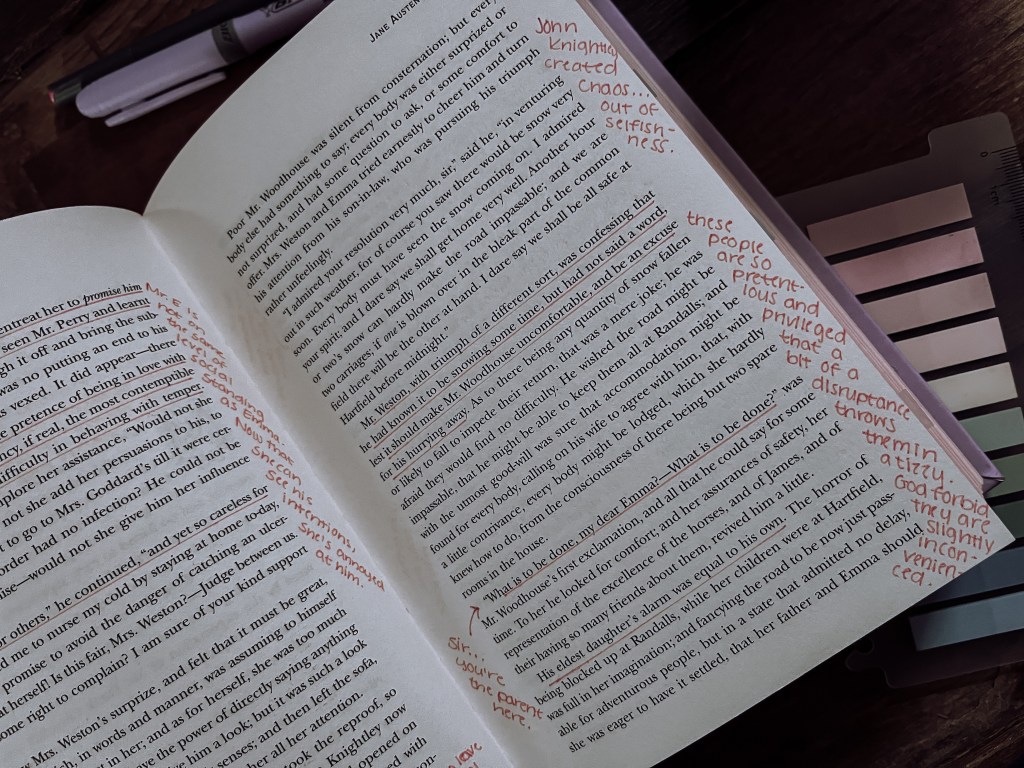
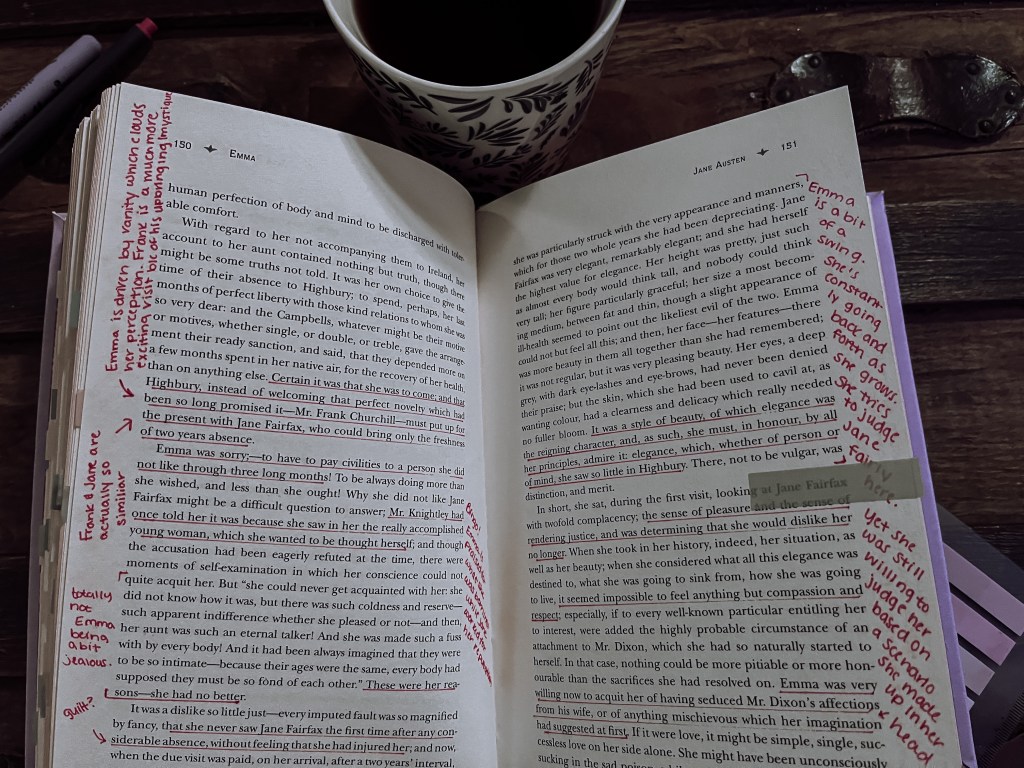
Be warned, I changed pens a lot throughout this batch of chapters, so I’m sorry if it throws you off while scrolling through pictures.
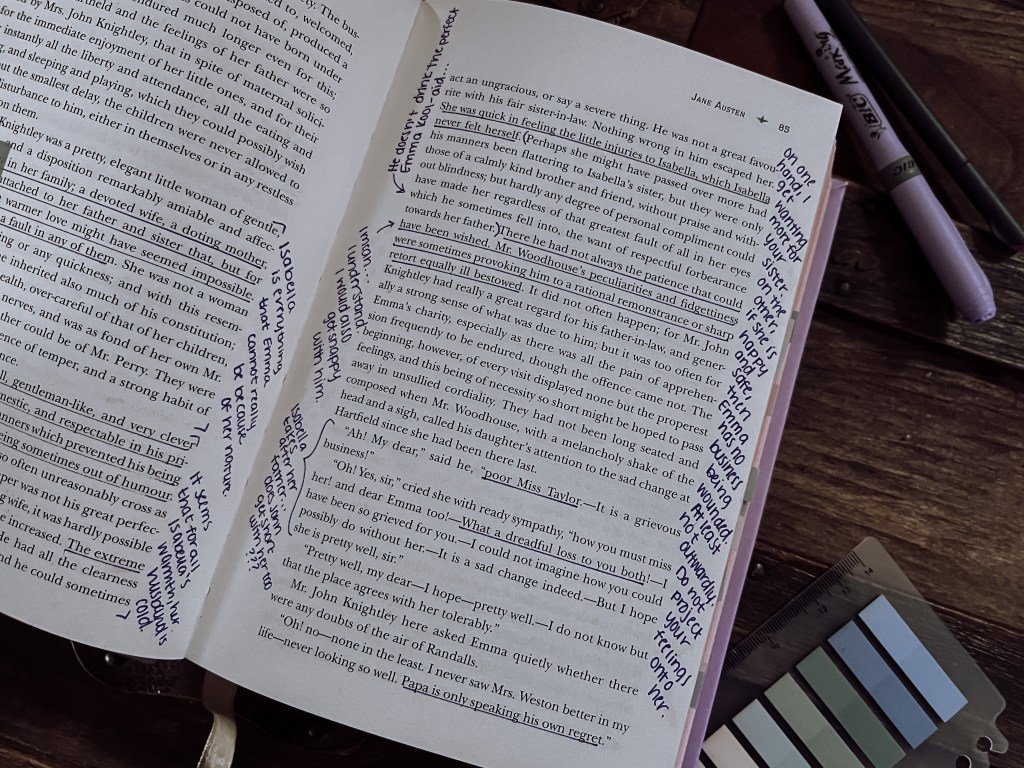
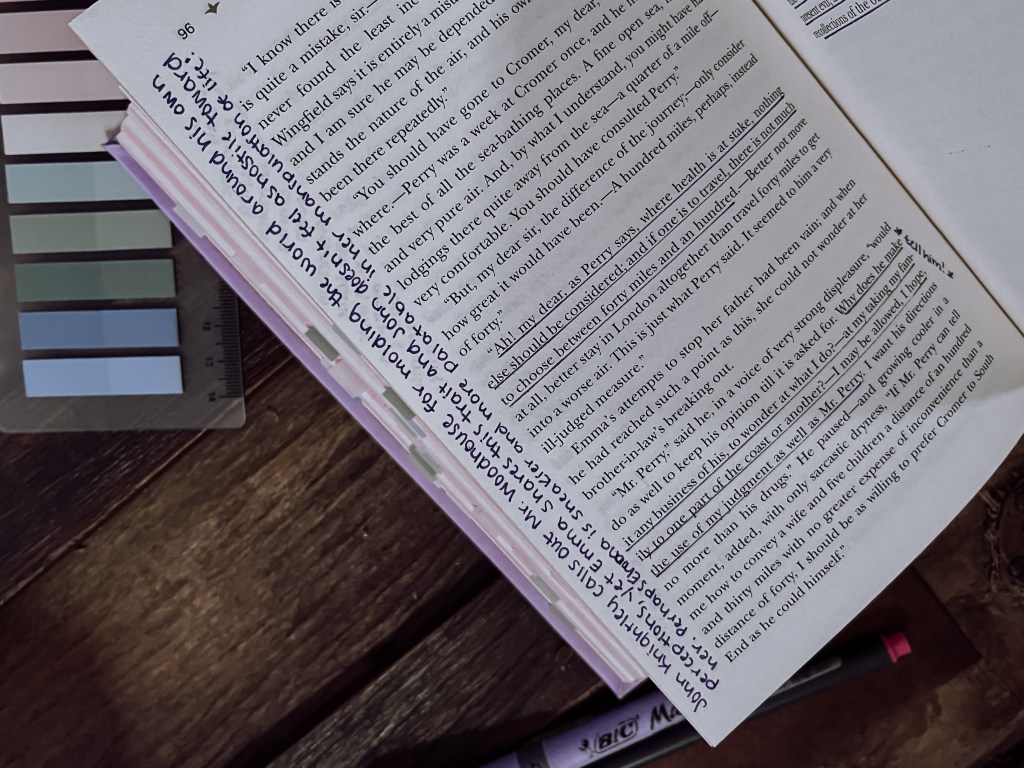
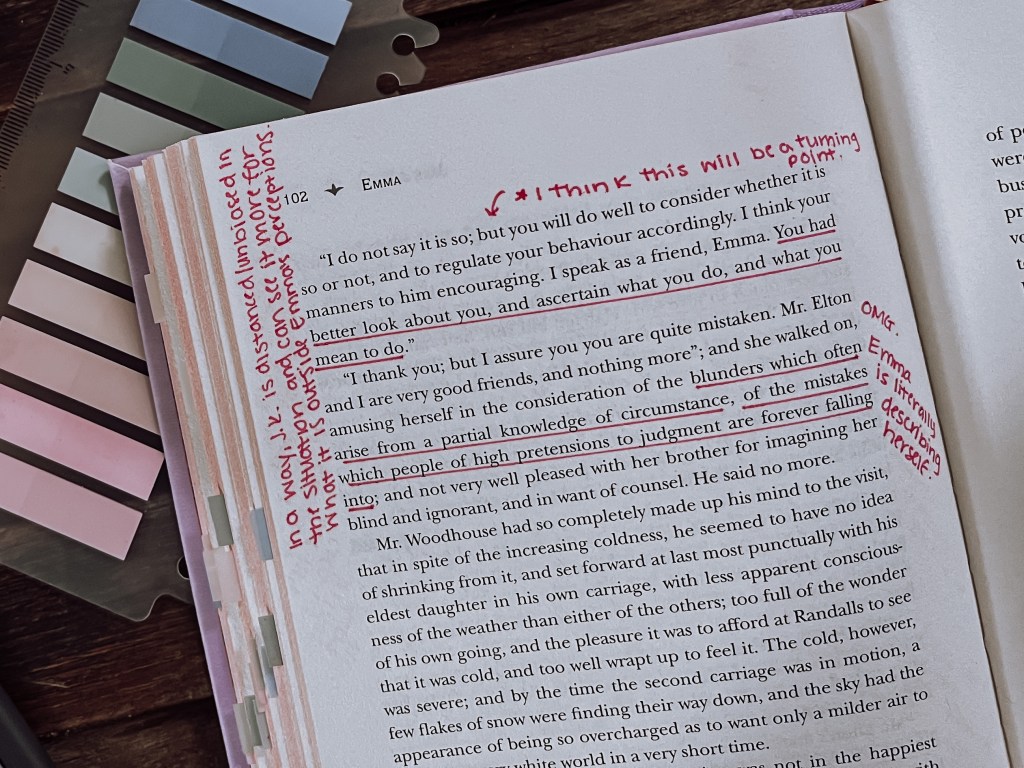
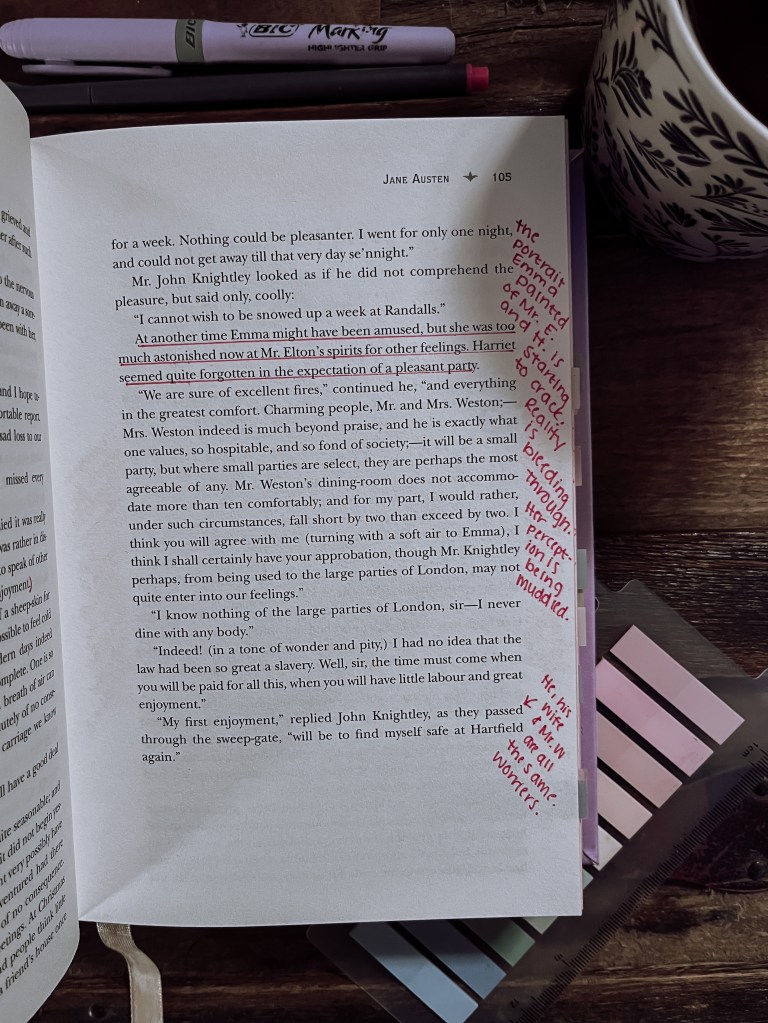





Initial, overall thoughts …
After 10 more chapters, my opinion holds up that I’m enjoying this much more than I thought I would. It’s taking me a while to get through this novel because life is busy, but when I do get time to read, I’m surprised by how I can fly through these chapters.
The pacing is wonderful as events turn rather quickly with a revolving door of eccentric characters. The comedic irony that drips from every page is just immaculate. I love it. The characters are often double-sided with Emma’s perspective and their reality competing for the reader’s attention. I personally enjoy characters that pull me different directions and make me think. I want to love them but also want to cringe every time they open their mouths. That’s just me, though.
Chapters 11-20 …
In this batch of chapters, the other shoe sort of drops on Emma as the err of her ways is unveiled and consequences of her vanity must be faced.
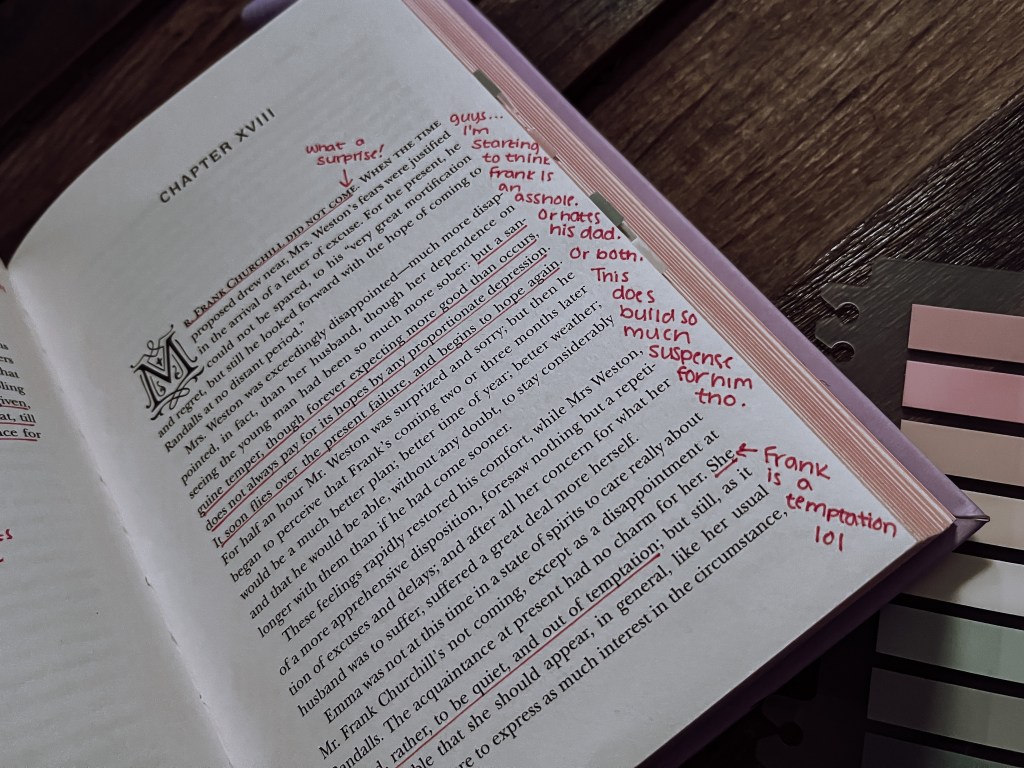
Firstly, as her sister arrives at Highbury, Emma shoves her fascination with Mr. Elton and Harriet aside, which shows that perhaps she only cared so much in the first place because she was bored. We see this a lot in chapters 11-20. Emma is a master at shifting conversation based on the comfort of herself and her perception of the world. She wishes to focus on what she finds interesting, which we see a lot with how she tries to pull word of Frank Churchill from anybody she can.
Let’s stick on the Mr. Elton and Harriet storyline first, and then I’ll get to ole Frank.
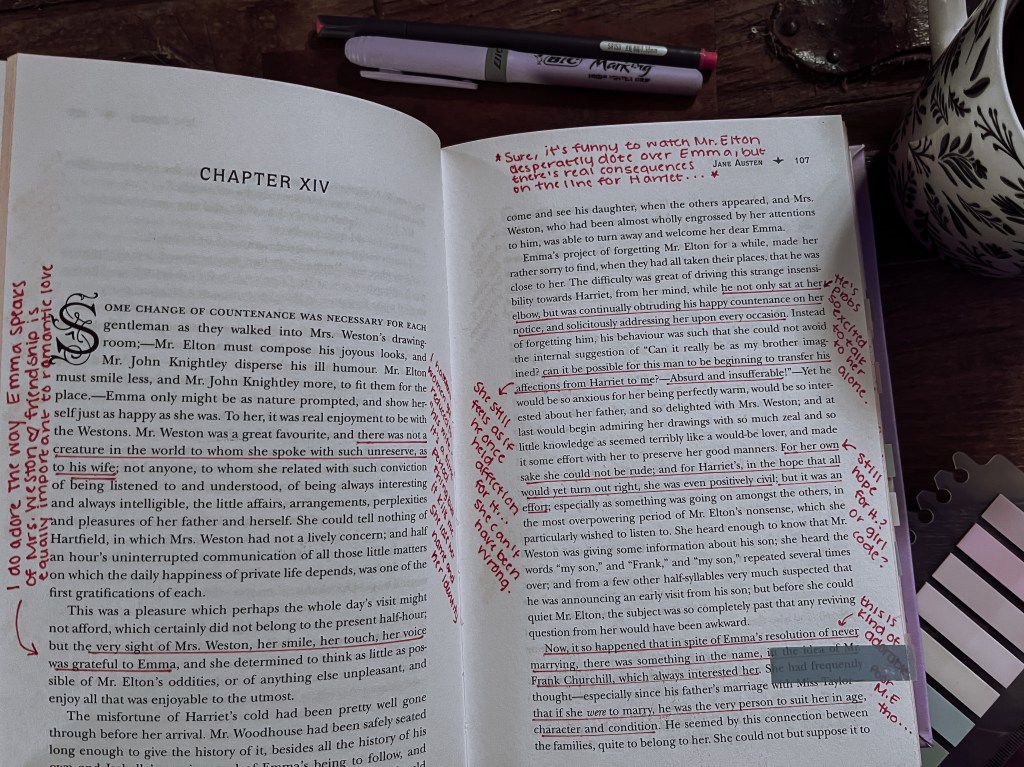
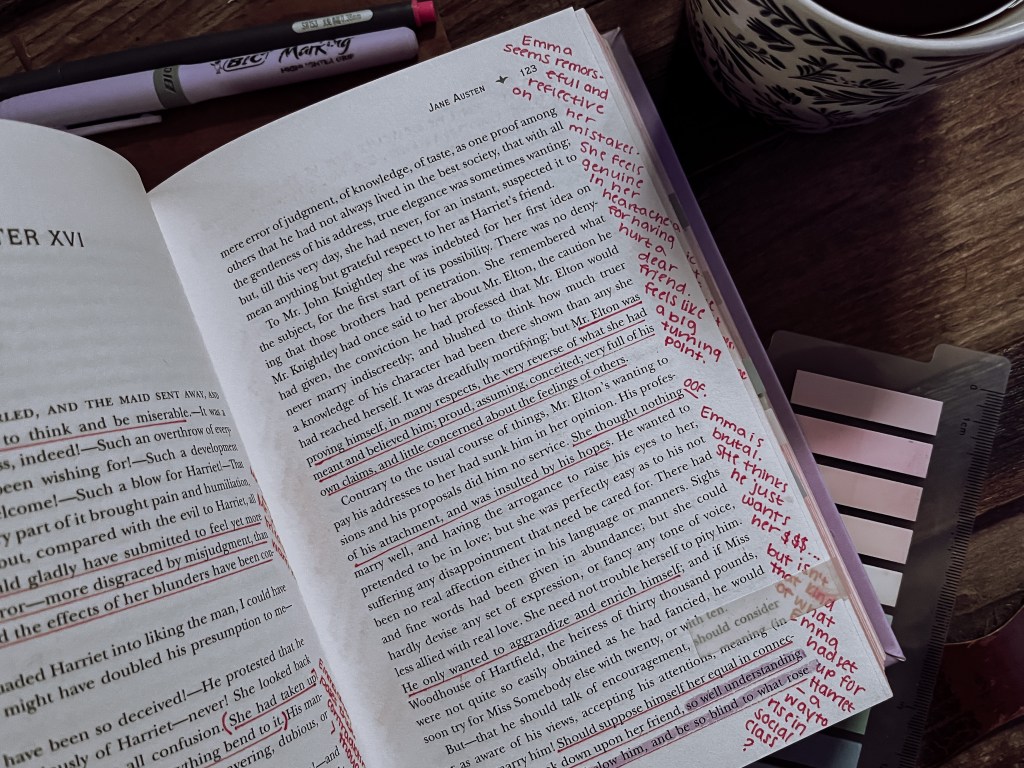
The turning point for Emma seems to be when Mr. John Knightley points out that Mr. Elton is in fact in love with her and not Harriet — something that is painfully obvious for anybody outside of Emma’s bubble of self-assurance. It’s after that moment that the picture she has painted of him begins to crack and she can see through his pleasantries that he is devoted to her and not her friend. However, she still holds onto her insistence that had affections for Harriet at one point. She can’t admit that she was entirely wrong from the get go.
Even when Emma shows true remorse for what she’s done to Harriet, there’s this touch of vanity that holds Mr. Elton more responsible than herself. He is more wrong for not being in love with Harriet than she is for believing something to be true that wasn’t.
She turns the tides on him. Where she once put him on a pedestal of perfection, she now buries him in the sea. He’s a monster. He becomes less and less agreeable as he disrespects Harriet in his offense of thinking he’d ‘stoop’ to her, and Emma even claims that he only wished to marry herself because he wanted more wealth and to marry ‘up’. The fact that Mr. Elton does seem like an asshole makes it a lot easier to push blame, but it is not his fault that Emma misread his kindness for affection for Harriet when he clearly did things to win her favor.
This one is on Emma.
It does say a lot about his character that he gets engaged so quickly after. It shows his own vanity and conceit as he brags about his swift success in finding a girl who is so similar to Harriet except that she has money.
I can’t stand him.
We see Emma grow in understanding that she hurt Harriet, but her character often swings. She shows this want and need to be good that is so often clouded by her vanity and self-interest. While she can try to dutifully sway Harriet’s mind away from the pain of Mr. Elton’s rejection and her rejection of Mr. Martin, Harriet must live with the never-ending after effects. It is Harriet who will have to endure embarrassing encounters with the Martins and the embarrassment of Mr. Elton’s slights. She has to live in the uncomfortableness that Emma created and can forget about when something new excites her fancy. It’s so sad, and it’s just another conflicting trait to add to the long list Emma gathers.
I do really love that I go from loving Emma to wanting to shake her fiercely by the shoulders while screaming. It makes her character so fun and interesting. She’s a bit of a walking contradiction.
This brings me to the notion that I noticed a lot of commentary on the public perception of social class and gender roles — which, to be fair, are probably the biggest themes of the novel.
Particularly in the un-love triangle of Harriet, Mr. Elton and Mr. Martin, there’s a show of how class does not equal manners or grace in the way Emma or others of her social caliber perceive it.
Mr. Elton is cruel and brash in his rejection by Emma. He is disgusted that she would see him as an equal match for Harriet and tears the other woman down because of his own embarrassment. He runs off rudely and comes back to boast about his conquest in love. Meanwhile, Harriet still respects him despite her broken heart. Similarly with Mr. Martin, he shows so much respect and kindness to Harriet even though she rejected him. He runs after her and tells her to take another path to avoid flooding. It’s such a small gesture, but small acts of kindness are often the loudest. It shows how even though they are of lower class, they are more respectable humans.
I also liked seeing Isabella, this picture of the ideal woman of her time with a passion and devotion to her husband and children, compared to Emma, a more progressive woman looking for fulfillment outside of being a homemaker. It was interesting to me that these two sisters are a statement that you cannot be a perfect wife and mother while being clever. You must give up yourself to be devoted to the family, which may be why Emma is so adverse to the idea.
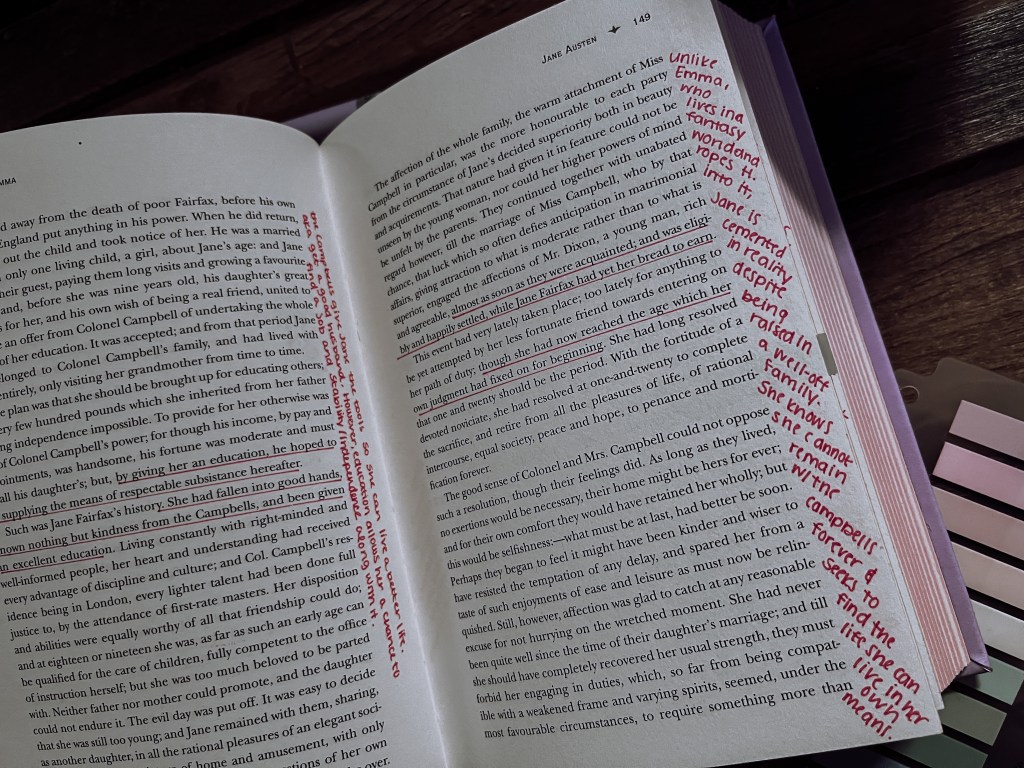
There’s also Jane Fairfax, who becomes a foil to Emma. Jane is in a very similar position to Harriet, she was orphaned and raised by the good graces and generosity of others and brought up in a society higher than her born class. However, where Emma has made Harriet believe she is rightfully in this higher social class, Jane knew her place. She pulls herself away from the safety net of her wealthy benefactor and makes a name for herself through hard work. She is praised for building up a reputation that Emma has received through no merit of her own.
I think Emma is jealous of Jane for this. She doesn’t want to work. That’s why she makes a reading list without actually reading and why her attempt to make Harriet more well-read turns into compiling a book of riddles. She wants the praise Jane receives but without putting in the effort.
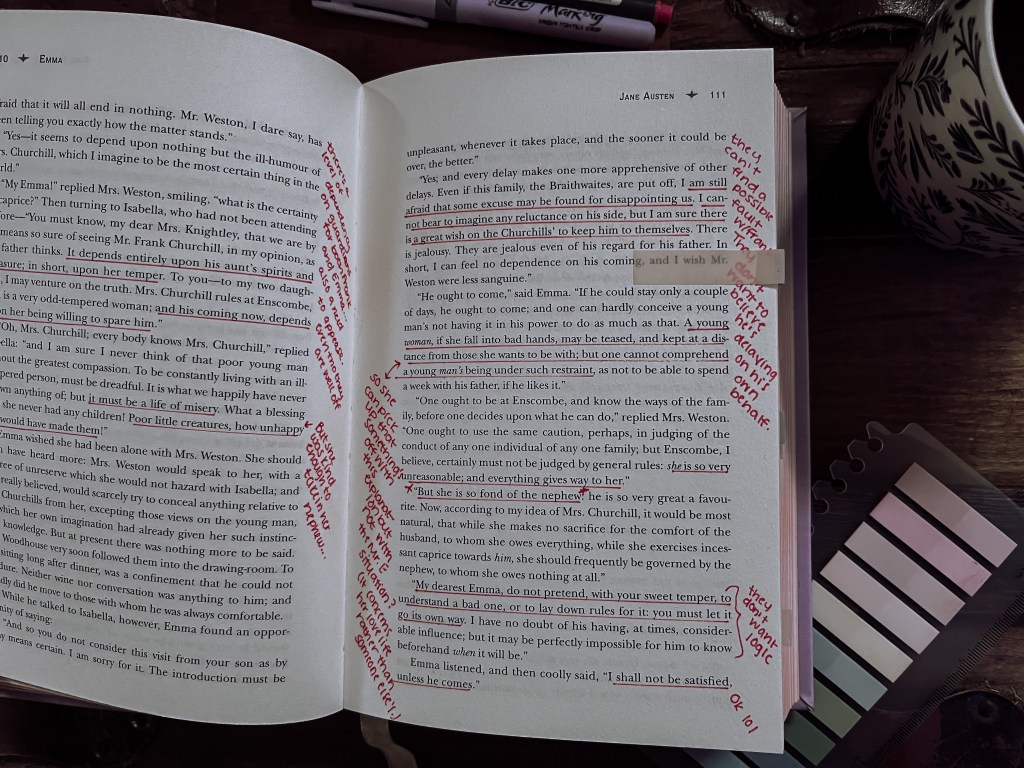
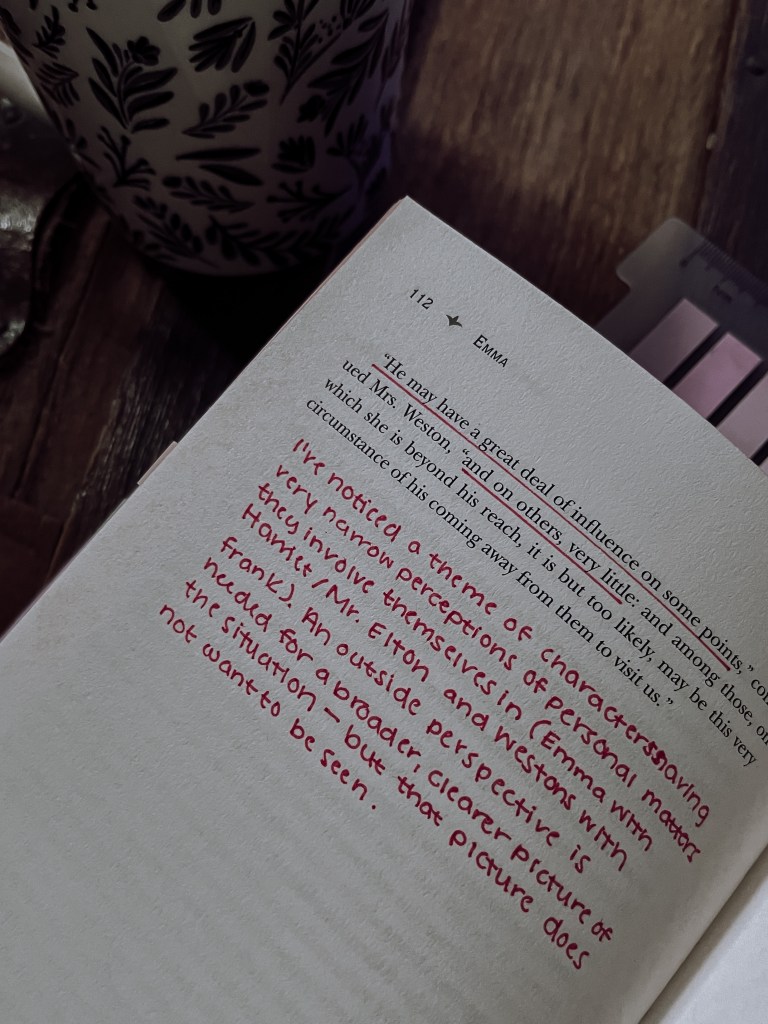
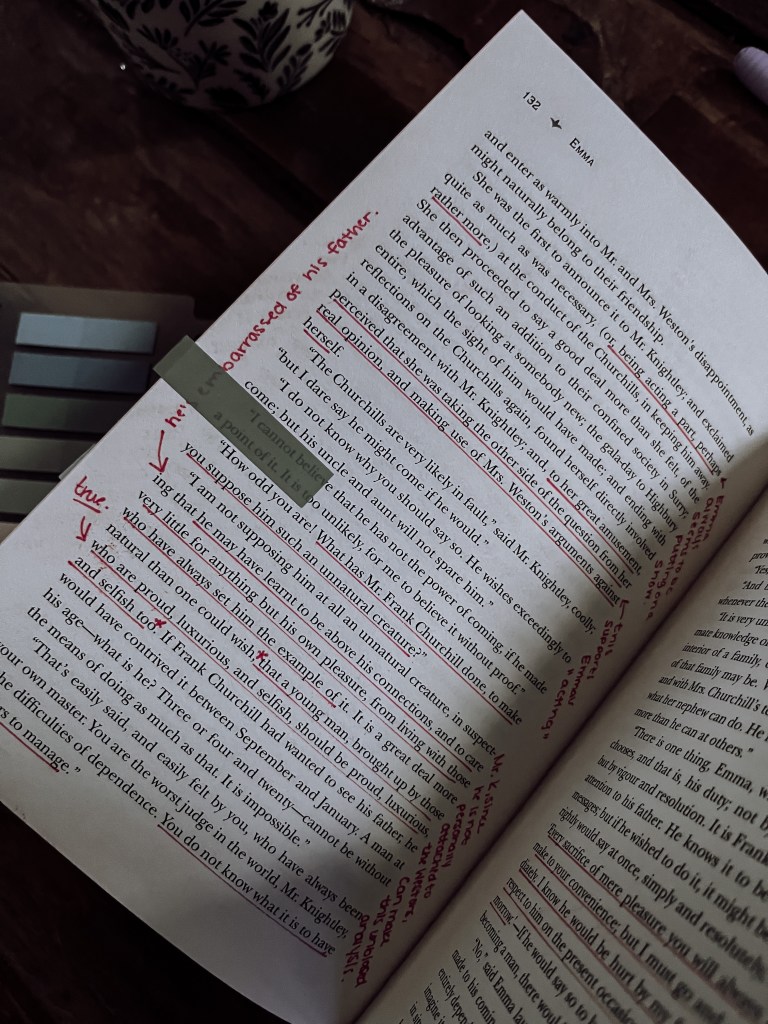
There’s also this really powerful conversation between Emma and Mr. Knightley in chapter 18 where they debate the character of Frank. Both have incredibly valid points. I feel that Mr. Knightley was right in his assumption that Frank is simply writing pretty letters to maintain a good impression on Highbury and relationship with his father and has no intent on visiting. However, Emma is so right in her assessment that it is not always as easy to assert oneself as he makes it out to be. When you are dependent on someone for financial or social reasons, you are bound by them in a way. Emma, while wealthy, is dependent on her father. She lives a life that is conducive to him. She understands what it’s like to live to appease a parent. Because Mr. Knightley has never known that level of dependency, he thinks this battle can be won by commanding it to be.
Mr. Knightley is so often used as this voice of reason in comparison to Emma’s self-indulgent character, and it was interesting to see this situation where the tables turn and Emma is the one shedding light on his limited views. Smart and compelling writing.
That wraps up my thoughts for this section! This was way longer of a rant than I expected. We’ll see what the next 10 chapters bring *crosses fingers for a Frank appearance*


Leave a Reply