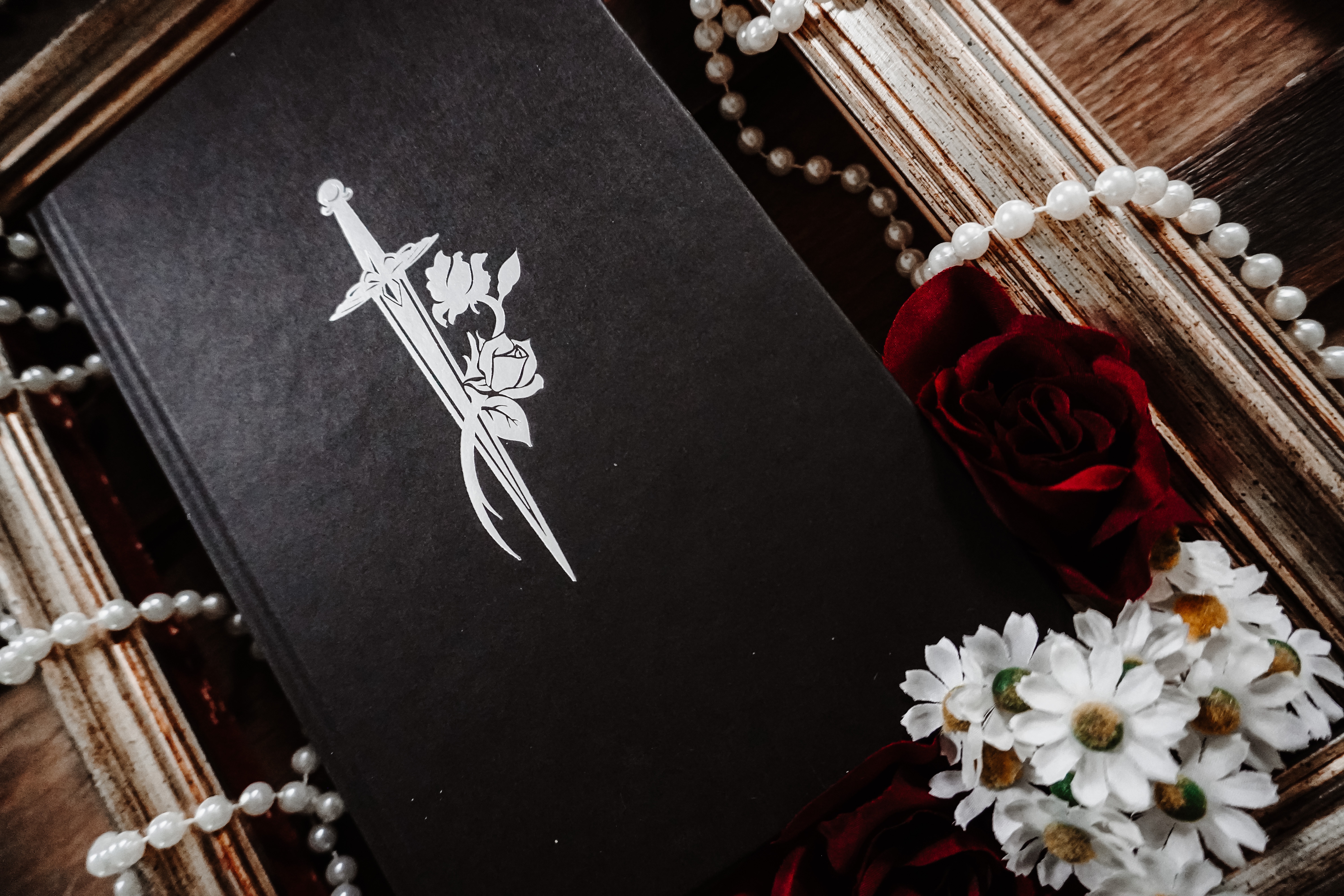
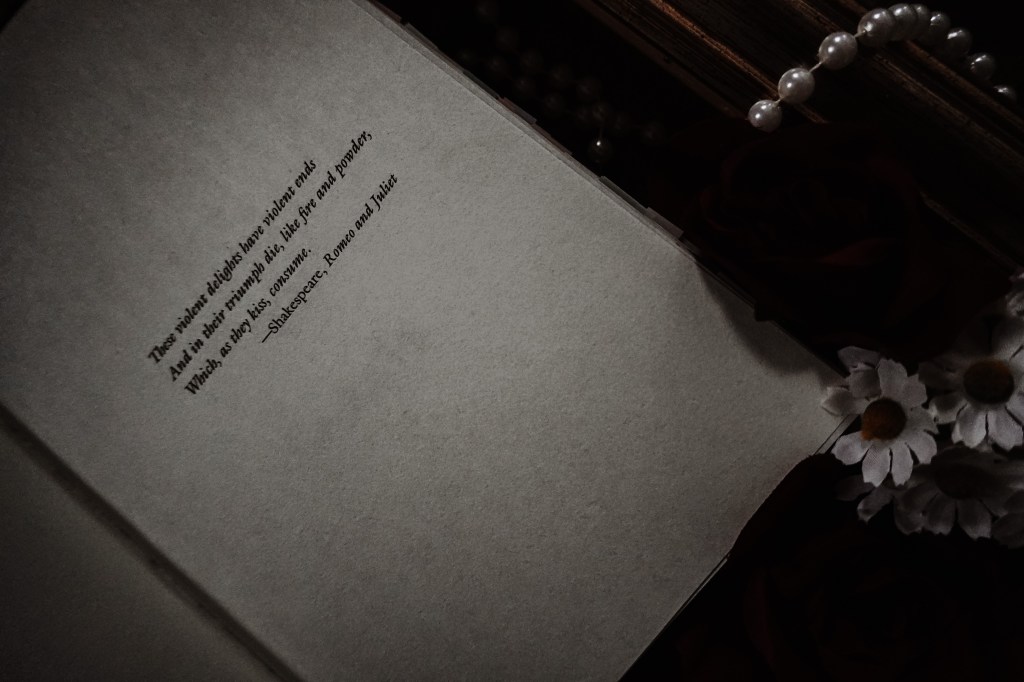
“These violent delights have violent ends, And in their triumph die like fire and powder, Which as they kiss consume.”
Hey!! Long time no see!
I fell into a very deep reading slump, which led to me taking over a month to finish These Violent Delights by Chloe Gong. I set it down for nearly three whole weeks. Yikes.
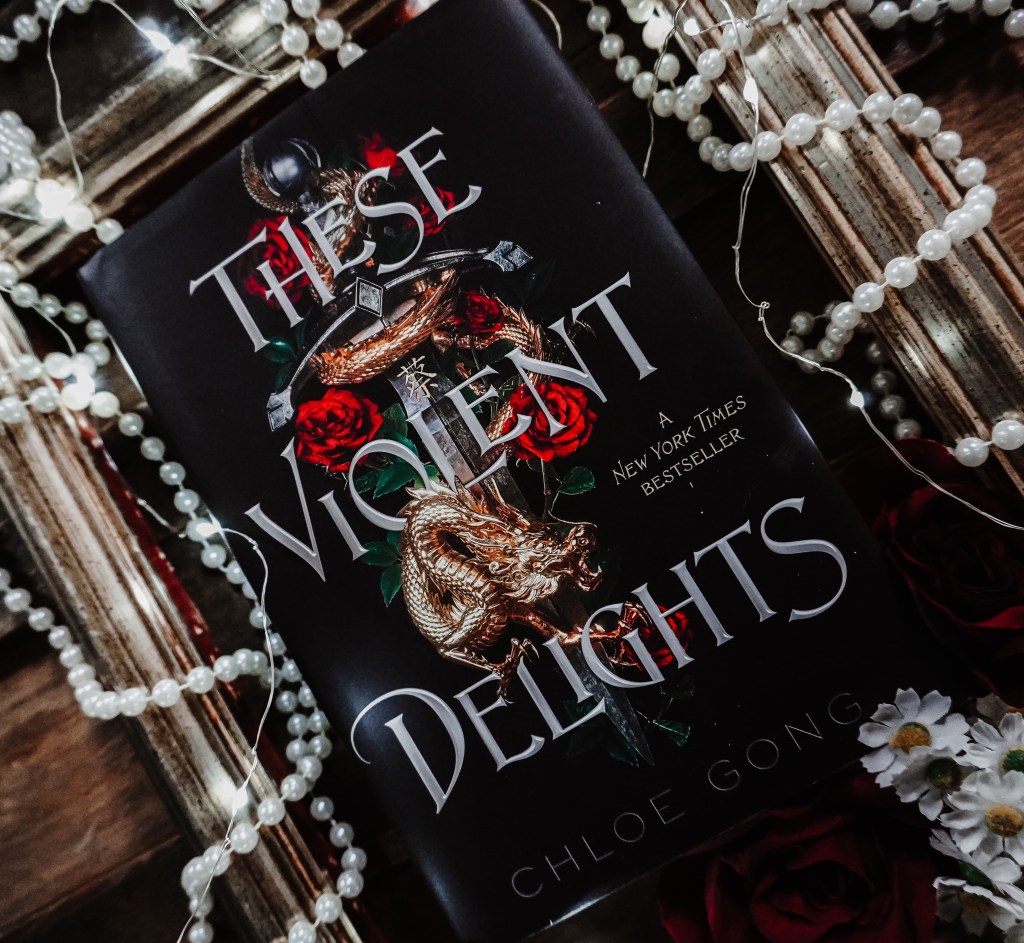
However, I have finished Gong’s debut novel, which is a reimagining of William Shakespeare’s tragedy Romeo and Juliet, and I have a lot of thoughts on this book, despite not falling immediately in love with it.
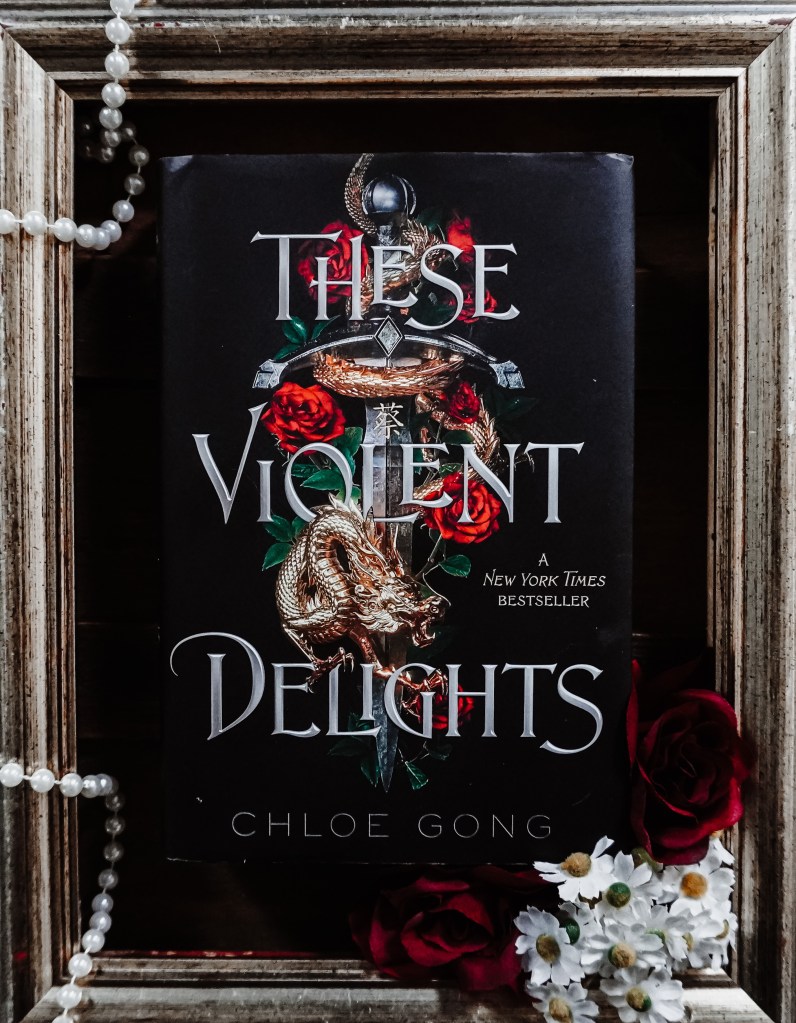
First a bit of context, These Violent Delights, published in Nov. 2020 and told from an omniscient third-person point of view, follows the blood feud of the Scarlet Gang and White Flowers in 1920s Shanghai. Particularly, the story shows how Juliette Cai, heiress of the Scarlet Gang, and Roma, heir to the White Flowers, react to a madness that has taken over their city that is already being pulled apart by politics and their families’ own petty games. There’s love, there’s hate, there’s bloodied hands and there’s bruised pride.
There’s so much.
Here are all my thoughts on These Violent Delights.
Star-crossed lovers and bitter exes
The absolute peak of this book is the leading characters of Juliette and Roma. I was immediately drawn to each of them in their individuality and their similarities, their roles in their rival gangs and how they’ve kept power, and how they’ve grown and changed since their childhood fling.
Both Roma and Juliette are heirs to their respective gangs. They were born with power, privilege and safety because of it, but this role binds them and forces them to prove themselves worthy of the position.
Their last names, Cai and Montagov, have written their fates for them and they have accepted that to some degree.
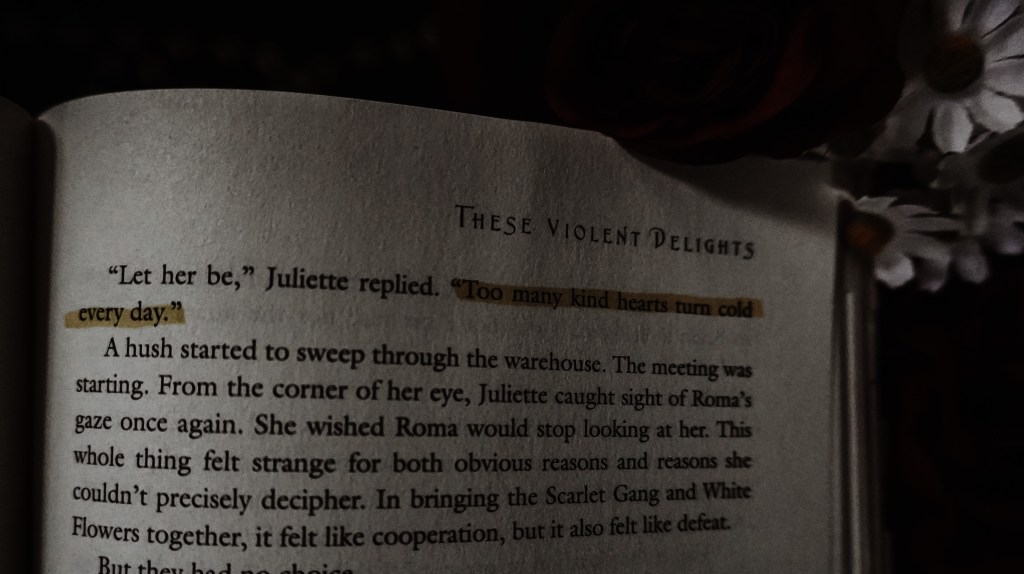
Early in the novel, Juliette says, “But she never had a choice. This was her life, this was her city, these were her people, and because she loved them, she had sworn to herself a long time ago that she would do a damn good job of being who she was because she could be no one else.”
Because of their position, they both have become caricatures of who they are expected to be in order to appease their parents and to be feared by their rivals. Gong shows readers at the start of the book how They both have hardened from time and experience. They are criminals — cold and callous against the blood that soaks their city’s streets. It’s important that they hold these images to maintain respect from their gangs and those who would wish to steal their throne.
Gong cleverly juxtaposed these new personas against the children they once were by intermingling glimpses of flashbacks of when Roma and Juliette first fell in love.
Through these memories, readers see how these kids were once full of hope for their future together that they believed would bring an end to the blood feud for good.
“Roma said that the future was theirs, that the city would be theirs one day, united as one, as long as they had each other.” (359)
I found it interesting that Roma was always the one to initiate these reveries of what the world could be. It seemed a hint at their upbringings. Juliette is the heir to the Scarlet Gang which is native to Shanghai and still very traditional, despite its Western shift; while the White Flowers are Russian operated and more willing to make forward advancements.
Roma almost pulled Juliette out of the Scarlet’s stagnant way of thinking and made her believe change was possible.
However, just as Roma had convinced Juliette that they could clean up Shanghai’s bloody streets, he gives up information on the Cai family that leads to an attack that kills several Scarlet Gang members, including Juliette’s caretaker Nurse. We learn later that Roma did so because his father wanted him to kill Juliette and then threatened to kill him and her, but our leading lady didn’t know that and so she harvested a lot of hate in her heart for five years. She felt played and betrayed, and used that anger to sharpen the edges he had smoothed.
“And he mourned for her. … he ached with the knowledge that the softness of their youth was gone forever, that the Juliette he remembered was long dead.” (Roma, 44)
One of my absolute favorite things was the frustration of knowing how Roma blames himself for everything, but reading Juliette believes that he was some master manipulator who had planned to betray her all along. This boy is drowning in self guilt. He even blames his mother’s death at the hands of the Scarlet Gang on himself.
While we get this moment where Roma notices all the ways Juliette has changed, we get another where he recognizes similar changes in himself.
“…Roma had crafted a cold and brutal face that he hated seeing every time he looked into a mirror.” (Roma, 69)
There’s such a contrast between Roma and Juliette in these moments. Juliette almost seems proud of the reputation she has built, because it means she is feared and respected. She knows she must work harder to prove herself because she is a woman, and she revels in this picture that was painted of herself because it’s a testament to the work she’s put in.
On the other hand, Roma despises that he has had to grow in this way. Similarly to Juliette, because of his father’s discovery of their relationship, Roma must earn his position as heir. Instead of becoming a cold-blooded killer, he has taken up small tasks that Lord Montagov can’t be bothered with — which is something Juliette said outright that she had no interest in doing for own father.
To me, I perceived Roma’s reputation as being nearly entirely constructed by the White Flowers. While he is a sharp shooter and capable of killing, he is still soft at heart. He doesn’t want to kill. He isn’t as trigger happy as Juliette.
This is why Roma feels he has to fight Dmitri, who is trying to push his way into the spot of heir. Everyone sort of knows that Roma fights for his position out of safety and not loyalty — this is something Benedikt mentions, as well — and our young heir knows that they know or at least suspect.
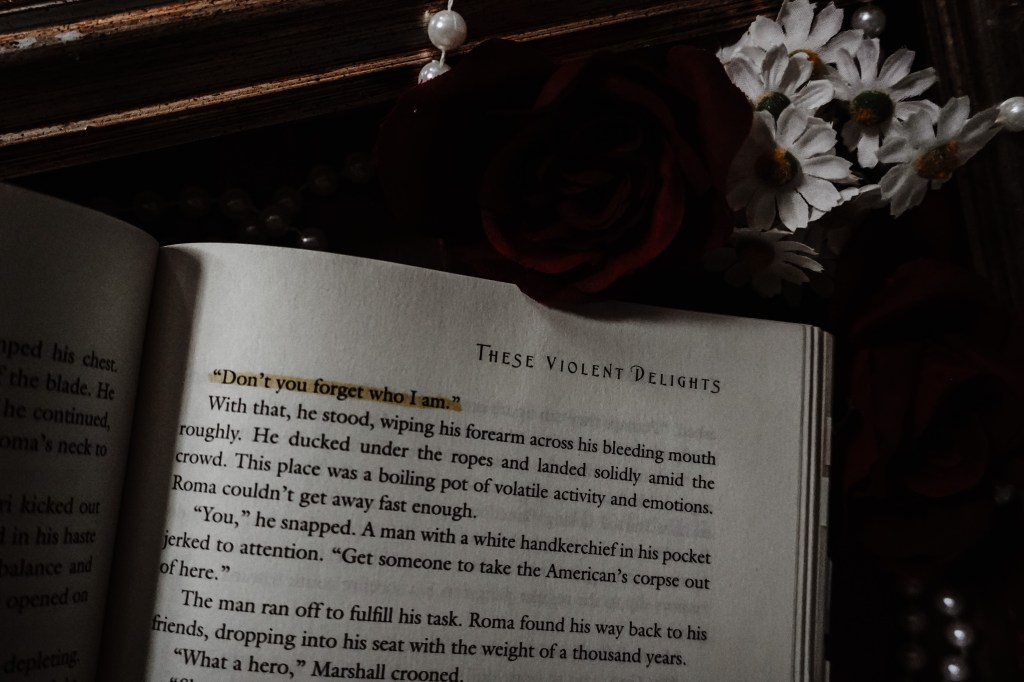
“Don’t you forget who I am.” (Roma, 211)
Through everything, there’s always this underlying tone that these two heirs have always been each other’s mirror.
“They were laughing kids who had found a confidant, a friend who understood the need to be someone else if only for a while each day.” (89)
They were similar as children looking for someone to share the burdens only the other would understand, and they grew together in matching ways despite being apart.
There’s this really beautiful moment where Roma realizes Juliette has been followed, and he asks her to hug him so he can use her jacket as a way to conceal his gun for the shot. Despite her reflexes screaming not to do it, she falls into his embrace, he shoots and she realizes, “They had both grown tall and grown thorns.”
It’s just this incredible scene of Juliette, who up to this point has convinced herself that Roma is unchanged, recognizing that she and the White Flowers’ heir are not so different even after all these years.
With this realization comes the truth that she had never stopped loving this boy she wanted to hate so desperately.
The love is still there and the hope is still there for a peaceful future.
Roma and Juliette’s insistence on figuring out the root of the madness to end it was reflective of their collective dream of unity. The madness is symbolic of the blood feud itself that has been killing the people of this city relentlessly. Much like how Roma and Juliette wished to end the blood feud to save lives, they now put aside their differences to do just that by putting an end to the madness.
These two care about their people rather than pride or power — which is what drives their parents, and we’ll get to later. Their hearts are true, even after being given every reason to let it harden.
“The stars incline us, they do not bind us,” is a Latin phrase that Roma tells Juliette as children that means that, while the fates or some higher power may push us in one direction in life, we are still free to make our own choices and alter that path.
Roma and Juliette may be inclined to lead a life of bloodshed due to the positions they were born into, but they still have the option to change that.
And they start.
Until the end when Juliette tells Roma she was toying with him, admits she gave away the address to his mother’s safehouse and pretends to shoot Marshall to protect them all from crazy cousin Tyler who discovered the pair were in cahoots.
It’s a direct parallel to Roma making the choice to launch the attack on the Scarlet Gang to save Juliette’s life. She’s willing to bury their relationship, happiness and hope for his safety. I think she believes that this is how it’s always going to be. They will continuously have to hurt each other to keep the other safe, and one day they may not be able to guarantee the other’s safety.
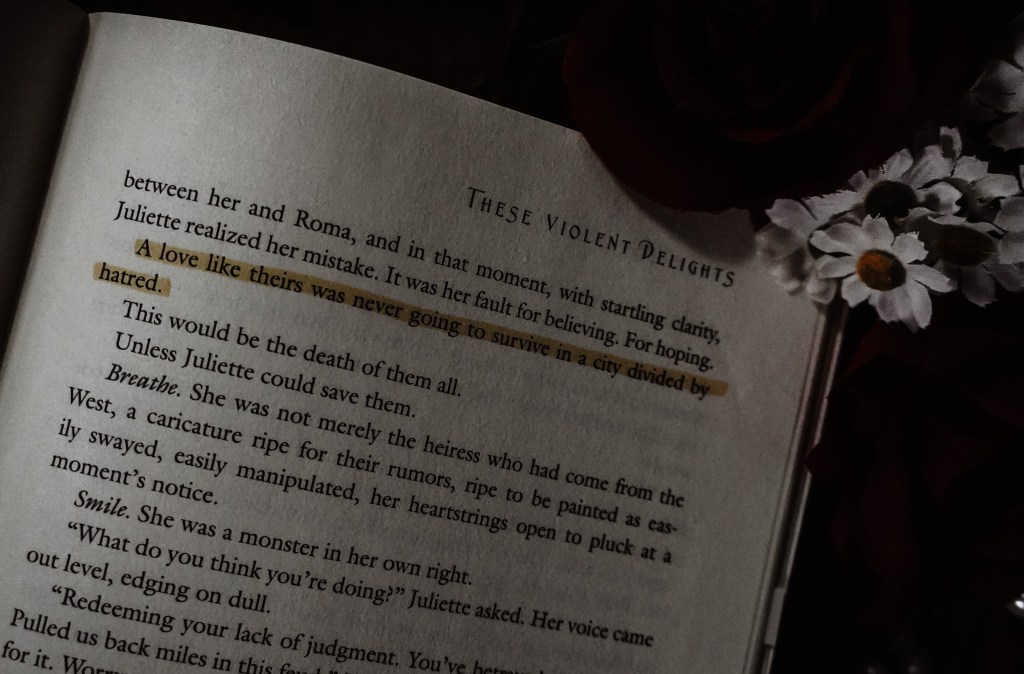
“A love like theirs was never going to survive in a city divided by hatred.” (425)
Overall, Roma and Juliette were flawed and well-fleshed out characters, who were products of their distinctly different upbringings. Neither one took control of the story or stole from the other. They were balanced and beautiful as they pushed and pulled against and toward each other to solve the mystery at hand. I’m incredibly excited to see how the ending shifts their relationship moving forward.
So much more
I’m a slut for a good retelling of a classic. Literary parallels are my absolute favorite things. With that being said, I’m not the biggest fan of Romeo and Juliet. I think that it was pushed so heavily and drawn upon so much in high school English that it lost its appeal for me. However, it was so fun to read through These Violent Delights and discover how Gong reimagined this tragic story and truly revamped a tale that is so overdone in pop culture.
Here are some of my favorite parallels:
The opening scene establishes the blood feud, which is similar to the prologue of R&J that introduces the rivalry between the Capulets and Montagues. The fight that breaks out in the opener is also a nod to Act 1 of the original play.
“All that fuels them is reckless, baseless loyalty to the Cais and the Montagovs, and it would be their ruin.” (3)
Of course no Romeo and Juliet retelling is complete without a poke at the iconic, “What’s in a name?”, moment. In TVD, this scene plays out as a flashback of Roma and Juliette as children.
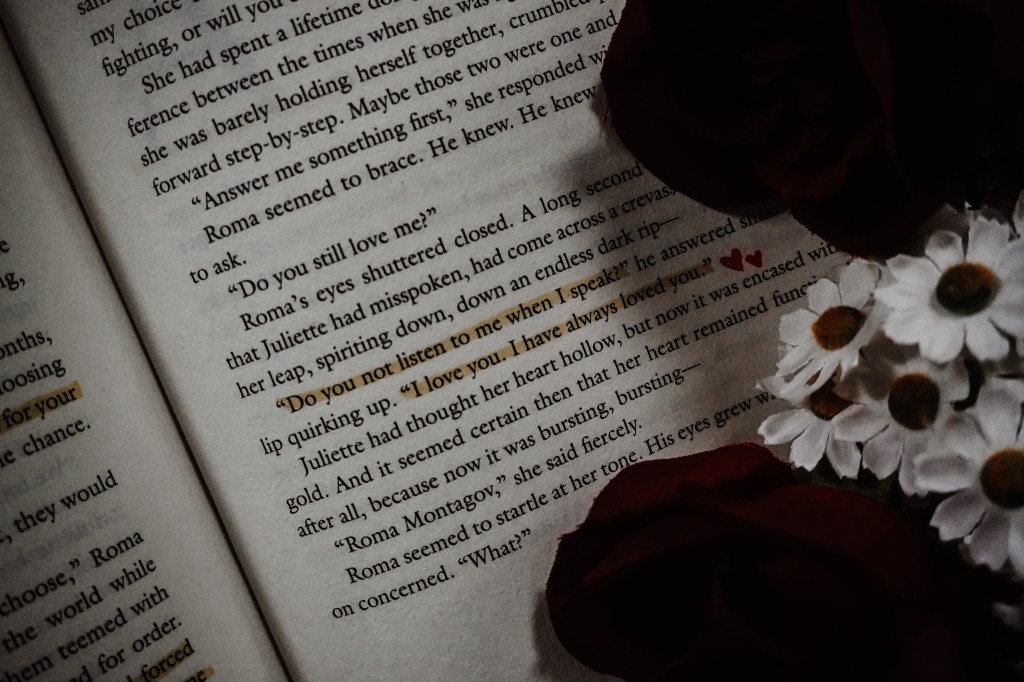
Juliette asks Roma, “Do you ever imagine what life would be like if you had a different last name?” Then, Roma replies, “All the time.”
Gong even gave us a balcony scene, where, instead of a plan to marry, the two star-crossed ex-lovers make a truce to stop the feud between them to save their people. Also instead of a love confession, we get Roma completely laying his heart and desperation out on the floor for Juliette to crush.
“Under the low-hanging light of the moon, Roma was a black-and-white study of sorrow.” (221)
That was my favorite scene. Just exquisite.
There’s also a masquerade ball scene and a nod to the sleeping potion that stops your heart for a few hours.
More than anything, Gong really upped the ante on the original themes of love, family obligation, violence and fate that are presented in Romeo and Juliet. What makes the source text so tragic is how the city and the feud pull at these two innocent children whose only crime is being born with certain last names. But Gong strips away at that innocence and adds layers to the context. Roma and Juliette are criminals, because they’ve had to become them to survive. They were once fighting for peace and love, but are now fighting against their love for each other, for the safety of their people and for their city being pieced apart.
It’s truly a darker, grittier Romeo and Juliet, grounded in historical detail.
I had no prior knowledge about the political throws of Shanghai in the 1920s, and I have to admit that it took me a while to get into this story because I felt that I was too far behind the characters. But that’s my own ignorance at play and not Gong’s writing, so I’m not holding it against the novel. I did some outside research and felt better continuing.
With that being said, I loved how Gong used these historical details as a reflection to her mythical elements.
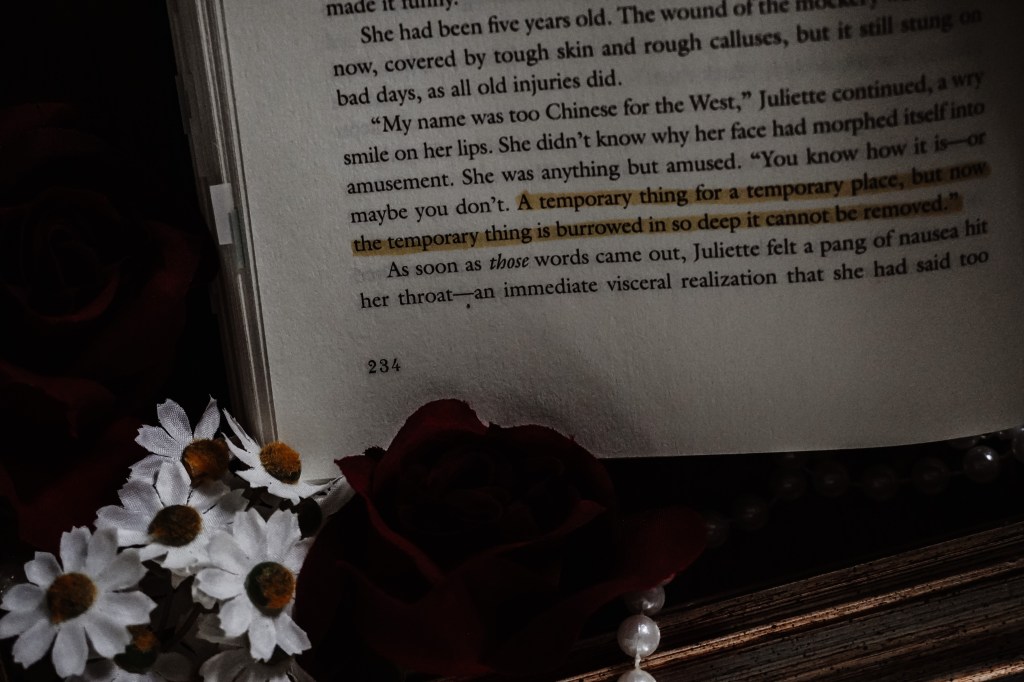
The monster and the madness it brings was imported from a British foreigner with capitalist ideals looking to profit off the violence, which reflects how Shanghai was being invaded and torn apart during this time by the Communists and Nationalists and foreigners looking to stake their claim on the city. Juliette as a character is a walking representation of Shanghai. She was born in the East, but she was practically raised in the West in the United States. Despite clinging to the city she was born in, she wears the flapper dresses of New York and doesn’t fall in line with the Eastern traditions of women at the time. This is also something we see with Kathleen and Rosalind, who were sent to France when Juliette was sent to the U.S.
“He had sent them to the West, where they were taught different ideas, taught about a different afterlife that had nothing to do with burning paper money. The West had corrupted them — and whose fault was that?” (124)
These parents sent their children to the West to protect them, and now they are facing a war within themselves. They have seen a world that doesn’t operate by blood feuds, and they are not fully loyal or on board to the cause outside of their own safety — much like how the people of Shanghai affiliate themselves with the White Flowers or Scarlet Gang for protection and may shift that loyalty to other parties as the city falls apart further.
On another level, the madness/monster parallels the gangs themselves. Before the monster arrived, the gangs were killing each other and the streets were bloodied already. The city was crumbling on its own.
The monster and the madness feels like a red herring to our main characters. Roma and Juliette both had dreams of ending the blood feud and bringing peace to Shanghai as children, but that was set aside in order to fit the mold their parents made for them. They come together to save the city from the madness, while allowing the rest of their gangs to kill each other. That’s the violence they are used to; it’s background noise at this point.
The madness also distracts Roma and Juliette from the pull between the nationalists and communists that is also tearing at the seams of the city.
Meanwhile the older Cais and Montagovs are worried about these things more than the monster, but it’s out of their own pride and self preservation in keeping their hold of power.
Just a side note: The scene where Lord Montagov looks on in indifference as his daughter claws at her throat was infuriating to read. He refused to let the Cais see him panic. He was making a statement. While the Cais may have run to aid if it were their child, Lord Montagov cares nothing even for his own blood. He does not have weakness.
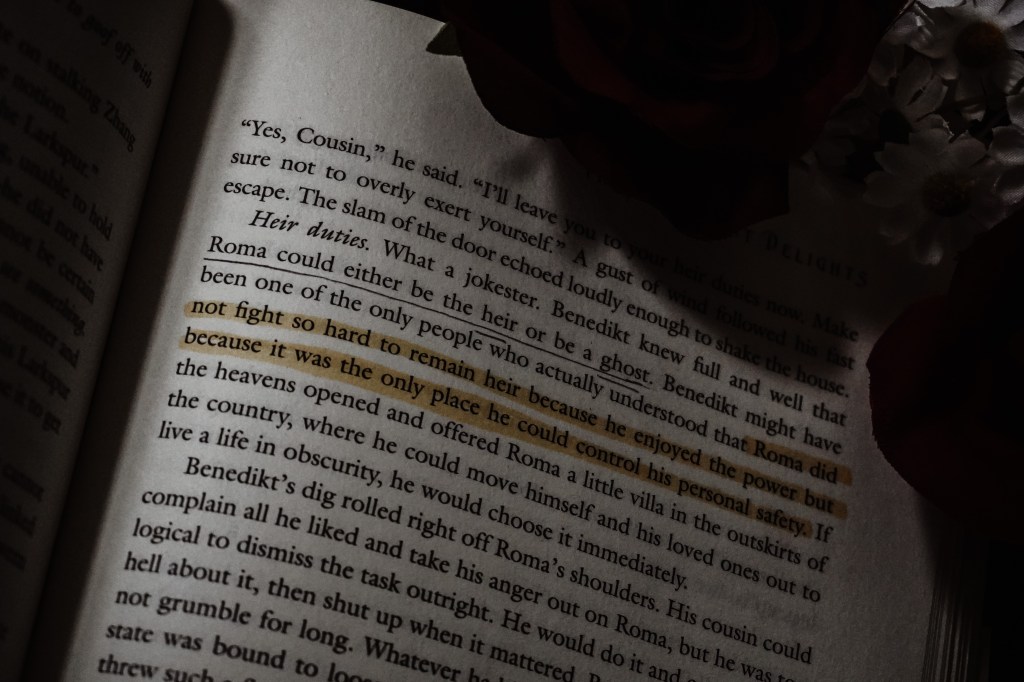
This is what killed Romeo and Juliet in Shakesphere’s work, and it will tear Roma and Juliette apart now. Their parents care more about pride and power than the well beings of their children.
Yes, These Violent Delights is a retelling of Romeo and Juliet, but it does so much more with the concept and story with darker undertones that strip away the facetiousness of the source text.
The best of the best
My No. 1 favorite thing about this novel is Gong’s writing. It’s phenomenal. I still find it hard to believe that this was her debut book.
She pulls readers into and out of the story as she pleases to set the stage with grotesquely beautiful narration. Most of the novel is told via the third-person view of a character; however, there are moments when Gong pulls even further back. She presents the story not from the viewpoint of a character, but a foreshadowing narrator — almost like Charles Dickens in Great Expectations.
This sensation is also reminiscent of the original play, where a narrator gives additional context in such a foreboding way.
However, Gong does it infinitely better, in my opinion.
Come one, just look at this first line: “In glittering Shanghai, a monster awakens.”
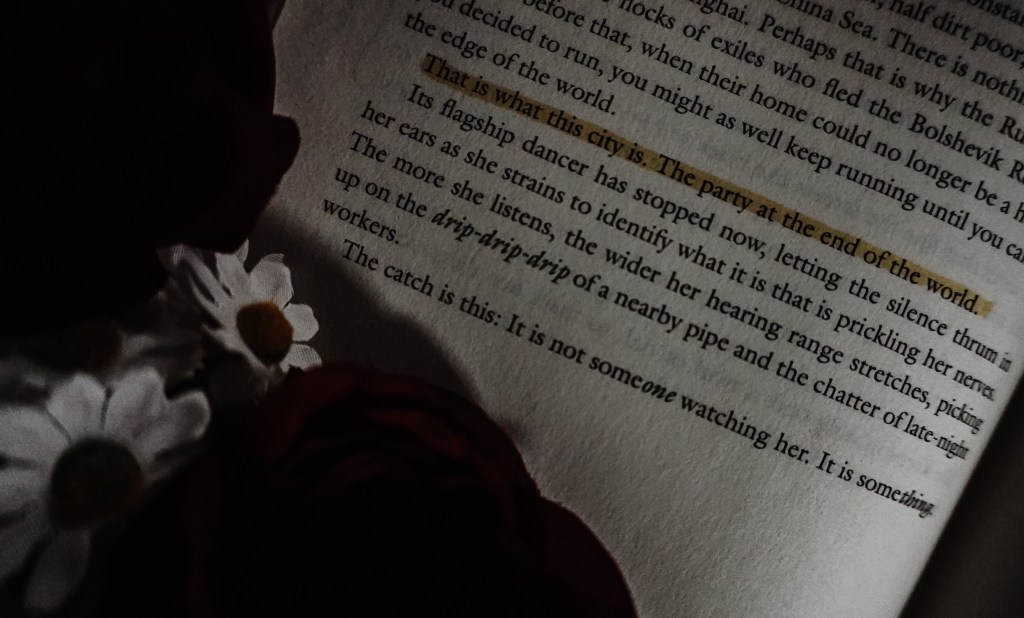
Or this description of the city that just killed me in the best way possible: “When the lights blink on — the buzzing of newly coveted electricity running through the wires that line the streets like black veins — it is easy to forget that the natural state of night is supposed to be darkness. Instead, night in Shanghai is vibrance and neon, gaslight flickering against the triangular flags fluttering in the breeze.”
My favorite instance of this romantic way of writing about this distorted setting was when Roma and Juliette are standing atop the Jade Dragon and looking over the city after the murder of Zhang Gutai.
“These heirs think themselves kings and queens, sitting on a throne of gold and overlooking a glittering, wealthy empire. They are not. They are criminals — criminals at the top of an empire of thieves and drug lords and pimps, preparing to inherit a broken, terrible, defeated thing that looks upon them in sadness.” (392)
It just adds so much to the story, because these are details our characters wouldn’t give to readers. They are ignorant of the brokenness around them. They see their gangs and their rights to heir as this safety net and opportunity. It makes the city a character in itself, and I absolutely love it.
The imagery itself is breathtaking in such a painstakingly beautiful way that just captures my heart and soul. I want Our Violent Ends to take this and run even further. I need it.
A Quick Note
I LOVED the side characters in the book so incredibly much, mostly because of what they add to the story. Marshall Seo and Benedikt Montagov, along with Kathleen and Rosalind Lang, served the purpose of showing readers how the hierarchy of power worked within these gangs. Roma and Juliette extended the safety they were given by birth to their cousins, and, in return, they felt themselves loyal to their future leaders. However, that loyalty has some limits, and we see that when Rosalind refuses to help Juliette at the end of this novel.
“Juliette will never face the consequences to anything she does. We will. We feel every goddamn part of this city when it breaks —” (377)
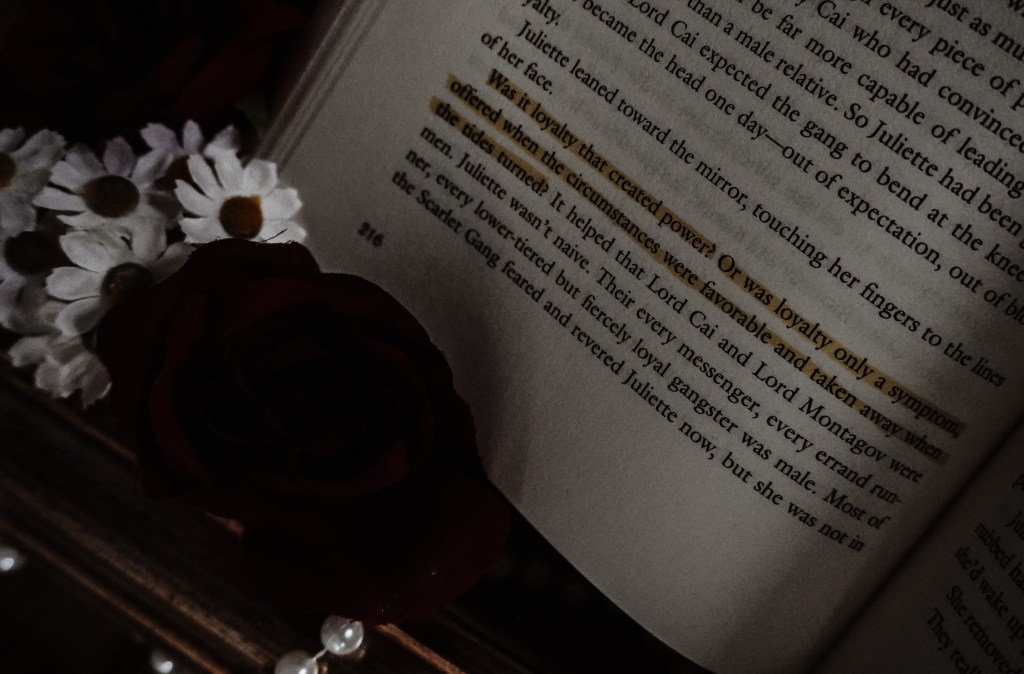
Readers get to see with Marshall, Kathleen and Rosalind this knowledge that their last names are not strong enough to protect them from everything. Particularly in Kathleen and Rosalind’s case, we see that they followed Juliette because they believed she would make the Scarlet Gang and the city better when she came into power.
On the other end of the scale, we have Dimitri Voronin and Tyler Cai, who act as foils to Roma and Juliette. These are two men looking to steal the thrones from our heirs by being exactly the people that Lord Montagov and Lord Cai expect out of their own children. They do not seek to change the gangs or end the feud, they only wish to add fuel to the fire until the entire city burns and they can proclaim themselves the victor.
I can’t believe I’m saying this, but I want more of these side characters in Our Violent Ends. I also want Juliette to stake Tyler.
Official Review
These Violent Delights by Chloe Gong is a fresh and gritty take on William Shakespeare’s classic tragedy Romeo and Juliet.
I didn’t fall in love with this book the way I wanted to; however, it was still a unique perspective on one of history’s favorite couples with a thrilling mystery that had high stakes in its solving.
I really enjoyed the look into the throws of Shanghai in the Roaring ’20s, the way the clash between the White Flowers and Scarlet Gang reflected the city in which they fought for control over, and how Roma and Juliette were both born into a role they’d have to fight to keep.
The writing style is gorgeous and poetic, the literary parallels are wonderfully subtle nods to the source material and the plot itself is solid.
That being said, the pacing lacked and the plot became confusingly muddled toward the end. The pacing issue may be my own recent reading slump speaking. I set this book down for a few weeks. Not enough was happening at the start to pull me in. The pettiness of the pride from the blood feud took over the clues being discovered, and I lost interest.
But, once I picked it back up and got into the story more, I became hooked. The middle section of this book, as Juliette and Roma teamed up for the common cause of stopping the loss of life, was immaculate. I couldn’t put it down.
However, the ending was almost too quick. There’s too many twists that happen far too quickly to allow readers to follow along. I had to reread a couple sections twice to make sure I understood who I should be pointing a finger at.
Through everything, the characters carried the story. Roma and Juliette as star-crossed lovers painted in blood were phenomenal, Marshall and Benedikt stole my heart with their silly edge and Kathleen and Rosalind made me think about loyalty.
I didn’t fall in love with this book. It won’t keep me up late at night thinking about the words, no matter how beautifully they were written. But, there’s a lot of potential looming for Our Violent Ends. I want it to shatter my soul and give me no other choice but to love it whole-heartedly.
Also, how is this Gong’s debut novel? That’s insane.
These Violent Delights gets 4.5 stars out of 5.


 Life of Bry
Leave a comment