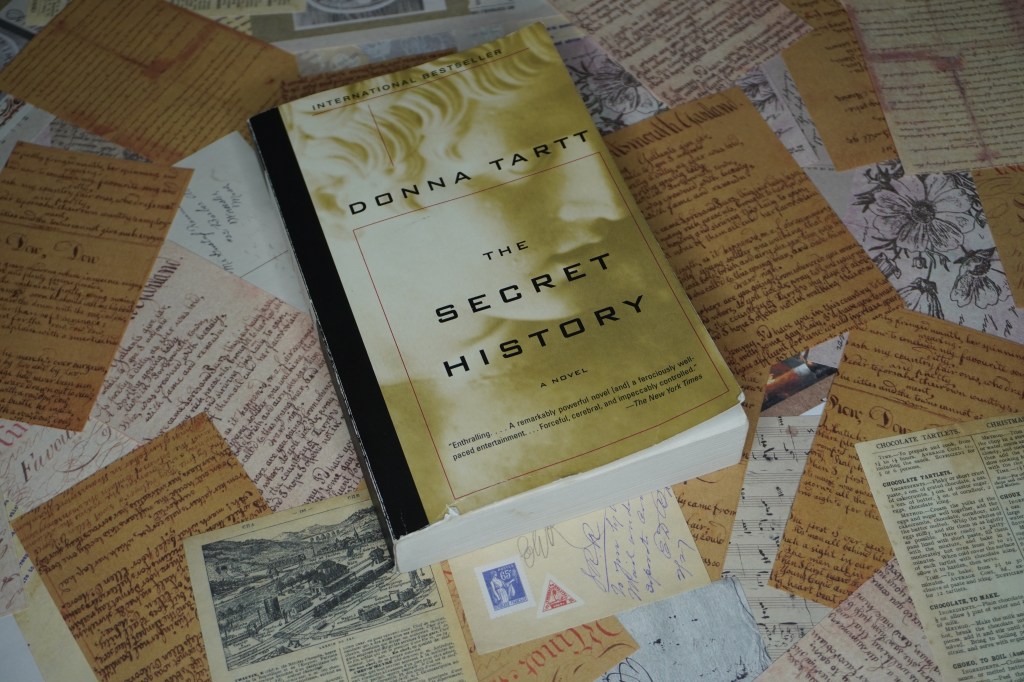
All my thoughts: The Secret History by Donna Tartt
“Forgive me, for all the things I did but mostly for the ones that I did not.”
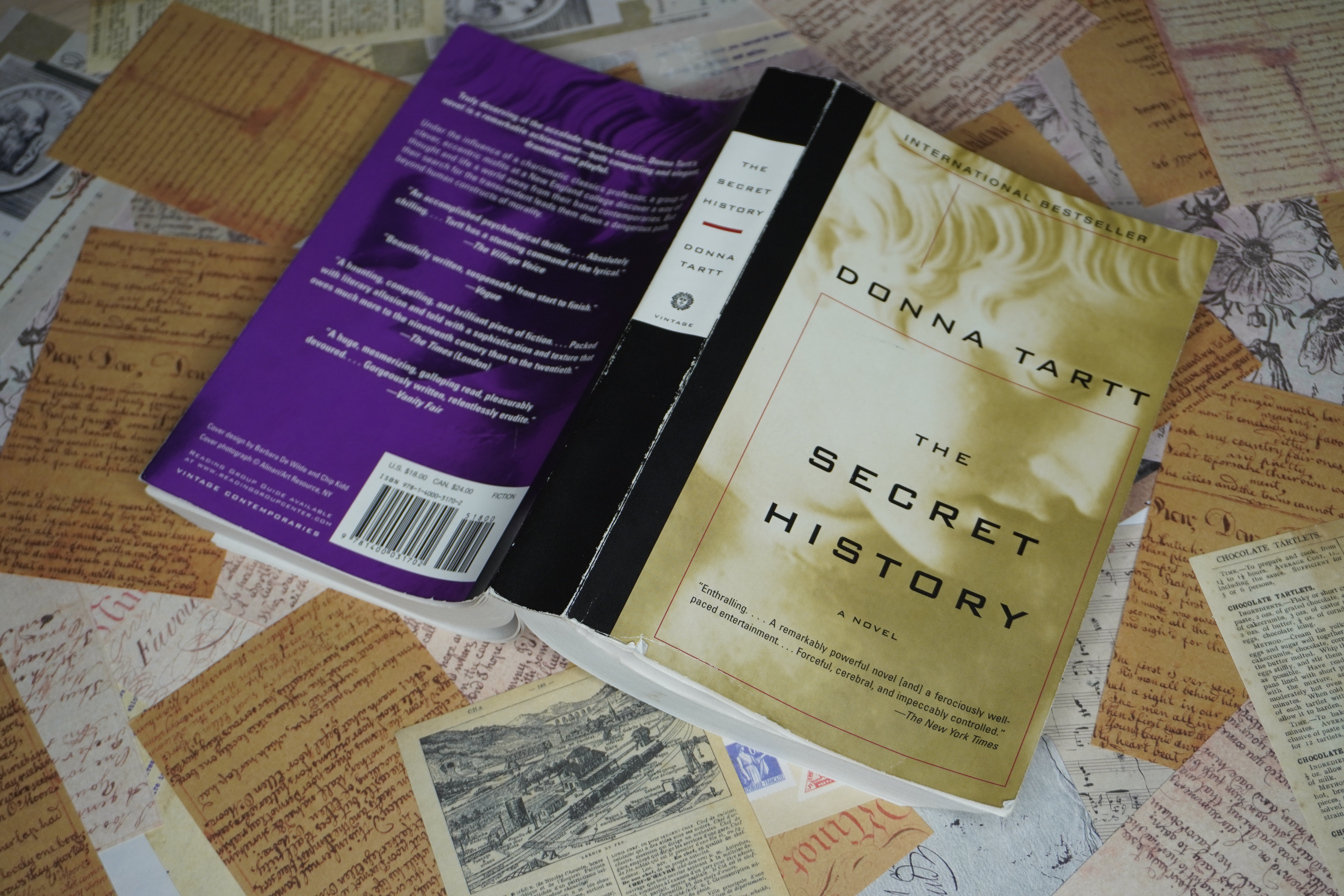
The Secret History, Donna Tartt
5⭐️
Now I know why they call this book a modern classic.
The Secret History by Donna Tartt is an atypical murder mystery following a group of classics students at the prestigious Hampden University after they murder one of their own.
Tartt’s writing is stellar. I loved the narration. It was sophisticated but aching with the rawness of the guilt dripping from our narrator. Richard is an unreliable narrator. He tells us himself. He’s aware of his own biases. And that self awareness is so fascinating. It’s as if the guilt has worn away at his ability to continue lying after all this time. It’s a push and pull between a Richard wanting to keep the secret and a Richard who needs to spill his guts. It helps consistently trigger the theme throughout the novel of appearance vs. reality as Richard tries to paint their actions as justifiable against his own leaking conscience.
I really loved that theme, as well. It weaves itself throughout the entire novel. That idea that nothing is as it seems — especially not our characters. And the theme is such a slow trickle into the narrative. From Bunny’s falsified wealth to the group’s underlying rot. The line between morality and amorality is blurred and readers have to dig into the story to see for themselves.
Also, the characters. Just the characters. I personally am obsessed with unlikable characters. The worse they are, the better. Each one of our main characters is horrendous. They are manipulative, immoral, classist, bigoted and selfish. I love them all. They are so multifaceted and interesting, and it makes it even better to have them interact. Because there are moments of genuiness (or at least it seems) like Henry sitting at Richard’s bedside in the hospital or those days at Francis’ country home. But also there’s so much manipulation, you can’t even trust those moments. It’s wonderful.
Overall, The Secret History is perfection on page. A beautiful piece of prose that haunts the reader long after they turn the last page.
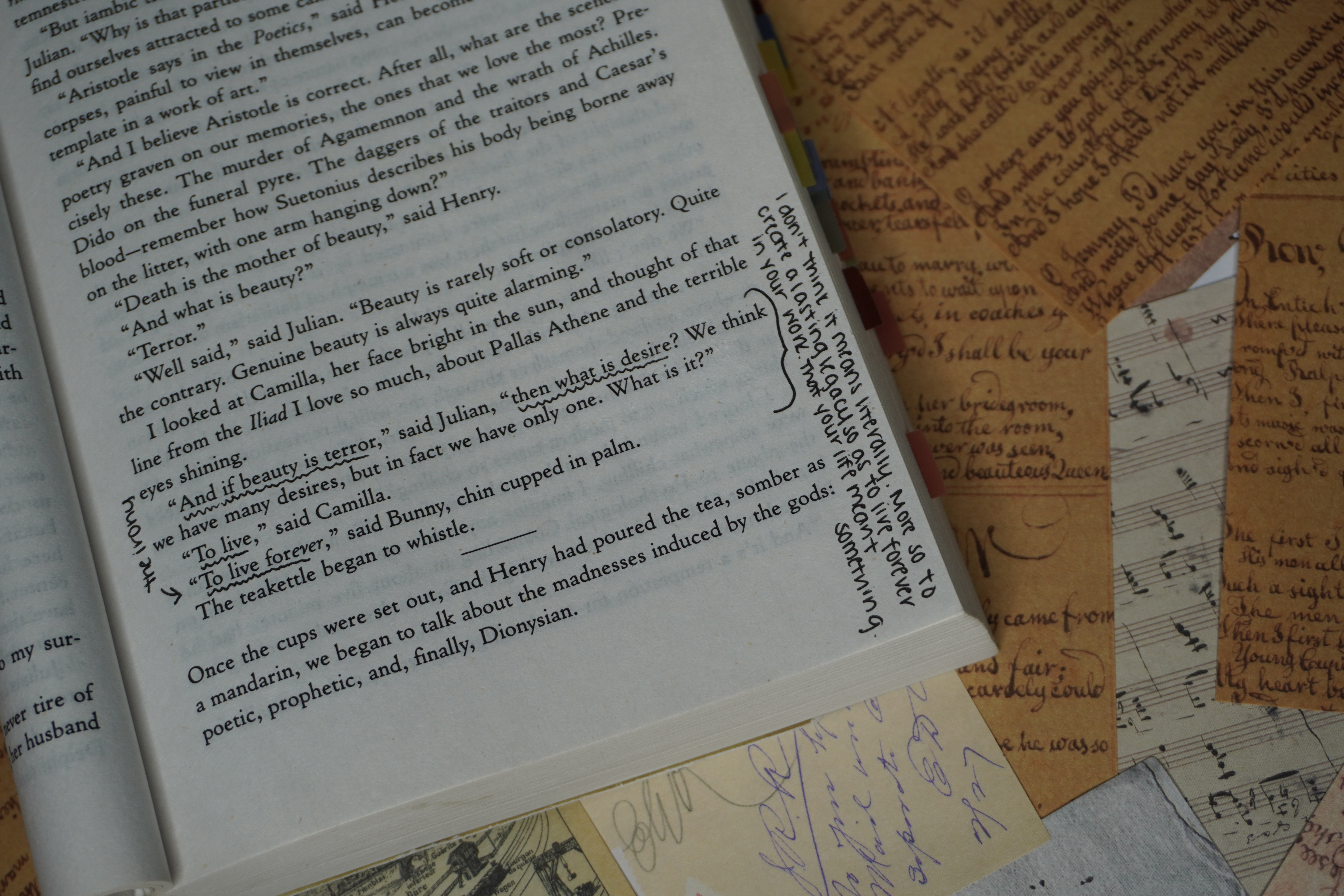
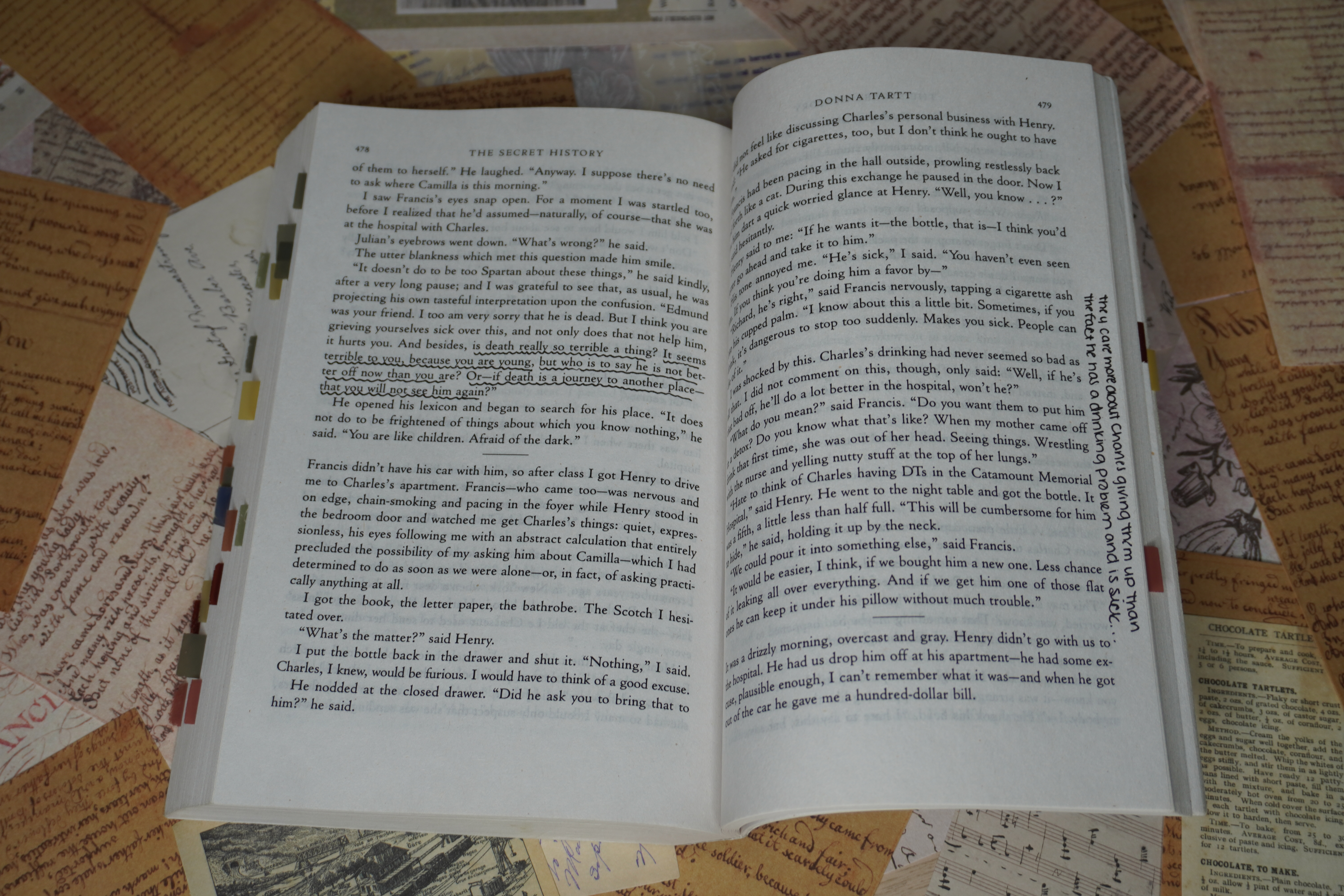
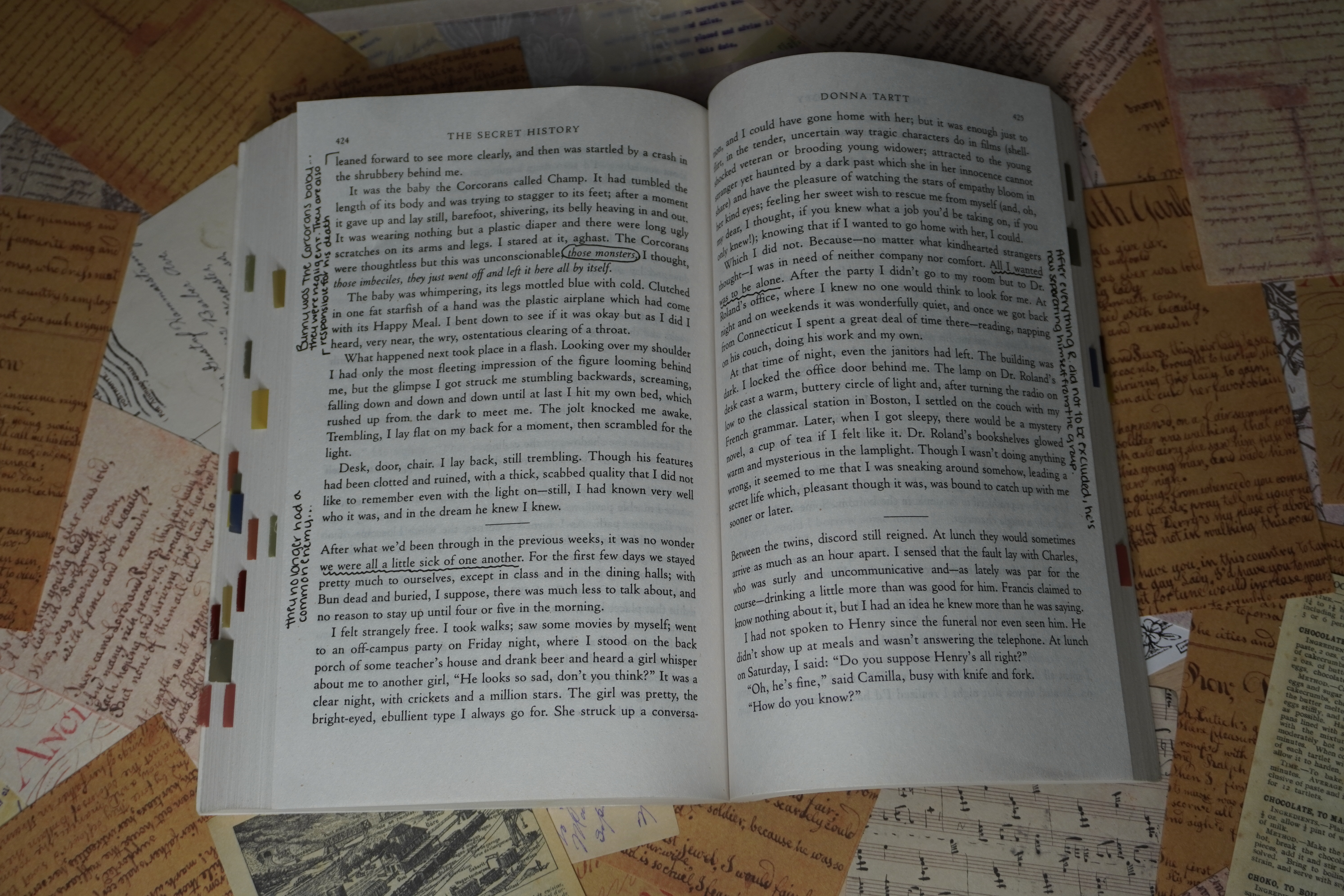
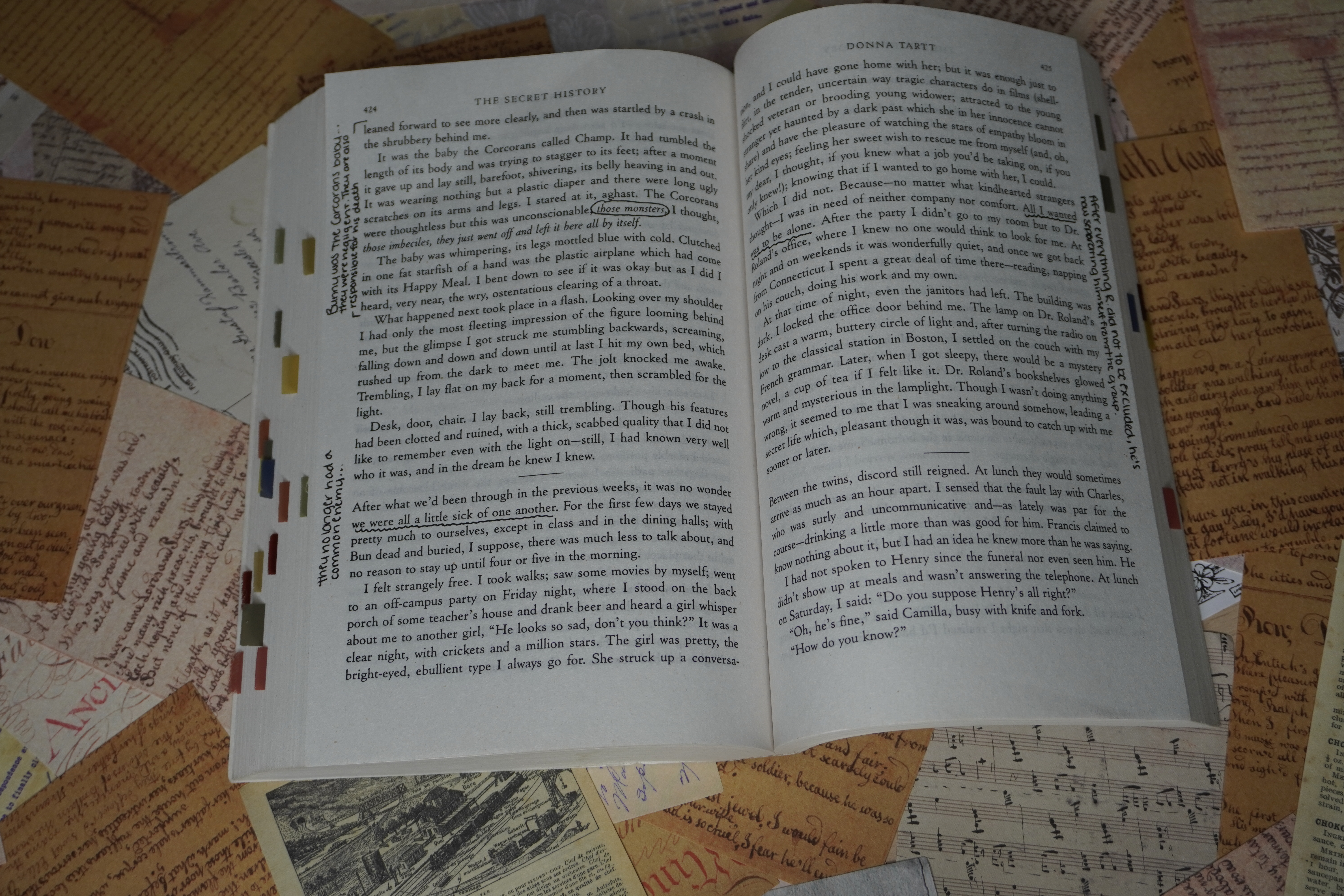
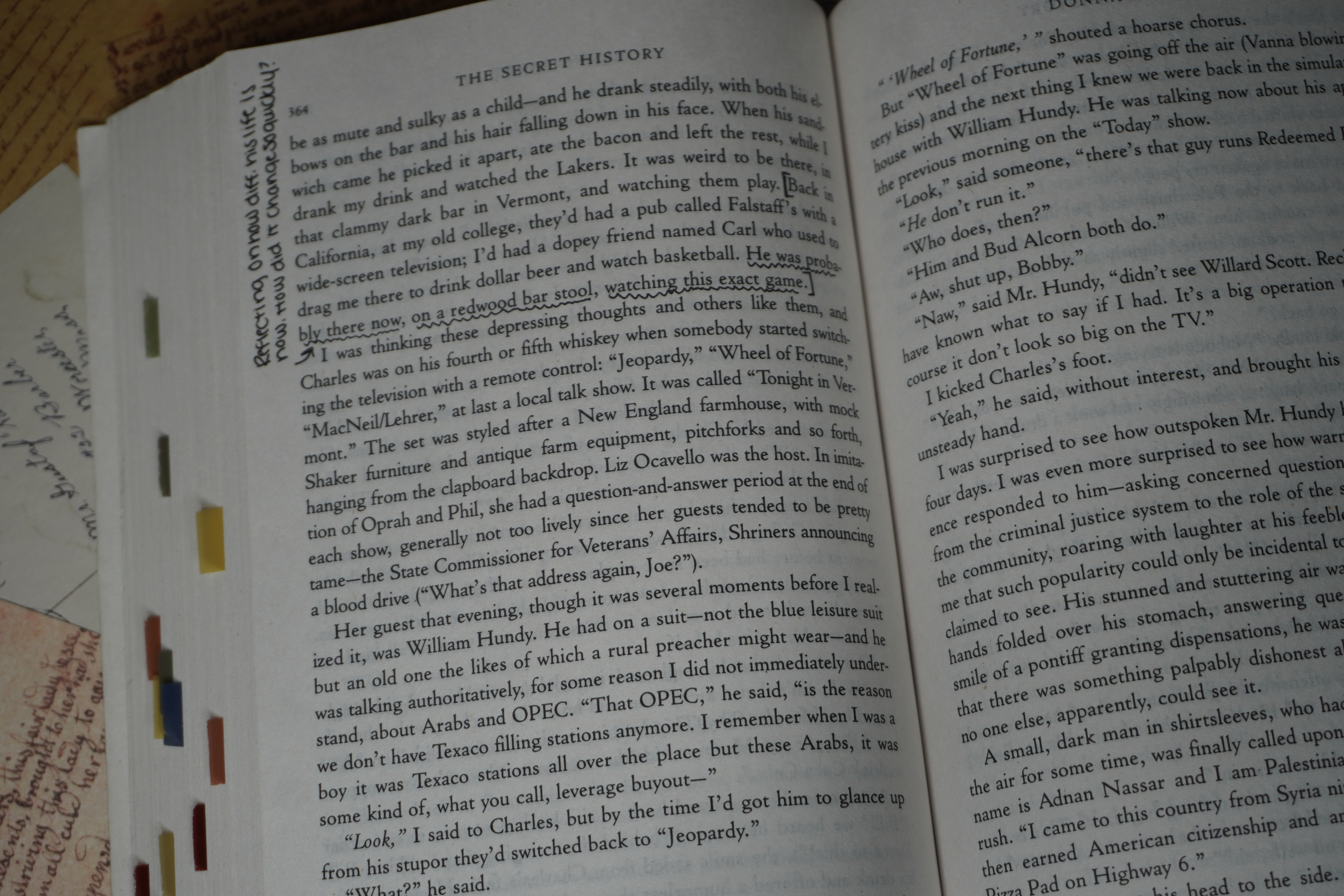
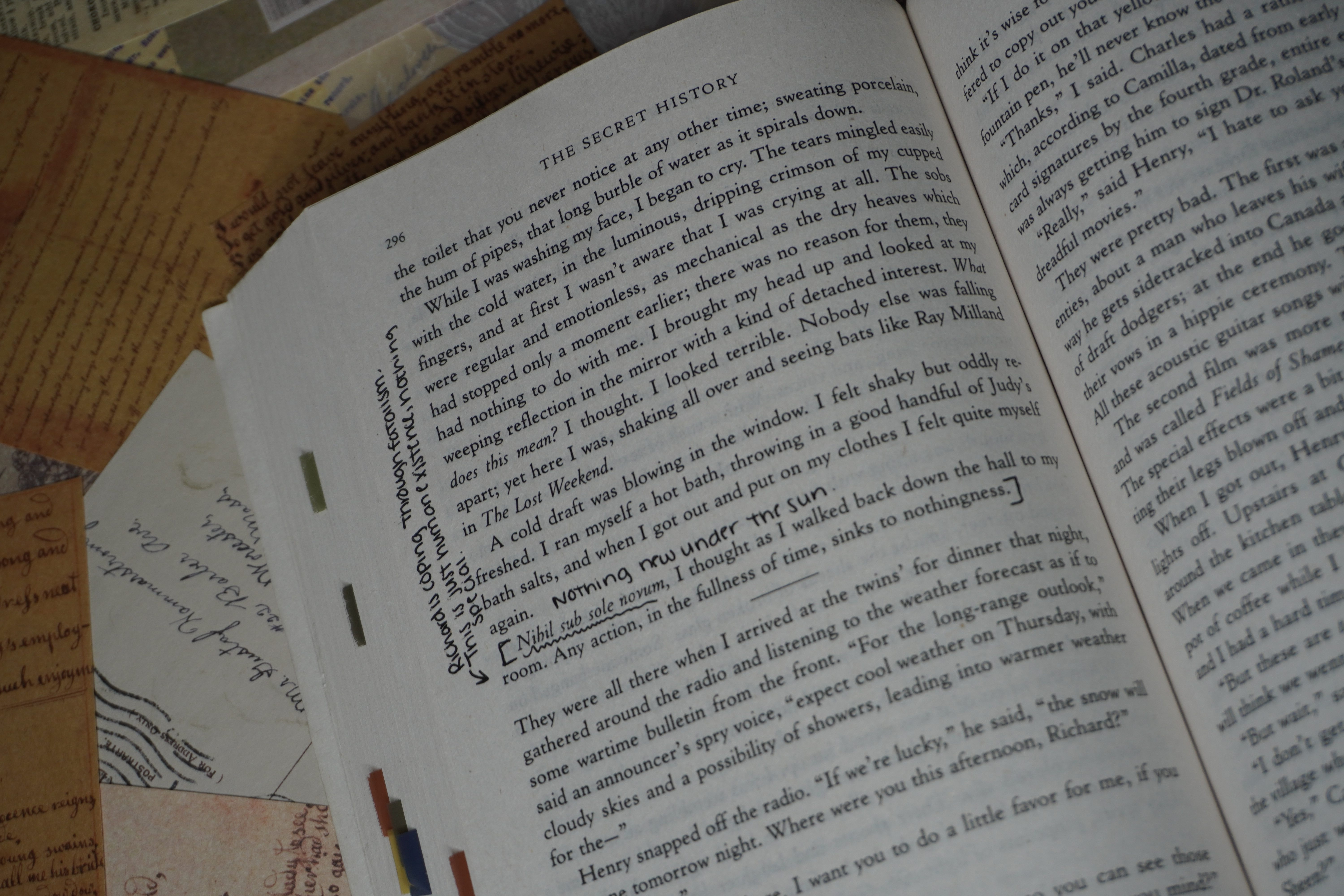
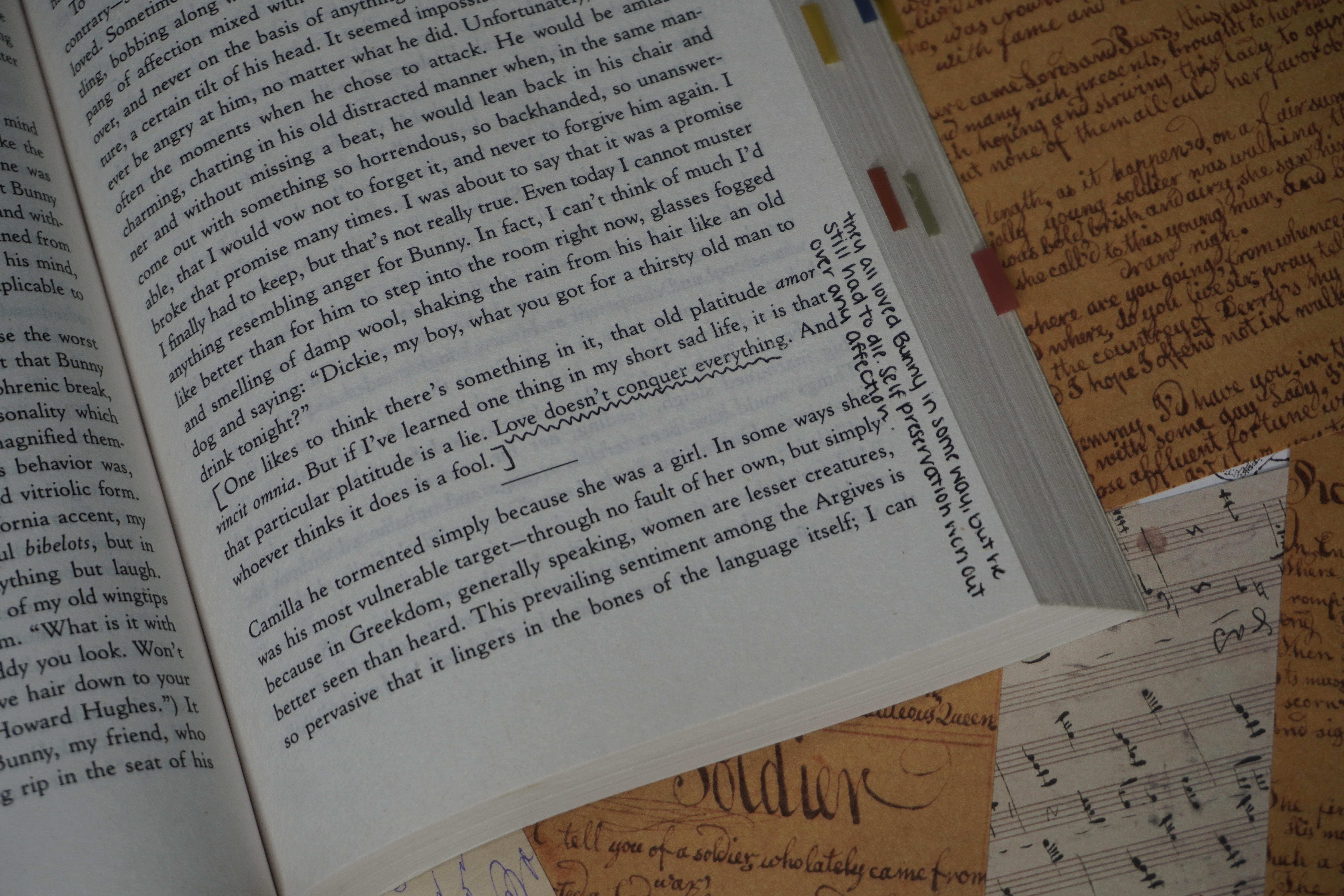
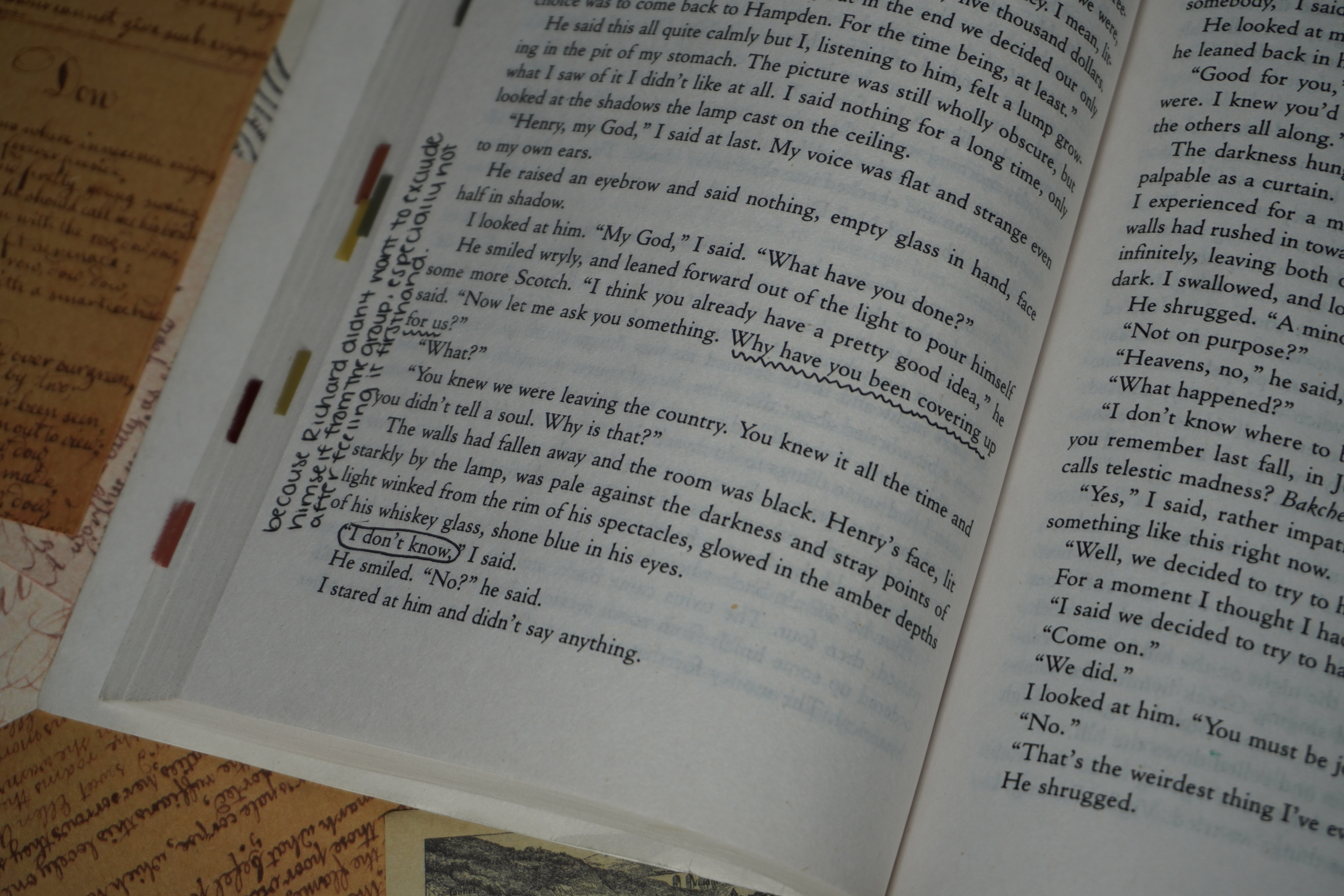
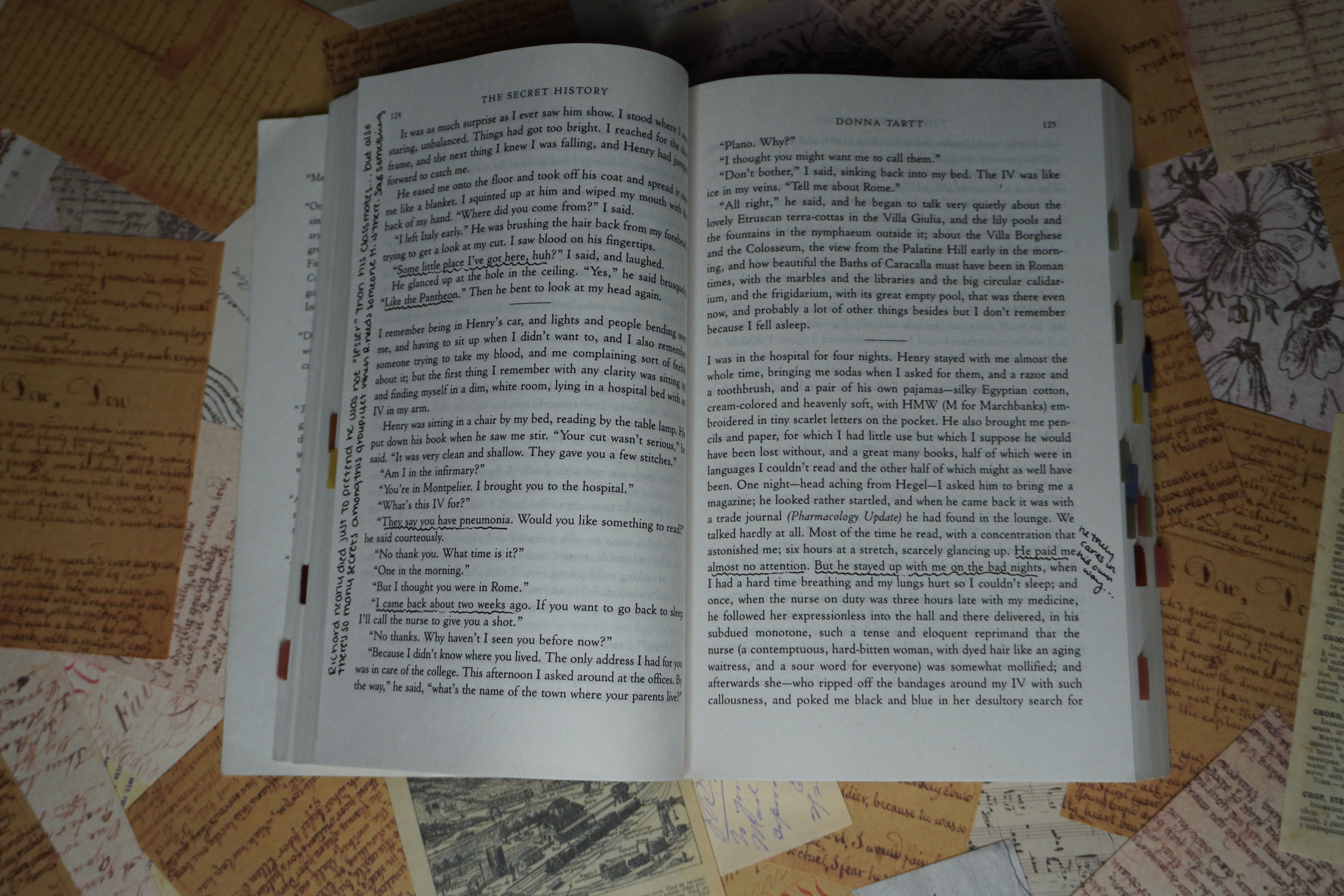
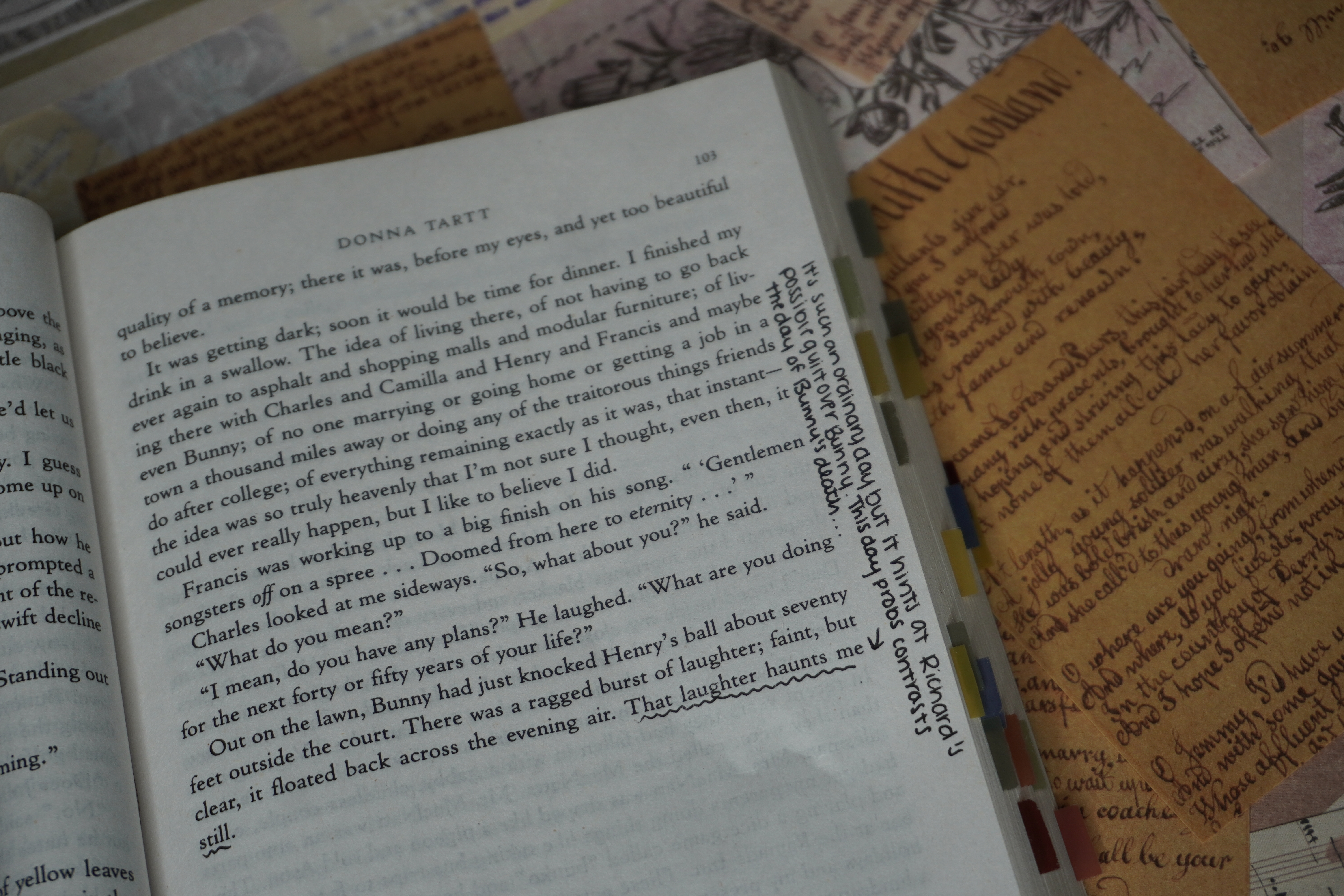
I wrote four pages of notes while reading, so here are all my thoughts on The Secret History by Donna Tartt:
- I love the twist that this is a “whydunnit” instead of a “whodunnit.” It adds a different kind of suspense to the narrative.
- Richard immediately paints himself as an unreliable narrator. We know he’s unafraid to lie.
- Richard is clearly enthralled by beauty and the extraordinary. He hates his mundane upbringing to the point he erases it. He chooses Hampden because of the brochure. He’s drawn to the exclusivity of Julian’s classes. He seems to be a very shallow person.
- I think every one of Julian’s students are yearning for something, to be something. And they find it in the exclusivity of their group and studying Greek. It allows them a sense of more, of betterment. For better or worse.
- Bunny is broke, but he uses his previous status to point out Richard’s flaws to make himself feel/look better.
- I’m starting to get why they killed him.
- You can tell Richard still feels guilty over Bunny. Or maybe what was lost. Those dreams they had of living in the country house together, of living forever.
- Richard would rather die than ask for help. Shows his priorities. He puts status above survival. He doesn’t want to be alienated from his group.
- Despite the sense of indifference among the group, Henry takes care of Richard. I’m not sure if it’s out of the goodness of his heart or if he knows he can manipulate him.
- Bunny is so ignorant … but is he a villain? Does he deserve to die?
- He exposes people’s insecurities and uses it to his advantage. Probably because he’s so aware of his own. He’s deflecting.
- I think the rest of the group knows the hold they have over Richard, and that’s why it’s OK he knows about the murder … especially after winter break. He was willing to die to not prove himself lesser.
- Henry coursing on the bacchanal more than the murder itself is so telling. These kids only care about their own search for pleasure. Because they killed a farm, who they see as less than, they see it as an afterthought. They care more about avoiding consequences than this man’s potential family.
- Of course Julian knew his students were trying to do this. He gives me the creeps.
- I love when the tone shifts with the season. Winter brings darkness.
- Richard is trying to justify Bunny’s murder by describing him in the worst light possible.
- Sure, Bunny is cruel and unlikable but that doesn’t mean he deserved to die.
- It’s ironic how Bunny doesn’t actually care about the murder, but about leaving him out of it; and how he tries to use the knowledge as leverage within the group but only alienates him further.
- it’s never about the murder, it’s about the power dynamic in the group.
- Bruh … Richard only cares that Henry’s plan to poison Bunny might not work, not that they’re literally gonna kill their friend.
- the decline of morality is a domino effect.
- how are they being so chill about this? The farmer was a stranger, an accident … Bunny is a friend and they’re planning this.
- The investigation shows the moral rot within the campus/community. The students are a product of their environment.
- but also they can hide behind the community’s bigotry and their own privilege.
- Everything played out just as planned but also not at all how they expected. Bunny still goes for his walk despite going to the party, and Henry kills him but the weather doesn’t allow for them to find the body. Almost like it was fate for Bunny to die.
- Richard doesn’t say who pushed Bunny, almost as if by doing so, he’s sharing the blame amongst all of them.
- Does it really matter who bushed him in the end? They are all complicit, all responsible. A burden they have to share.
- The thing is, Richard didn’t need to be. He didn’t kill the farmer, wasn’t even there; but he was complicit in keeping it a secret and that’s on him but also Henry.
- How people react to Bunny’s death brings home the theme of reality vs. appearance. They only knew Bunny on a surface level. They mourn that person; the one they saw but didn’t really know. The idea of who Bunny was.
- Our gang isn’t used to moral qualms. They can escape physical consequences with their intelligence, but not evade their own consciences.
- You can tell Bunny was a product of his home life by the way his family acts leading up to his funeral. His parents, especially his mom, are more worried about appearances than their son being dead.
- It honestly makes so much sense Bunny being the way he was. And it makes him a more sympathetic figure. I feel bad for him being raised in such a cold environment.
- The funeral is torture. Eating me alive like I’m the one who murdered him.
- Henry reading one of Bunny’s favorite poems says so much. It’s about the loss of youth and the impermanence of beauty. While Richard sees it as poor taste, it’s a perfect reflection of Bunny’s clinging to his falsified show of wealth to make up for his lack of intellectual advancements. It obviously meant something to Bunny, as well, because he knew it by heart.
- It makes sense the group splits apart. They are a constant reminder of what they’ve done. It adds to the guilt. They can’t escape it. But they can escape each other to some extent.
- Even Richard, who nearly died last time he “lost” the group, is separating himself (and finding some peace in it).
- We get another shift in mood with the seasons. Spring brings a lightness and newness. But it’s not as it seems. Guilt is still lingering under the surface.
- It takes so long for Richard to realize he will never be rid of this group or this feeling. They aren’t used to consequences. And especially not ones you can’t buy or smart your way out of. They expected to get away with murder completely clean. Again. They didn’t consider their own consciences.
- They’re realizing the exact thing they thought would keep them safe — their appearance as five wealthy, well-educated college kids — actually makes them look suspicious.
- especially Henry, who is very careless despite how intelligent he is.
- As the group loses themselves to guilt, Richard can finally see through the cracks into reality.
- Henry repeatedly used Richard to do his dirty work, like bailing Charles out of jail.. All of them used RIchard by exploiting his need to be included but Henry manipulates him beyond belief for his own personal gains. He even tells him about the first murder to make him a scapegoat. It’s disgusting.
- Henry’s suicide is so interesting. Because you’d think it would be because he’s consumed by guilt, but Richard says he looks triumphant. Maybe because he’s gonna get away with everything. Or perhaps because of the sacrifice. He can go out protecting his friends to clear his own conscience, but also it’s a perfect ending for a Greek tragedy. He can be a tragic hero. But he’s not a hero…
- Also, I think Julian fleeing broke Henry’s hearts, and he didn’t want to be a coward.
- Henry not dying immediately really shows his character as a whole. He appears so intelligent and put together, but he’s really a mess.
- Even though they all separate and move on, they also can’t let each other go completely, just like how Bunny’s death haunts them forever.
- Richard realizes Julian’s the puppet master of everything. He’s the one who pushed and isolated his students to seek enlightened beauty and search for pleasure above all else. He even encouraged the bacchanal. Maybe that is why he fled. It was his own guilt.
Make a one-time donation
Make a monthly donation
Make a yearly donation
Choose an amount
Or enter a custom amount
Buy me coffee ❤
Your contribution is appreciated.
Your contribution is appreciated.
DonateDonate monthlyDonate yearlyLatest Posts
- All my thoughts: Heated Rivalry by Rachel Reid
- All my thoughts: The Last Olympian by Rick Riordan
- Book Review: Caraval by Stephanie Garber
- All my thoughts: The Battle of the Labyrinth by Rick Riordan
- All my thoughts: The Court of the Dead by Rick Riordan and Mark Oshiro


 Life of Bry
Leave a comment