“We lead strange lives, chasing our dreams around from place to place.”
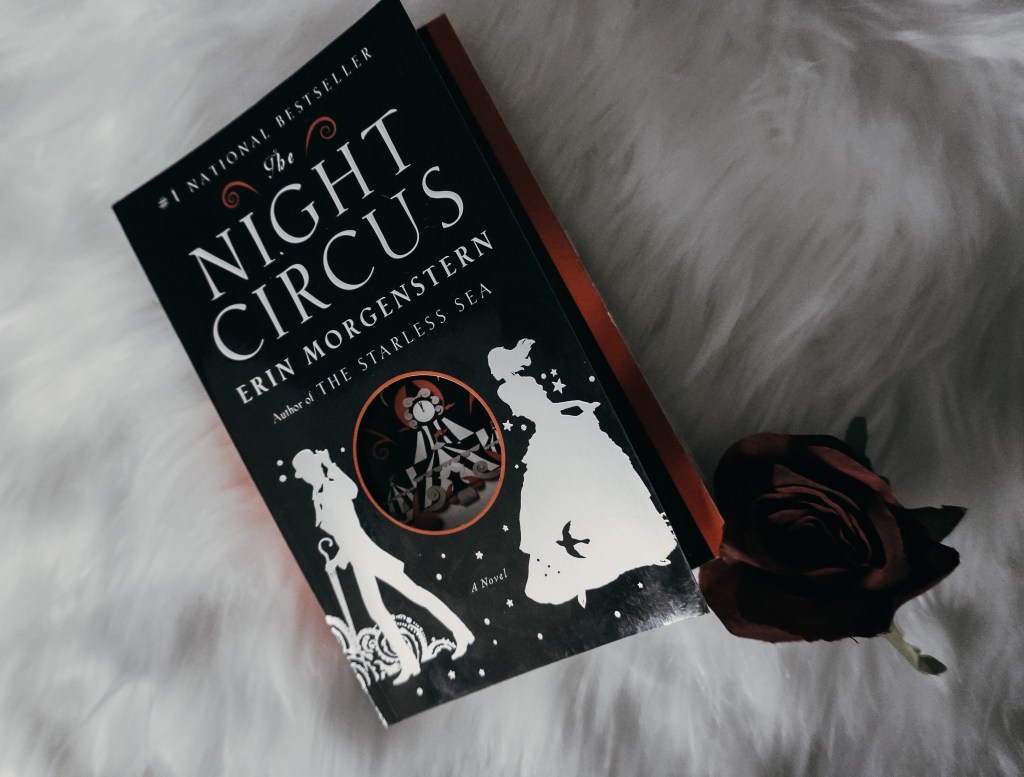
The Night Circus, Erin Morgenstern
I’m conflicted again.
The Night Circus by Erin Morgenstern is an incredible and unique concept confined within a larger-than-life circus where dreams and reality collide. Two young magicians, using old and new forms of magic and training, are raised for a duel to the death without knowing the rules or consequences until they’ve already fallen in love. While the pace is slow and the plot lacks a climax worthy of the tension created, The Night Circus is full of gorgeous imagery, wondrous writing, fascinating and extraordinary characters and a story that is magically intricate. My only downfall with this book was I was waiting for something more extravagant, but that wasn’t the point of the story. It wasn’t about flashy magic, it was about time, endurance and the fight for free will in a sealed fate. I just personally had trouble being satisfied with that fact because the setting was made for more action.
I’m behind on writing reviews/analyses, so I’m going to make this one quick … and probably full of typos. Forgive me in advance.
Here are all my (condensed) thoughts on The Night Circus by Erin Morgenstern.
Spoilers ahead!

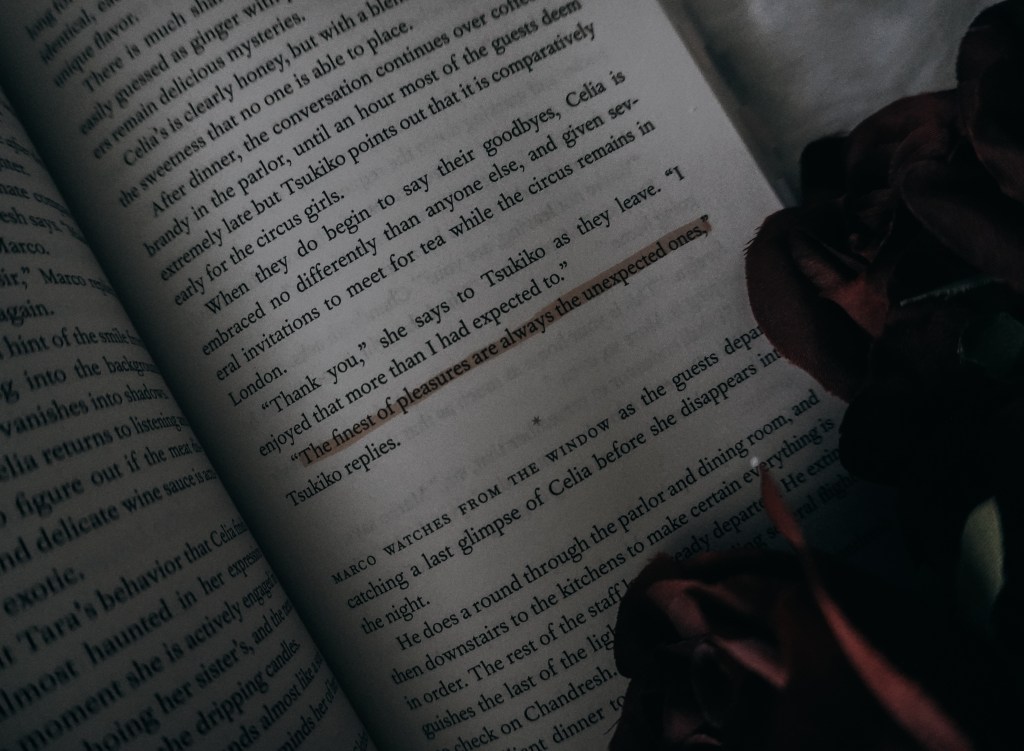
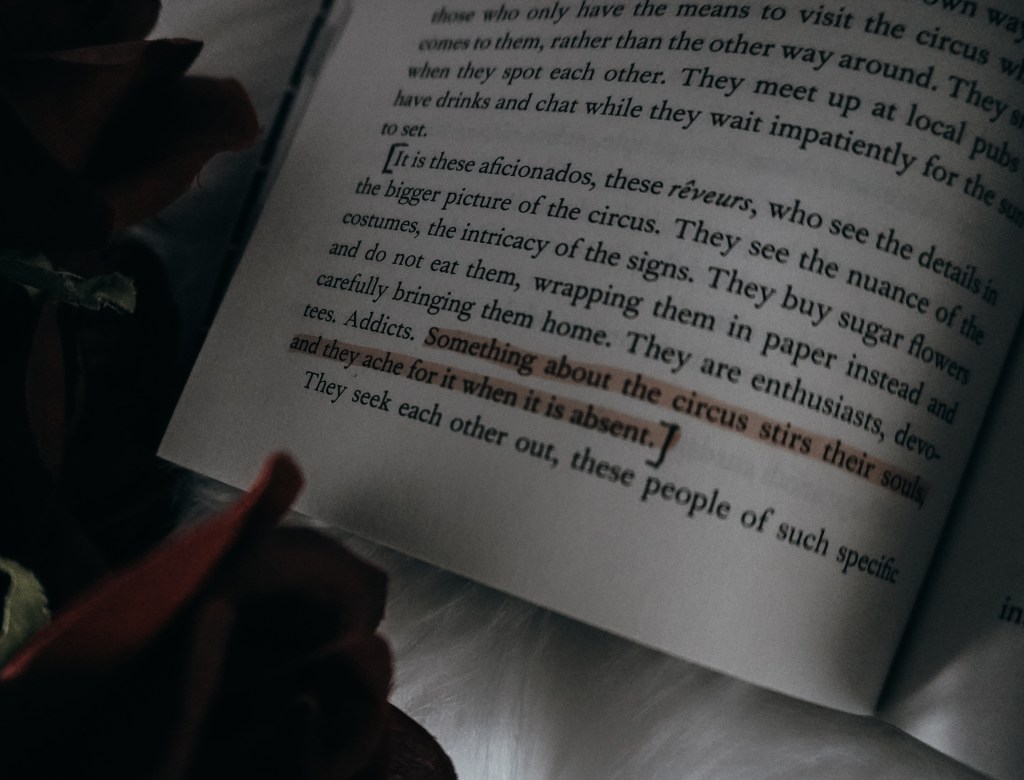

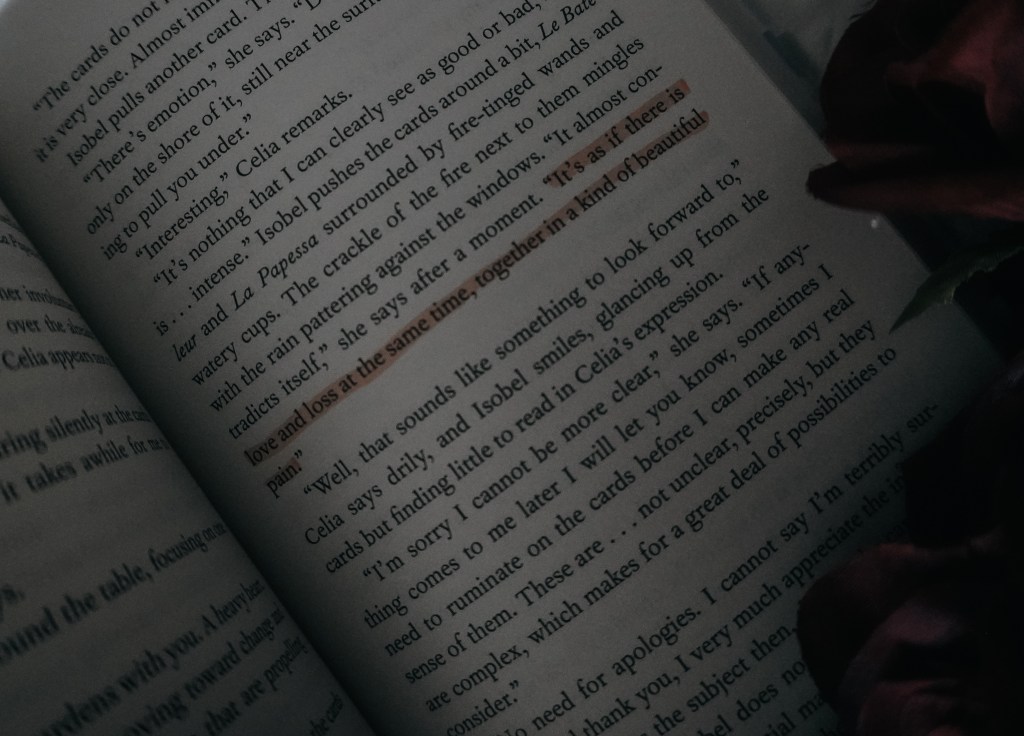
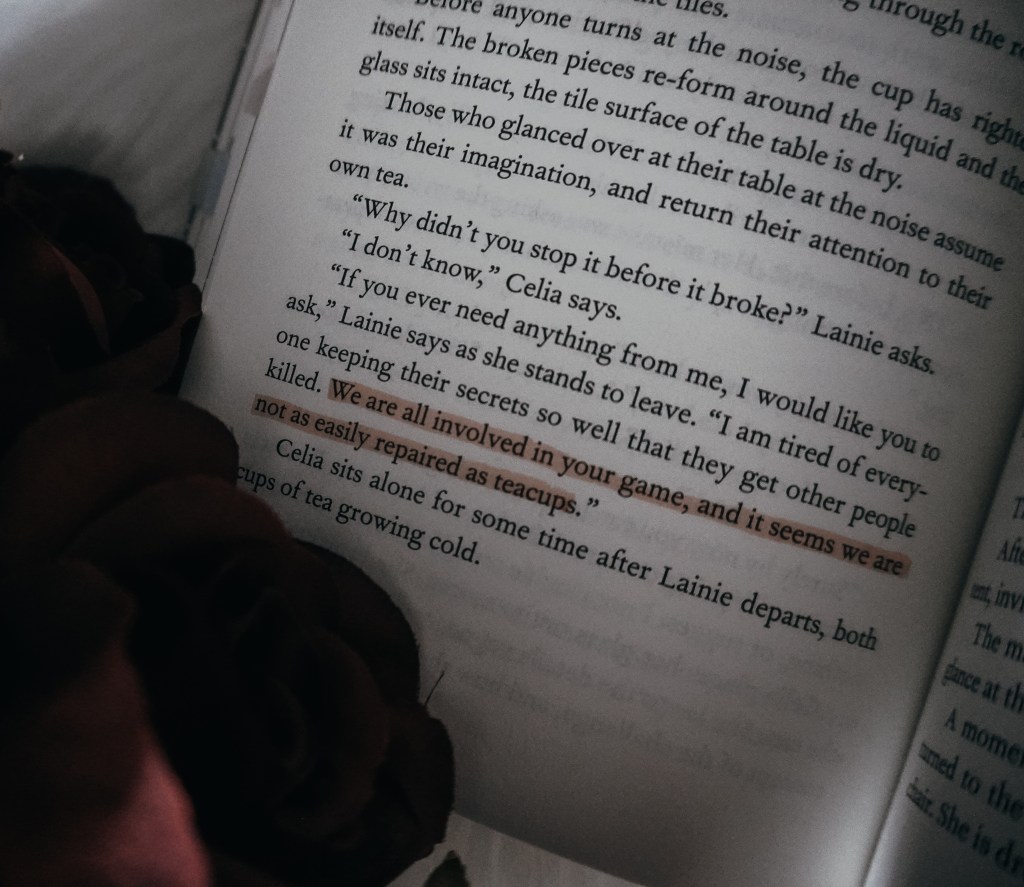
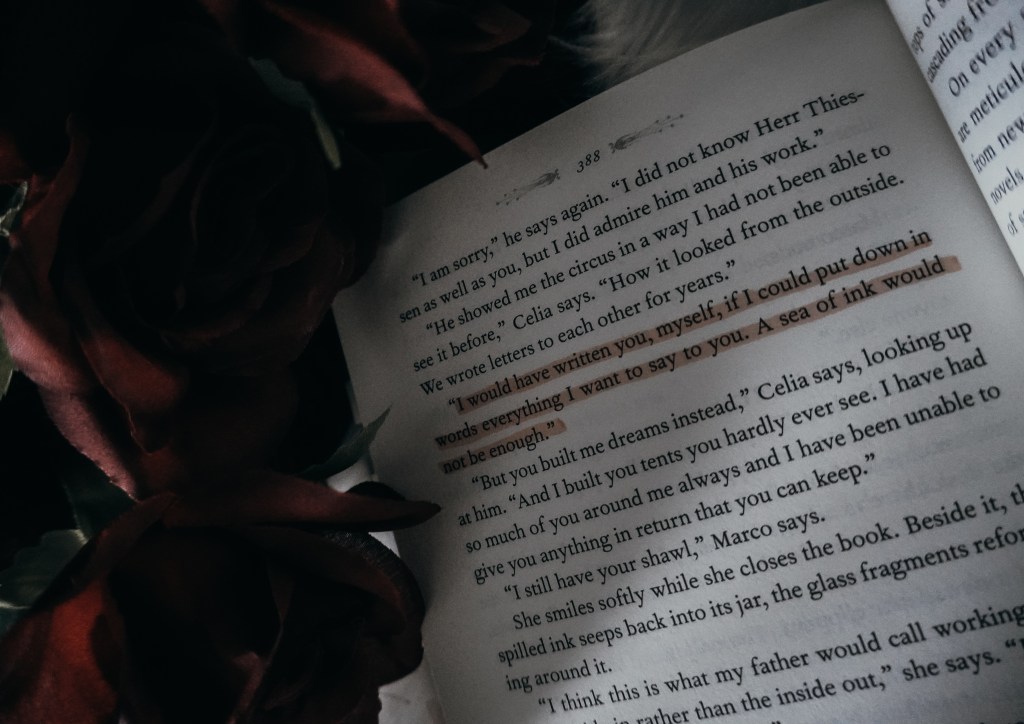
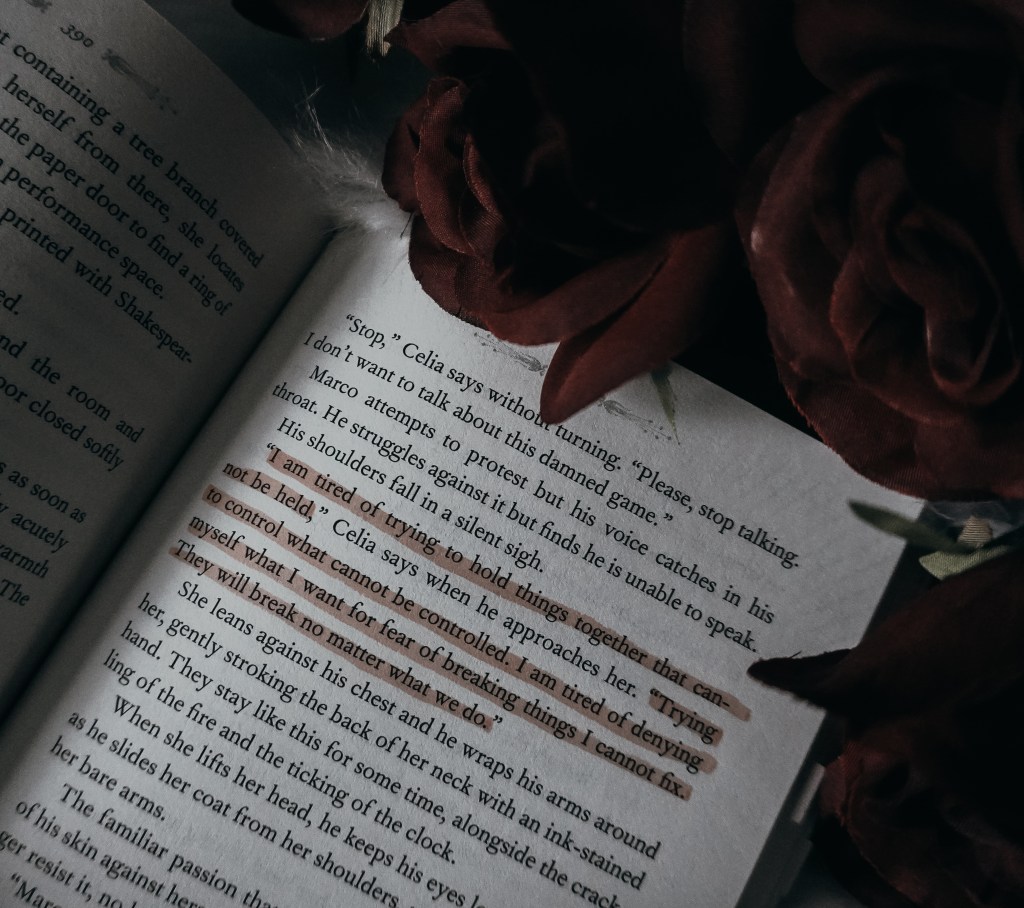
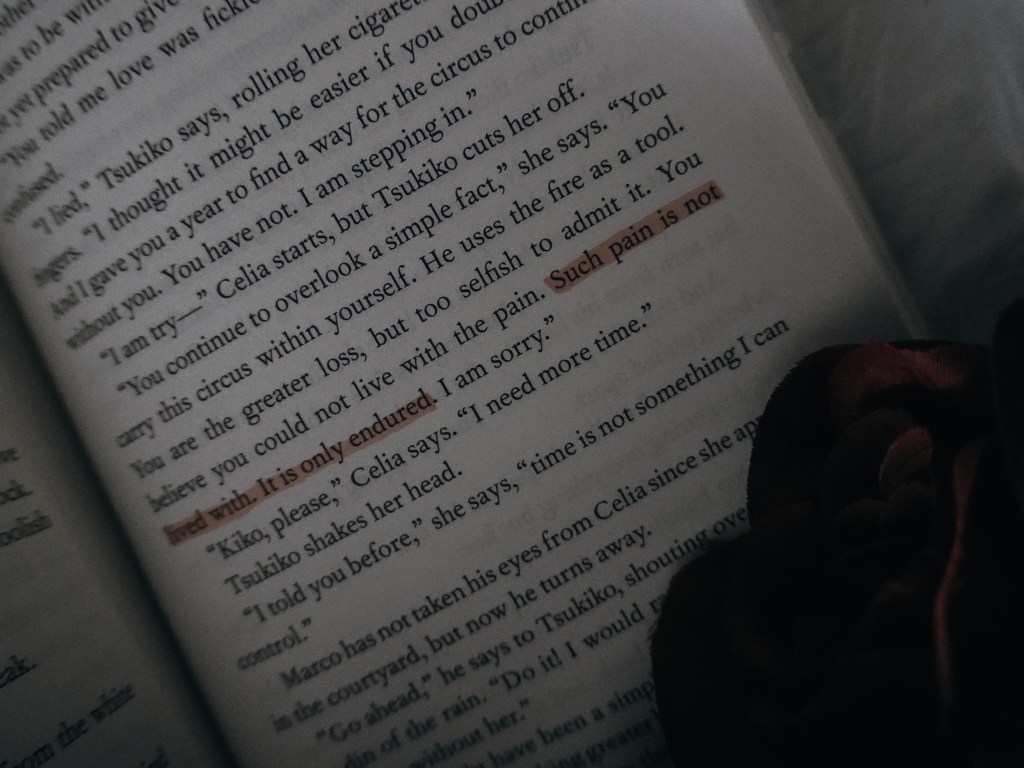
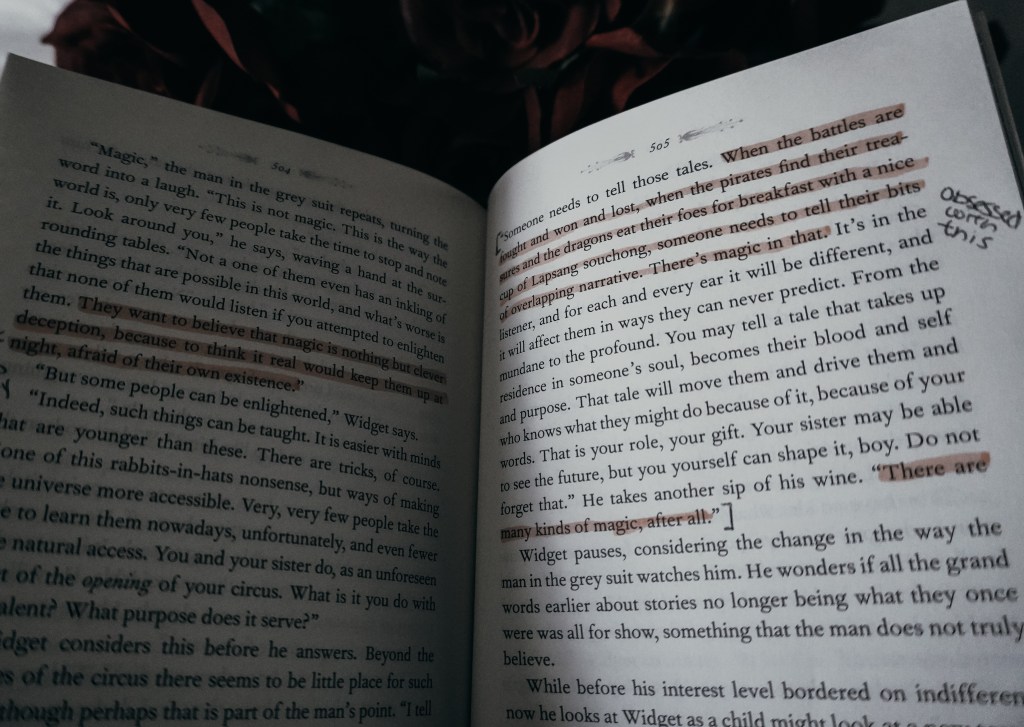
The structure of this book was absolutely phenomenal. I was obsessed from the beginning to the end with how Morgenstern formatted this story. When you look at it in black and white, it can easily become confusing. It’s not a linear timeline and readers are thrust from second-person POV to third as the story bounces around years and characters and plot lines. However, Morgenstern made it work. The sections which end up being Widget’s story to Alexander, were so incredibly immersive in bringing the circus to life throughout the novel and wrapped up everything so poetically. The way the story shifted between years as it went from Marco/Celia POVs to Bailey’s made the setting feel more eternal and added to the theme of time being uncontrollable and unreadable despite all the talents to see glimpses into the future and past.
I’m personally so fascinated with how authors decide to structure their stories, and this was the most interesting way I’ve encountered in a long time. It was flawless.
The circus itself was such a fun stage for the setting and did so much for the story just by including more damage in this duel. We learn that Tsukiko was the victor of the last dispute between Alexander and Hector, but her stage was much more intimate. That’s important because just as she fell in love with her competitor, the only people to suffer were the two of them. That suffering sticks with Tsukiko as a survivor with nobody to share that pain with who understands. Whereas, Marco and Celia’s actions affect not only themselves, but everyone who works within the circus or attends. There’s more consequences, which we see with the deaths of Tara Burgess and Frederick Thiessen and the births of Poppet and Widget.
The circus is meant to be a dream for those who attend, and with that idea in mind, it can truly be anything. It’s an escape for the attendees, a fascination for the revêurs, a safe bubble for those that work within it and the stage for dueling magicians settling a score between their competitive instructors.
Alexander tells Widget, “But dreams have ways of turning into nightmares.” Yet Widget isn’t willing to accept that or the idea this empire could fall. He clings to the dreams it represents and can’t be separated from, which is something I’ll hit later.
But I also think the setting of this magical circus is what made me want more from this story. I wanted a bigger climax that wasn’t just Marco and Celia blipping themselves off the plane of existence, or maybe it’s better to say I wanted bigger shows of magic. I wanted fantastical feats of nature more than repairing a teacup or turning fans into doves that fit this dream of the circus. I felt the circus deserved more show from the magicians that essentially ran it. I wanted intensity and a sense of competition in this competition.
Now, I know that’s not the point of the challenge or book. Our magicians needed to make everything they did to be believable enough to not stir too many questions. They had to press the boundaries without breaking them because the second you tip the scale the illusion of the entire circus cracks. And Marco was chosen for this challenge because he was complimentary to Celia, which means there wasn’t much room for that competitive spirit I was looking for — these two were also bound to a challenge they had no say in and have no firm connection to their instructors, so there’s nothing for them to be competitive over.
I wanted this book to be something it wasn’t because of this insane setting that I loved, and that’s probably just on me. You’re “technically” not supposed to review a piece of media based on what it doesn’t have, but I get to do what I want here.
Creativity is such an underlying theme of this book that’s hidden within home as all these creatives find safety and family within the circus. Chandresh Christophe Lefevre is obsessed with new creative feats and he feels lost when the circus is self-sufficient. Even Tsukiko is looking for a home and outlet for everything she learned. Everybody involved in the creation of the circus goes on the expedition in search of creativity. The feud between Hector and Alexander is to settle creative differences in the perception of magic and illusion, Tante Padva’s fashion designs help bring together the ambiance of the circus, Ethan Barris’ inventions makes it run, Frederick’s clockwork is a centerfold for the entire show, and the Burgess Sisters’ role isn’t clear but it’s alluded to that they’re entertainers.
All of these creatives — including the unnamed performers — find a home within the circus. That is why Tsukiko is desperate to keep it running, why Celia was trying so hard to find a way to make it independent, and why Widget is determined to help Bailey take on the task of running an empire that may one day fall. Creativity is often something that sets someone apart, because they stray from the mundane and what is typical of society. Finding home and safety and family in creativity is not something easily given up.
Time is another major theme of The Night Circus that I loved. This book feels timeless in a very unsettling way, because the circus presents this undefined sense of time that’s rooted in careless youth and whimsical dreams yet the people inside the circus aren’t aging at the same speed and are caught in this mysterious slowing of time that can’t be explained. All the while, there are people in the circus that have abilities to see the future and glimpses of the past, yet as Isobel says, “The most difficult thing to read is time.” It’s a helpless feeling to have gifts to alter, predict and see the future and past and yet have no control of it. That’s what makes Tara’s death so jarring. While the Murray twins have aged, nobody else has in a noticeable way. It makes the circus feel like a miracle safety blanket — which it is in its own way — that shouldn’t be questioned. Tara’s death shows what happens when you step outside of the illusion of the circus.
Going along with time is mortality. Marco believes he can control mortality with the spell he puts on the circus to protect the performers. Celia tries to control mortality when she attempts to save Frederick. However, with Tara and Frederick, it’s proved that time and mortality aren’t things that can be completely controlled by magic. While the focus of the story is made to be this duel between magic and illusion, it’s not the most dominating force at play. However, the isolation of immortality is what makes the petty philosophical discussion between magic and illusion feel more important. It starts with Hector and Alexander, who clearly have a long-held rivalry, needing the stage for the duel, but it trickles down to those in the circus. Tsukiko needs the circus to numb the pain of what she endured, Marco and Celia begin to feel the weight of time as they try to control it, Chandresh is confused and lost in his endeavors, the Burgess sisters are unsettled. All these people are essentially stuck in what is not quite immortality but close to it, and there’s an isolation they feel because of it. They only feel home in the circus or try to ignore it all together — and if they don’t, there’s consequences.
And finally, Marco and Celia. I adored them. So often when you have two protagonists, they’re opposites in very contrasting ways. However, these two were so alike and complimentary in their differences. That’s deliberate, as stated by Alexander that he chose Marco solely because he was complementary to what he saw out of Celia. It’s interesting that they remained so similar after being trained in such different ways. Isolation didn’t harden Marco or give him a temper, while the cruel training of Hector didn’t weaken or stave off Celia’s anger. However, Marco was able to temper Celia. That was such a beautiful detail. Because Hector only knew how to treat his daughter with a firm hand. Marco was gentle. He didn’t want her to not have a temper, but helped her pull it in so it wasn’t destructive to her or anybody else.
The fact they both created elements of the circus with the other in mind was bittersweet, especially when it’s revealed they’ve been bound to a duel to the death. These beautiful, magical creations are love letters to each other, yet they’re also knives. Brb … have to cry again.
What I loved most was how Marco and Celia were meant to be battling each other, yet it was truly them battling fate. I’m an absolute whore for a story about fate vs. free will, and this was a unique spin on the theme.
Marco and Celia are pitted against each other, destined to be enemies, but they end up falling in love. Considering that happened with the previous two opponents, as well, maybe the element of love is meant to be a sick joke by fate to make destiny a tragedy. However, Marco and Celia actively work against fate by following their hearts and often ignoring their instructors’ pleas to stay apart. Celia finding a way to blip them out of the plane of reality and into a weird dimension of the circus (idk what to call it lol work with me here), is her final act of defiance. That not only fits her character, but Marco trusting her is also a way of him pushing against his own fate. It’s still not a happy ending. They won’t live a true life, and as we saw with Hector, there’s even more isolation that comes with being a bit … invisible. But they have each other, and they’re safe for the time being in this place that they built for each other.
Rating: 4 churros that we aren’t calling churros out of 5

 Life of Bry
Leave a comment