“I learned to recognize the thorough and primitive duality of man; I saw that, of the two natures that contended in the field of my consciousness, even if I could rightly be said to be either, it was only because I was radically both.”
The Strange Case of Dr. Jekyll & Mr. Hyde
I love gothic literature. Big fan. Dracula, Dorian Gray, anything by Edgar Allan Poe? It’s for me. I will fight people on the idea that Great Expectations by Charles Dickens can be considered gothic lit.
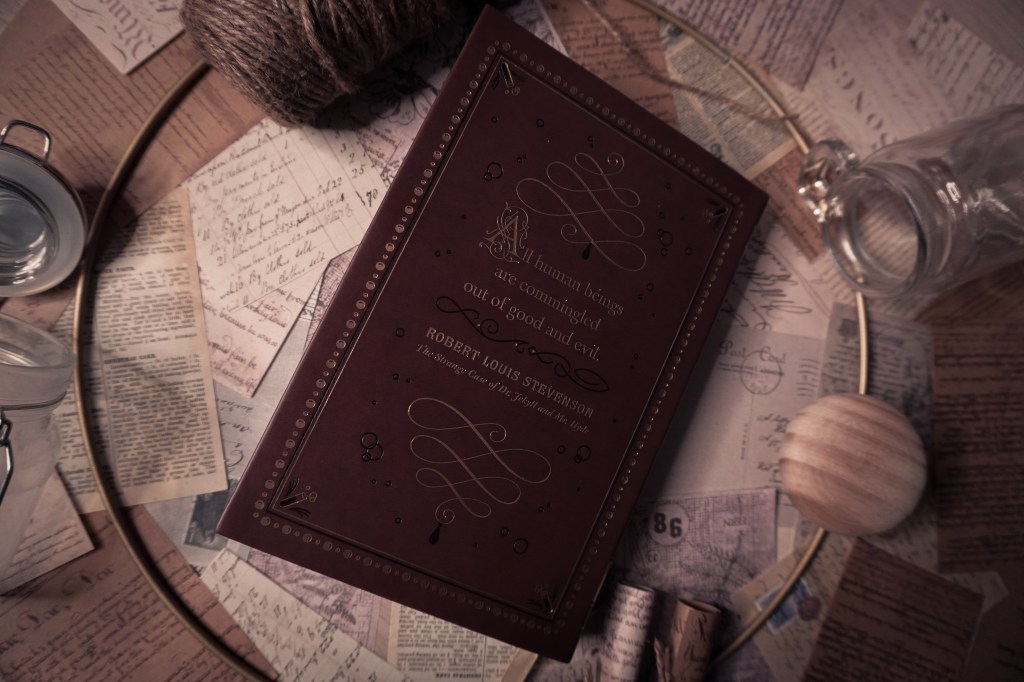
That being said, The Strange Case of Dr. Jekyll & Mr. Hyde by Robert Louis Stevenson wasn’t one of my favorite pieces of gothic literature.
I appreciated the writing, the structure, the elements that moved the story and the themes sprinkled throughout; but I think so much of the allure of Jekyll & Hyde relies on the twist ending, which I knew because it is ingrained in societal consciousness and I did study a lot of gothic lit in college.
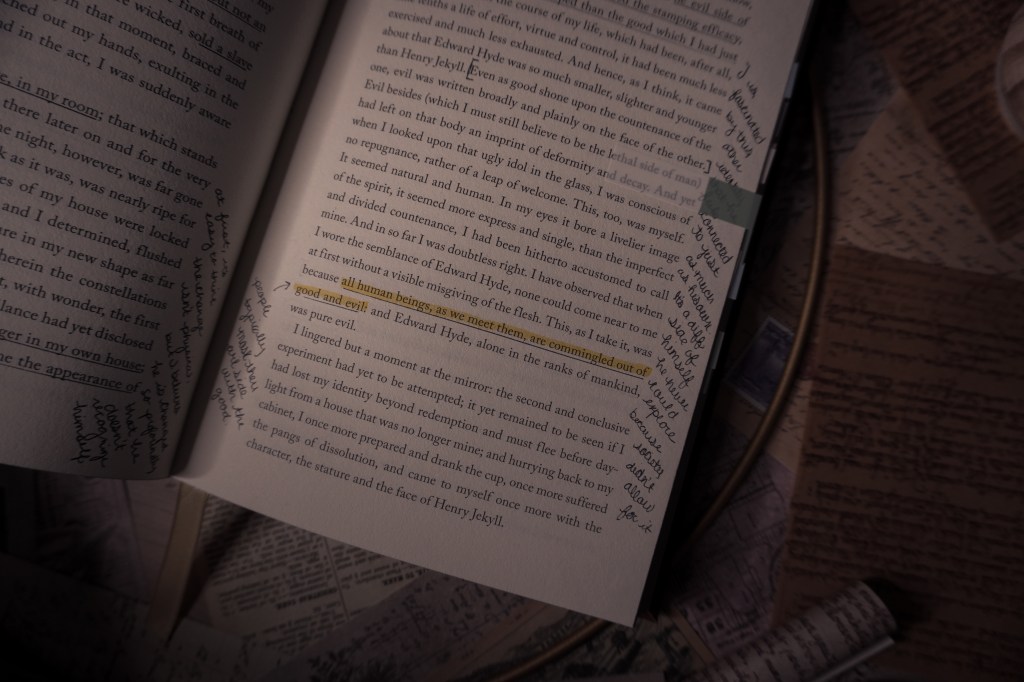
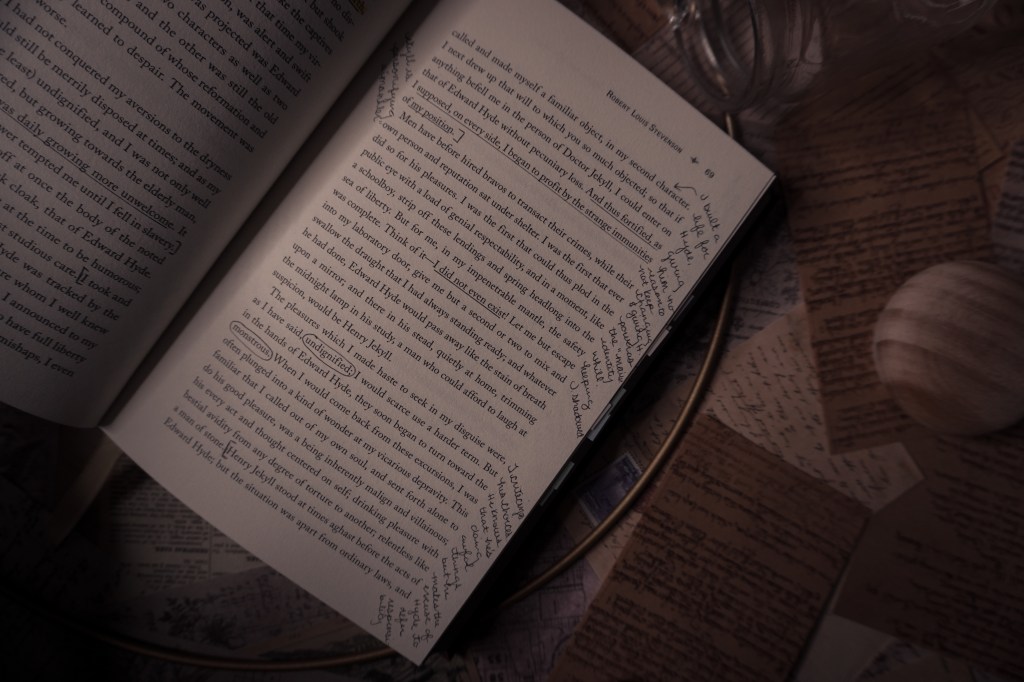
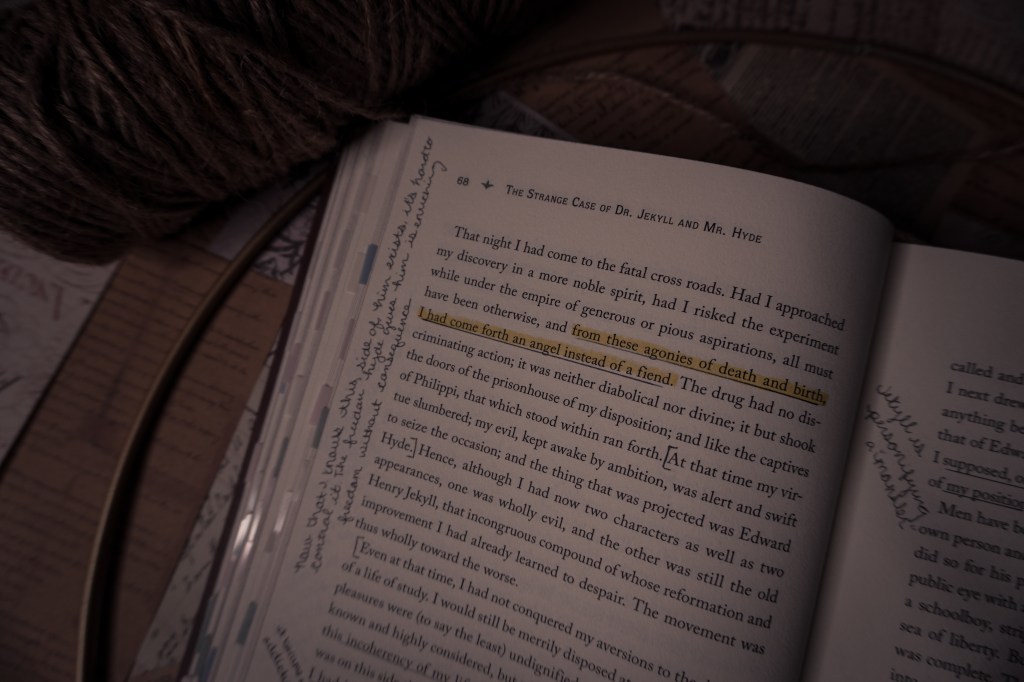
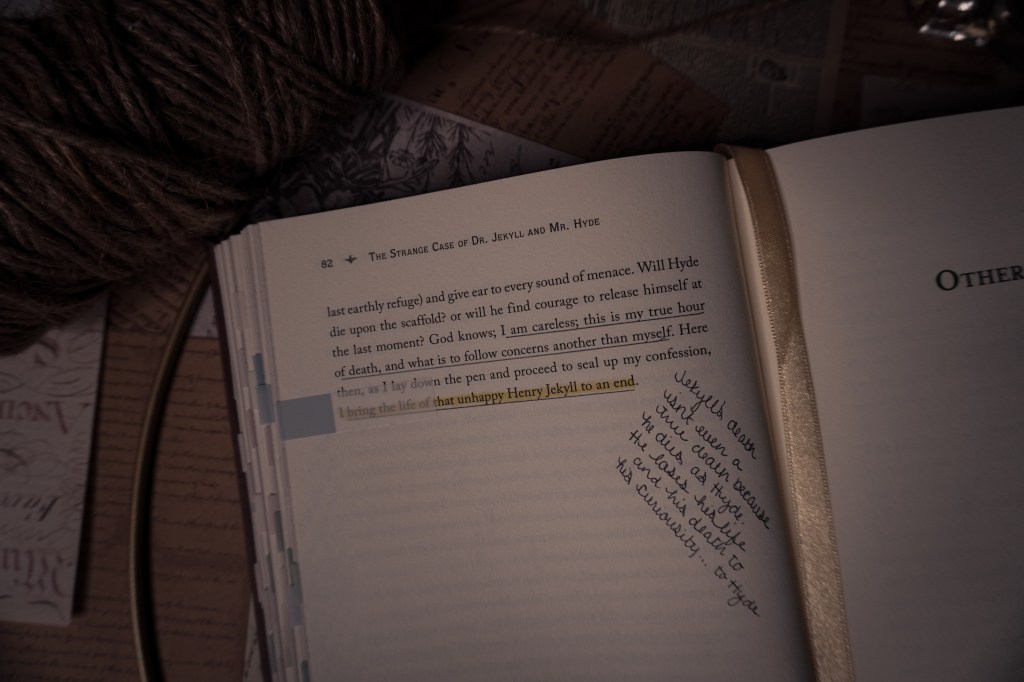
I don’t have time for my usual in-depth analysis, but I did want to go into some of my thoughts and include some of my annotations.
Here’s your formal spoiler warning for a book that came out 137 years ago.
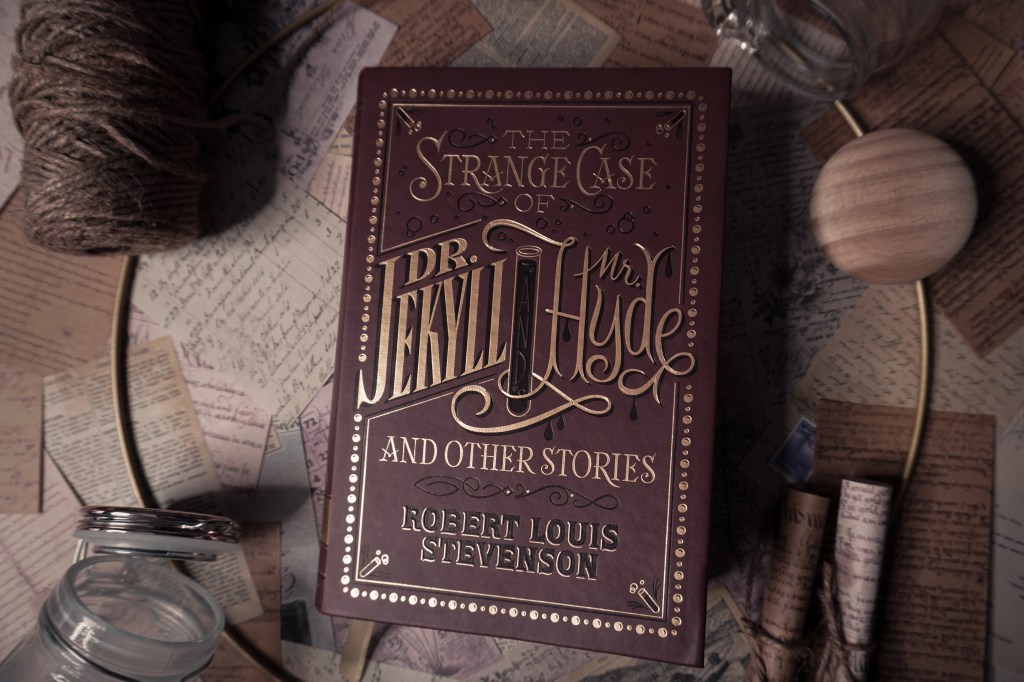

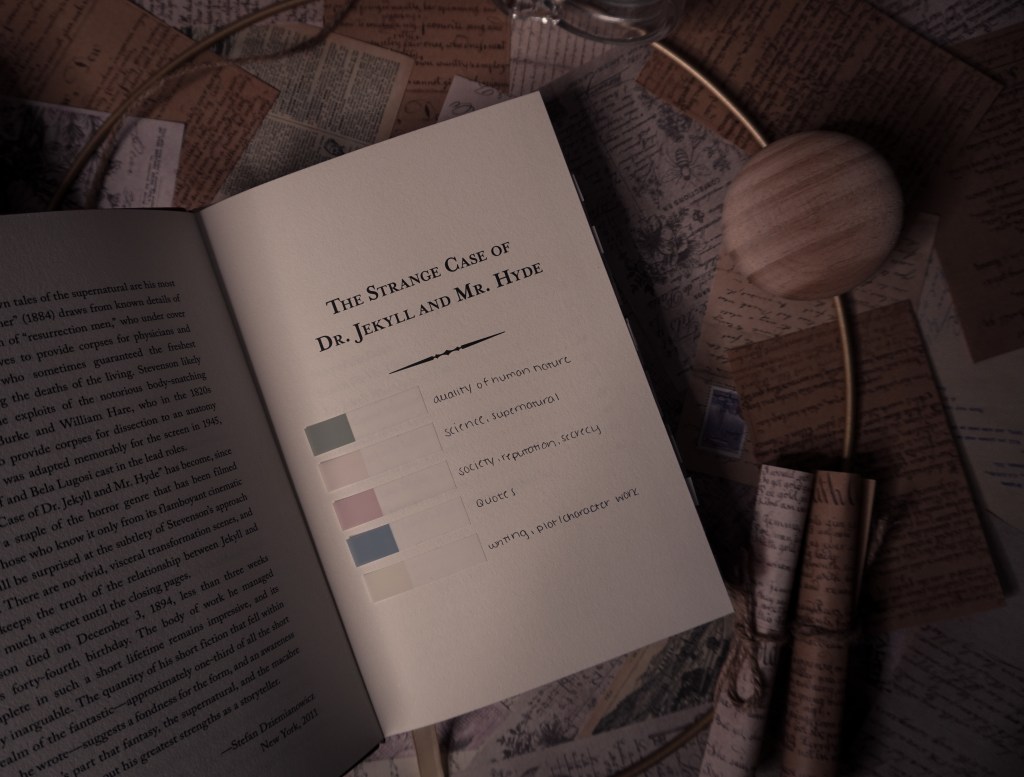
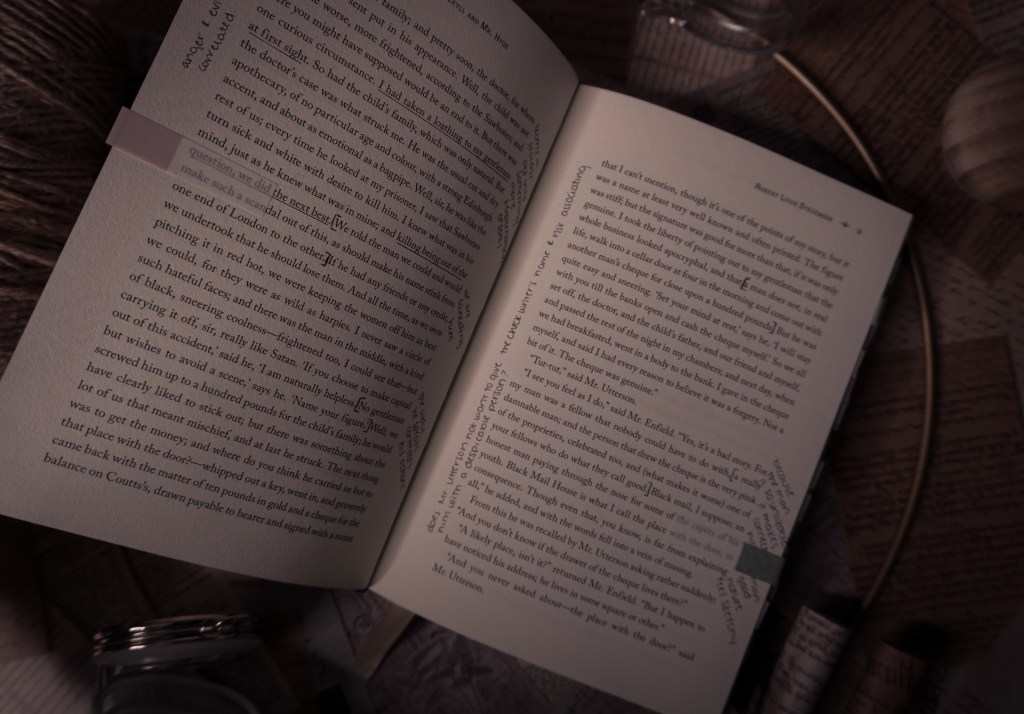
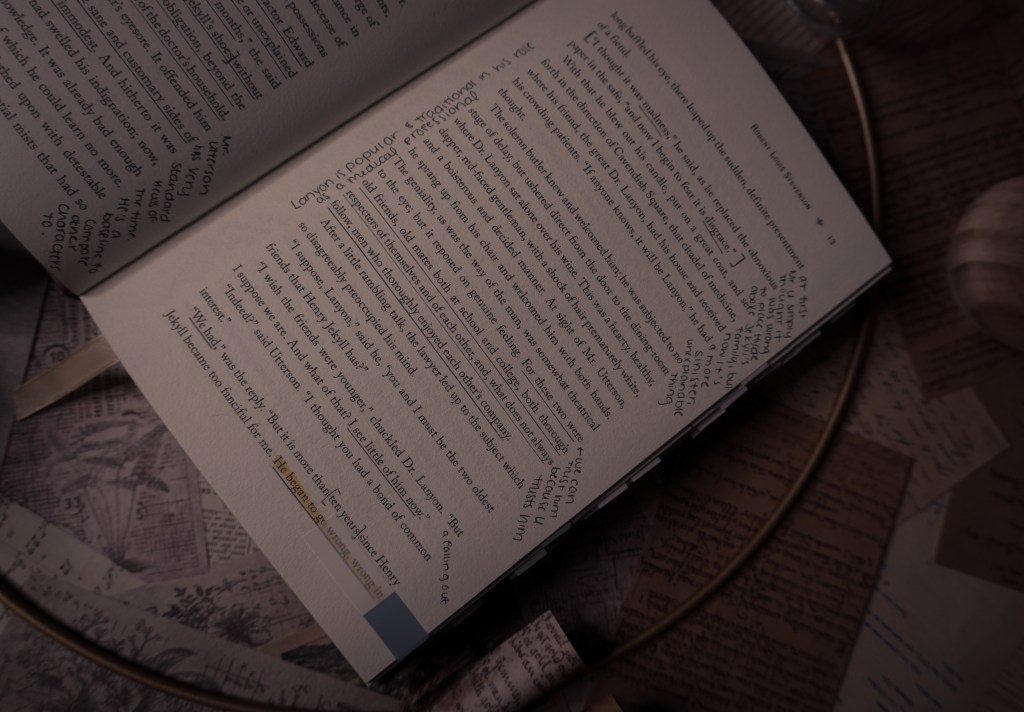
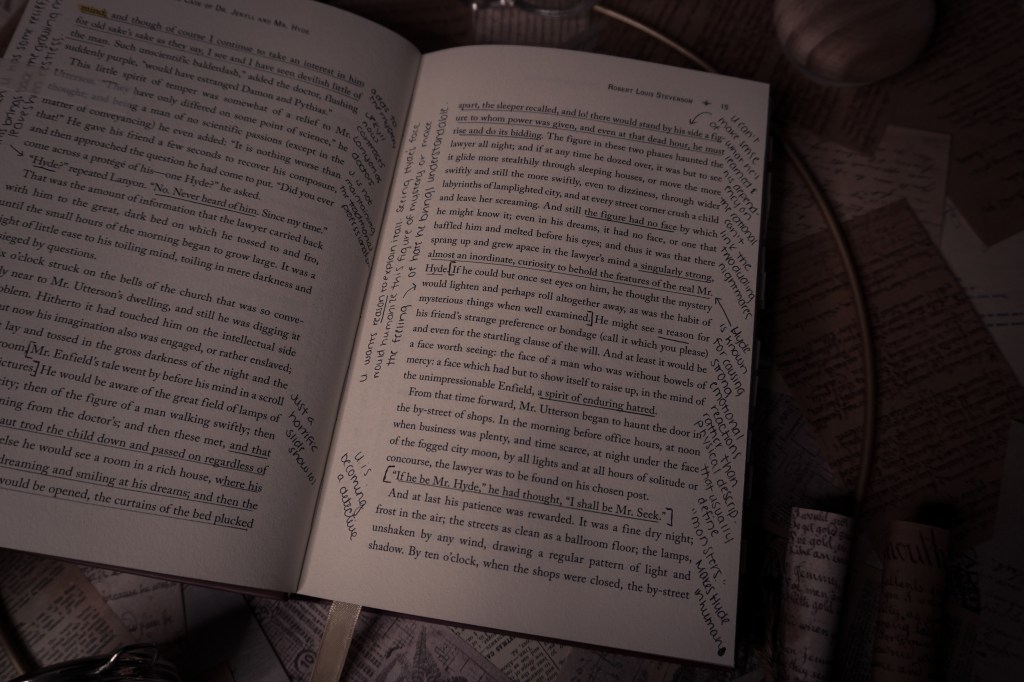
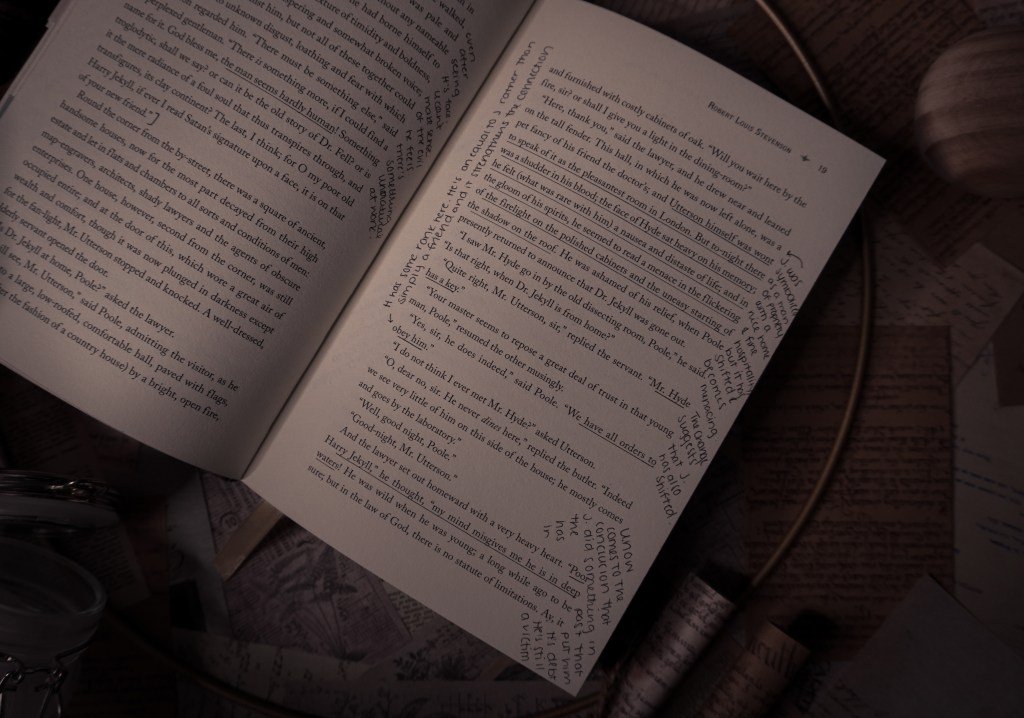
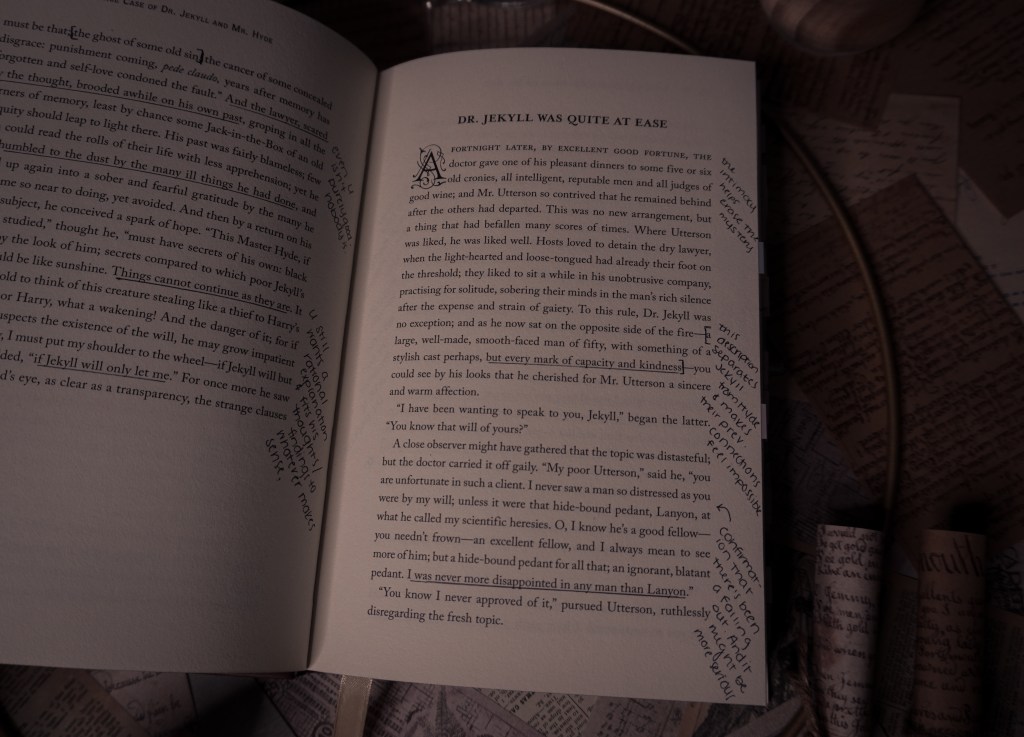
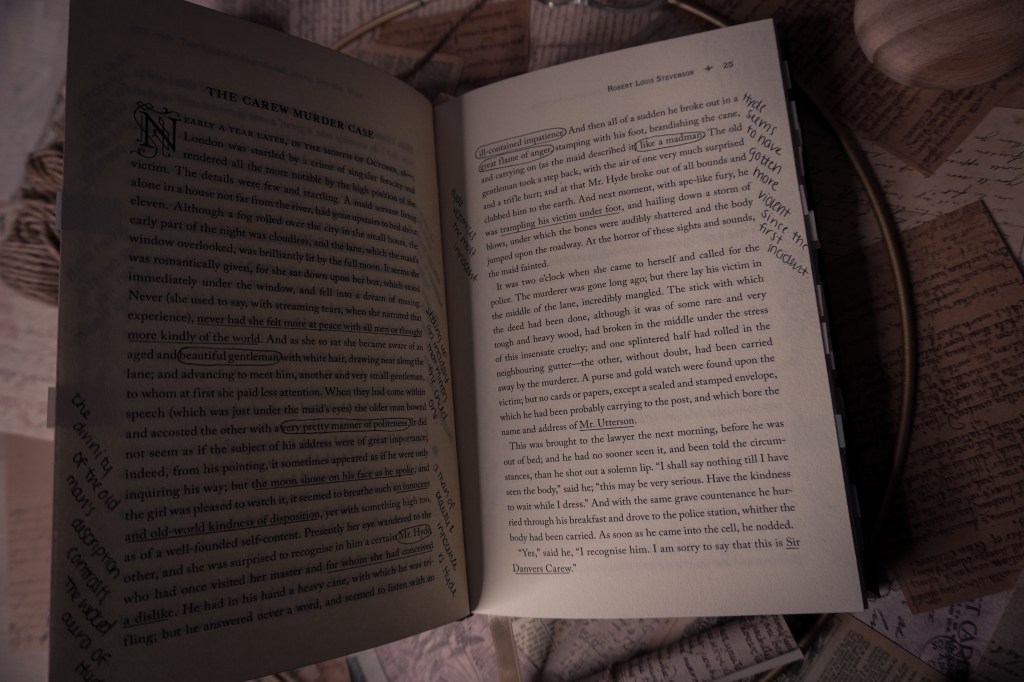


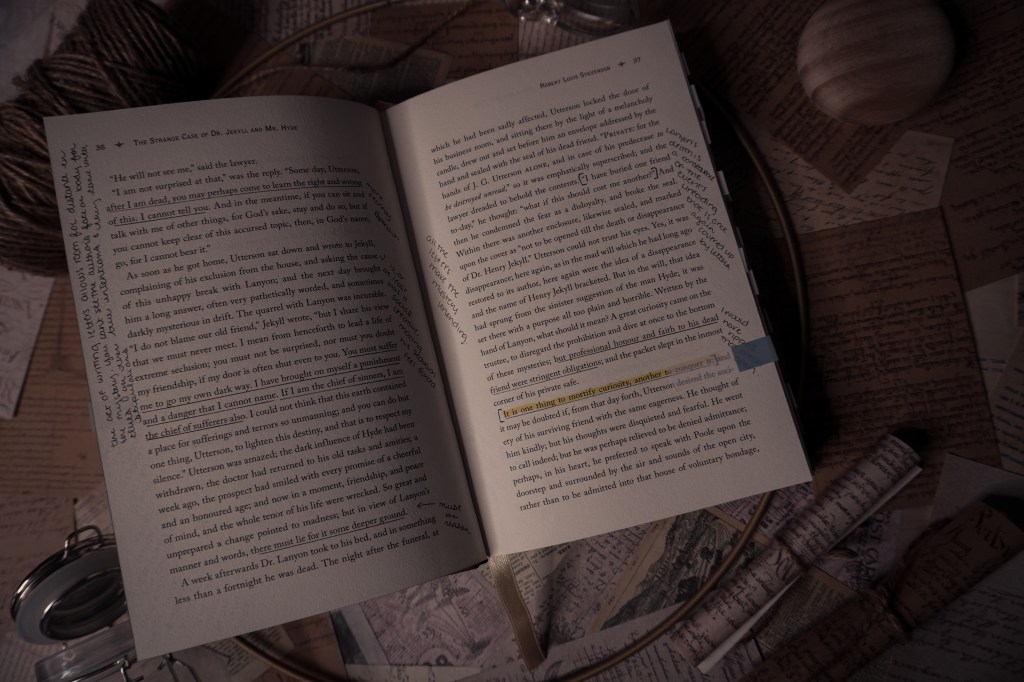
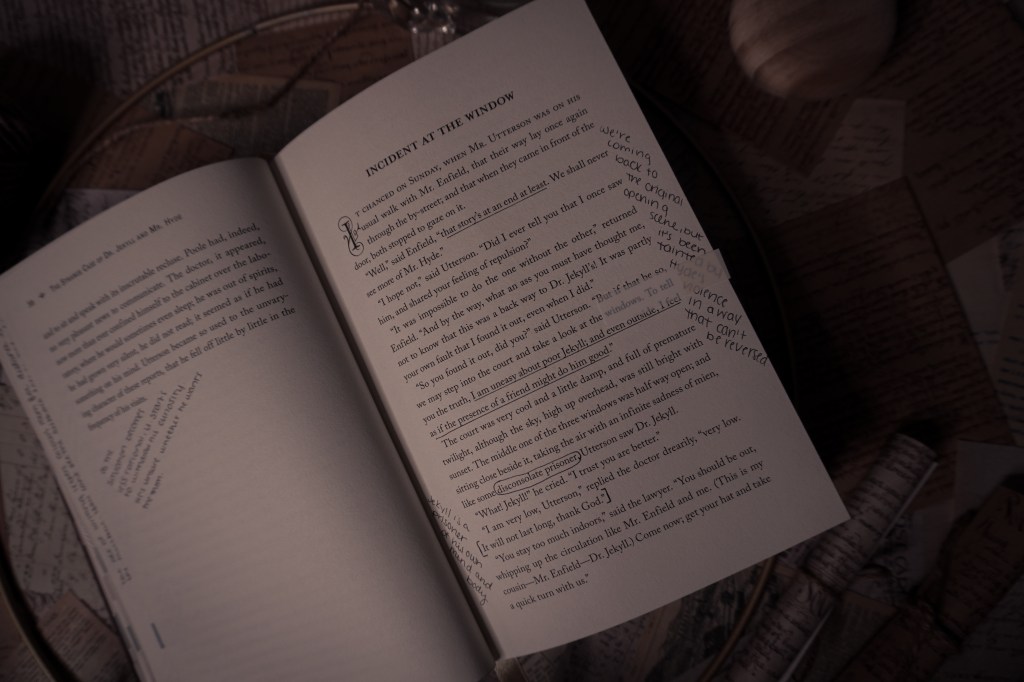
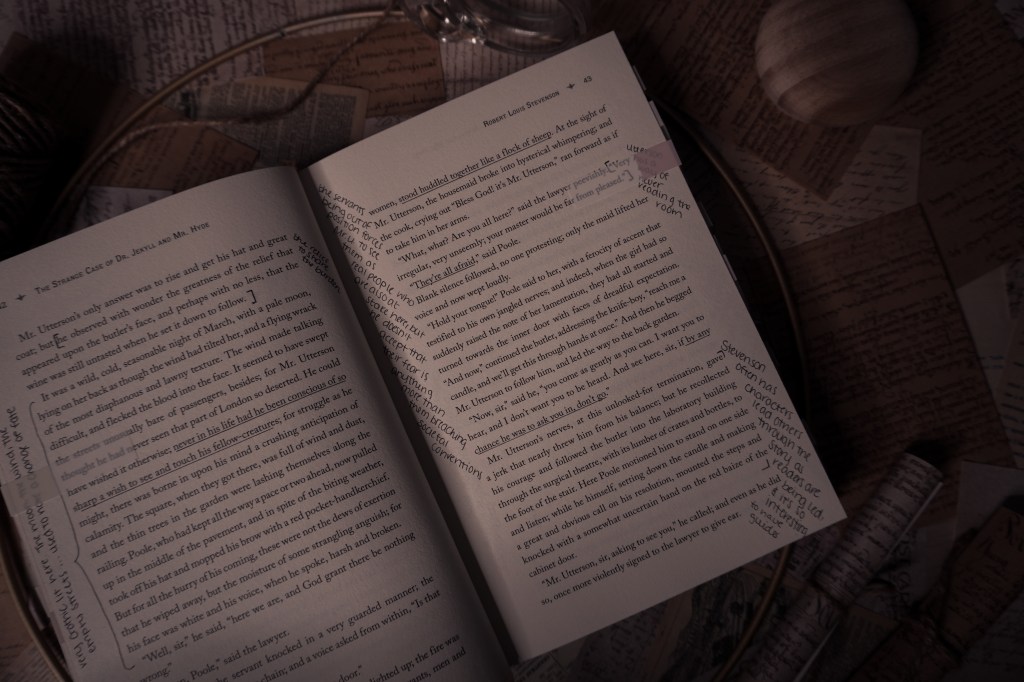

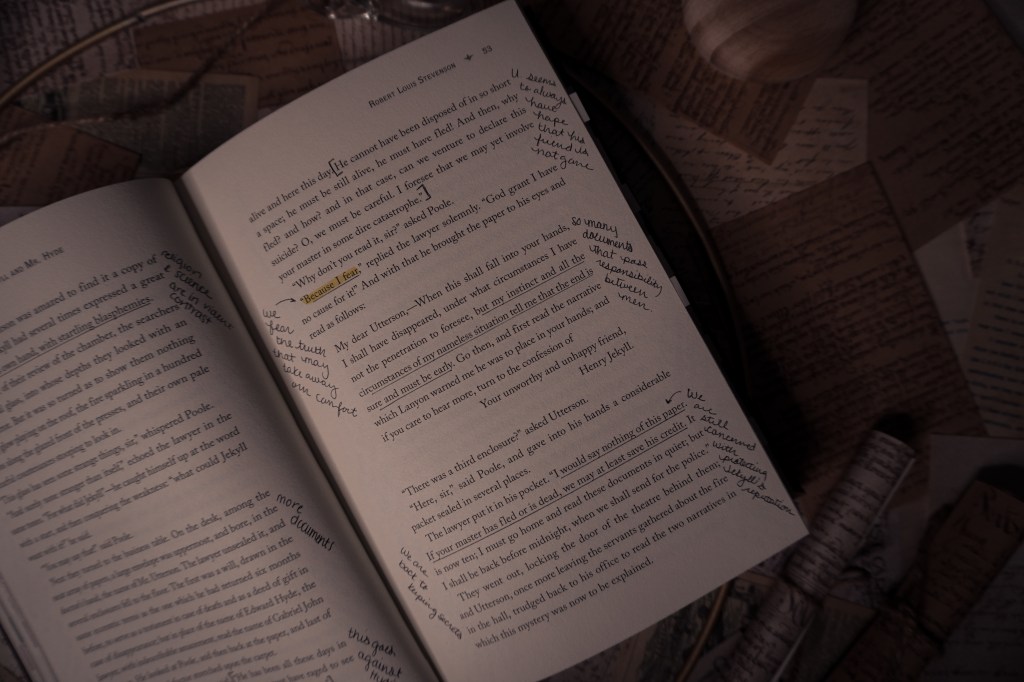
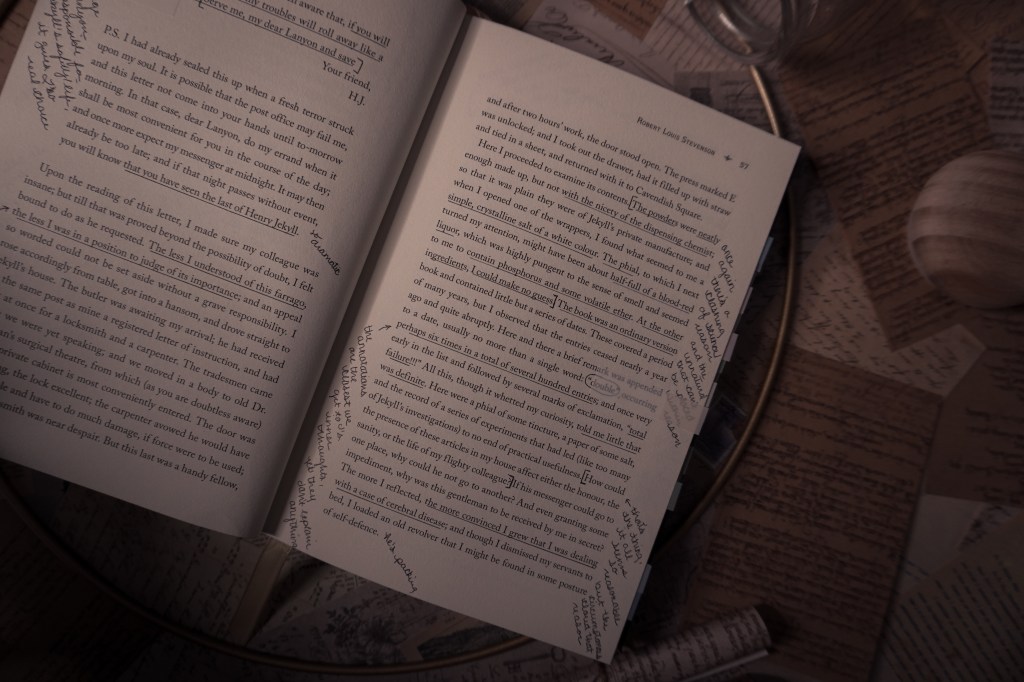
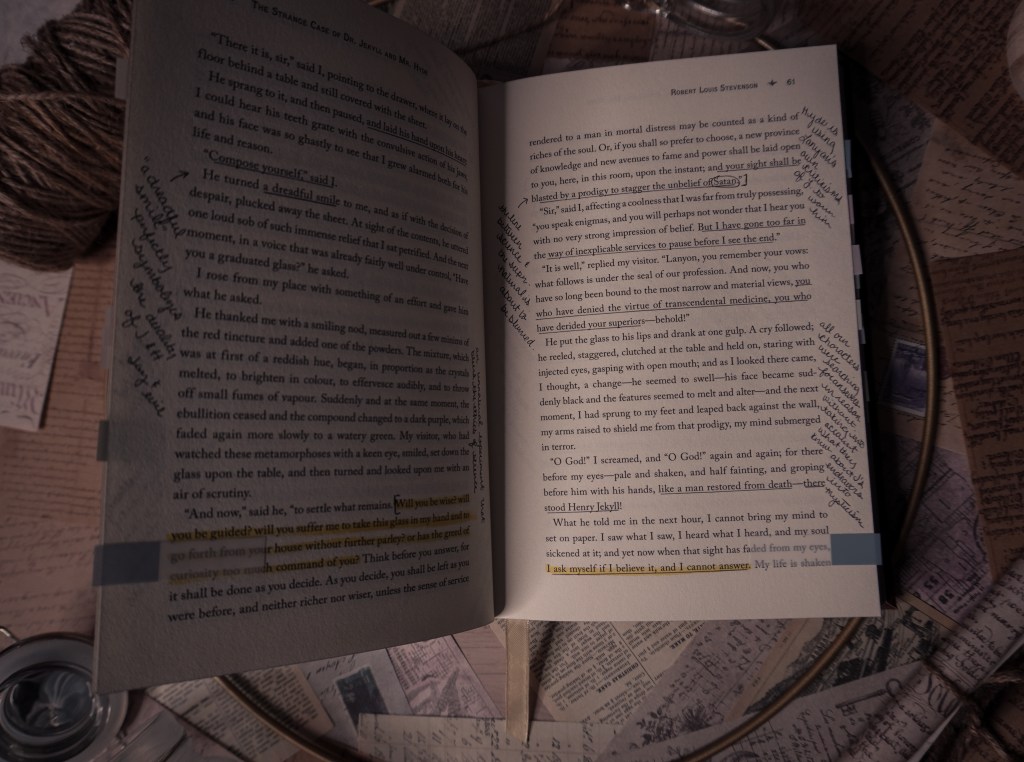

A summary: The Strange Case of Dr. Jekyll & Mr. Hyde follows — you guessed it — the strange case of one honorable Dr. Jekyll and a mysterious, violent stranger by the name of Mr. Hyde through the eyes of a Mr. Utterson, a lawyer in charge of Dr. Jekyll’s will. The details of Jekyll’s will began to nag at Utterson as more is learned about Hyde and his connection to the doctor, and the lawyer is sure something suspicious is afoot. As Utterson plays detective in trying to find what Hyde has over his long-time friend, it’s uncovered that Dr. Jekyll has been fiddling with the delicate balance between science and the supernatural with fatal consequences.
The downfall of notoriety: I feel like it’s rare to find somebody who doesn’t know that Jekyll and Hyde are the same person. It’s like not knowing that Dracula is a vampire. The thing about both of these stories (or really any well-known piece of classic literature) is the element of surprise is essentially removed from the texts because of their notoriety in history, so readers typically fall in love with these works due to the “how” elements rather than the “what.” The allure is no longer in the discovery of what the Count is (a conquering, blood-thirsty vamp) or what he wants (to move to London and munch on new cuisine), but in how Jonathan discovers it and how the Light Gang defeat him.
For Jekyll & Hyde, the narrative really relies on the twist of them being the same man as a metaphor for human duality. The “what” matters a lot more, and it might be because it’s a novella rather than a novel and has less moving parts to pull focus. It’s a very singular story. I found myself wondering, “How could Utterson not see all these connections? It’s so obvious!” I was getting annoyed at these characters for not knowing they were in a gothic horror story, which is absurd on my part.
I’m not saying that J&H is a “bad” story. It’s incredible, but it highlights the way literature can and should be read differently through time. There’s a sadness with knowing that I’ll never experience the gut-punching twist of Hyde actually being Jekyll the whole time. I won’t ever be able to experience this story the way it was originally intended in the time and space in which it was published. But there’s also something really beautiful that a century later with the surprise taken away, there’s still so much to get from this text in a whole new context.
So while I didn’t enjoy Jekyll & Hyde the way I thought I would, it’s still such an incredible piece of literature that exemplifies the endurance of words through time.
What makes this story tick: What fascinated me the most is the construction of Jekyll & Hyde. Our main characters are all very honorable and trusting people in society — lawyers and doctors and scientists, men of great esteem — which builds a sense of security in the telling of the story. It also helps drive the theme of science vs. mysticism as these men try to deduct reason from the supernatural. They don’t suspect any deviation from the natural because they are rooted in reason and societal standards. It makes them shitty detectives and allows them to miss the seemingly obvious clues.
It also pushes home the good vs. evil aspect of the story, because these men are very much representative of the good. They are innocent and pure, which is shown right away with Utterson’s quiet walks with Enfield that serve no true purpose but the pleasantry of company. When Lanyon discovers exactly what Jekyll has done, he deteriorates and dies. It shows how Hyde’s wickedness is set against the good and can corrupt.
Hyde also targets the most innocent — a small girl and a beautiful elderly man — which furthers the contrast between his evilness and the goodness of those he victimized.
That includes Jekyll, because while the two are of the same flesh, they are still pinned as two entities. Hyde literally bullies Jekyll at the end of the novel, laughing at him and burning letters. This man that was so respected in society was overtaken by the wickedness inside him, which begs the question that we’ll discuss later of whether or not there can be a balance between good and evil.
But more than the characters themselves, the construction of the actual story using letters and diaries is brilliant. Much like in Dracula, it allows for suspense to be created in the unknown. Information is concealed and left out at the writer’s discretion to tell their story, and we as readers have to fill in the gaps. Particularly with J&H, Jekyll never confesses exactly what he’s done, even in his final diary entry that he considers his confession. The scientific formula is never accounted for. It’s the last of so many instances where letters allow for communication without information — or information without answers. So much is hidden within piles of papers, the wills and letters that have stipulations to open and have more letters inside with detailed instructions but no answers to what is happening.
It’s the way to make chaos feel organized, and I appreciate the delicate precision in putting it together in a way that doesn’t feel like a cluster.
The point of it all: OK, so I know there’s a lot of speculation and theories on what J&H is about, or more so what Jekyll’s split personality symbolizes — addiction, sexuality, religion, society, etc. One interpretation is that it represents addiction to drugs or alcohol. Stevenson was believed to have a cocaine addiction and be on a bit of a cocaine binge when he wrote the first draft of Jekyll & Hyde in like 3-6 days. Actually, a fun fact is that the first draft was destroyed — some say by Stevenson and others by his wife, because a letter was found of hers stating she was going to throw it in the fire. But the point is, it’s easy to see this type of interpretation when the concoction Jekyll uses to become Hyde is a power and the aggressive qualities attributed to the alter ego coincide with possible effects of cocaine. The same with alcohol. Wine is found throughout the novella, and Hyde even has a closet full of it. The addiction theory is a solid one, though it’s not the one I’ll stick with.
I personally think it’s commentary on society and a pre-Freud take on the ego and id — Jekyll & Hyde was published about 30 years before Freud’s psychoanalytic theory. What plays into this is that repression is such a huge theme in the novella. The setting of the late-1890s when society held people to such high standards doesn’t allow for deviation. You have to fit the standard. When Hyde tramples the little girl, the angry crowd threatens to ruin his reputation, and Utterson says it’s worse than killing him. Utterson also fears that Jekyll’s association with Hyde will hurt his friend’s reputation. These show the constraints of society at the time that force repression.
Jekyll says in his diary that becoming Hyde offered a freedom from those constraints, and that is why it was so addicting. It was a blessing at first to have an opportunity to allow himself to live outside of the weights of expectation brought on by being born to a privileged life with high expectations that he met. Jekyll represents the desire of people at this time to return to a time with less responsibility and expectation, while Hyde represents the reality of that desire if unkempt (especially because Hyde is often described as child-like and impulsive).
That fits into the theme of human duality and that no person is only one thing. We all have a Jekyll and Hyde, but it’s about finding a balance between the two rather than repressing the Hyde all together. Jekyll didn’t see a way to balance these two sides of himself and later saw them as two different entities entirely to go with the identities he gave them. That’s because society wasn’t accepting of the qualities Hyde presented, and the line between “good” and “evil” was very distinct … and still is in a lot of ways.
Rating: 4 impure mystery powders out of 5

 Life of Bry
Leave a comment