Ask and you shall receive.
In my Six of Crows analysis, I specifically asked for Leigh Bardugo to make me like Kaz Brekker more in Crooked Kingdom.
Mission accomplished.
I love that murderous softie.
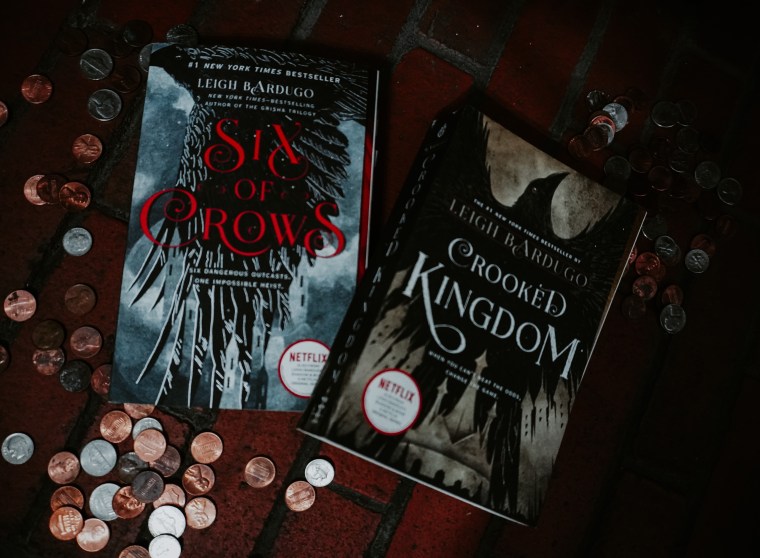
Crooked Kingdom is a continuation of SoC, following Kaz and his Crows as they try to outsmart merch scum Jan Van Eck to get their Wraith, their money, their revenge and their freedom. They’ve done the impossible once, now they have to do it over and over again to get what they want most.
Now, usually I give all my thoughts on specific topics before I dive into my official review, but I decided to change things up and pick a few quotes to analyze instead.
We’re all about mixing things up here at lifeofbry.com.
Here are all my thoughts on Crooked Kingdom.
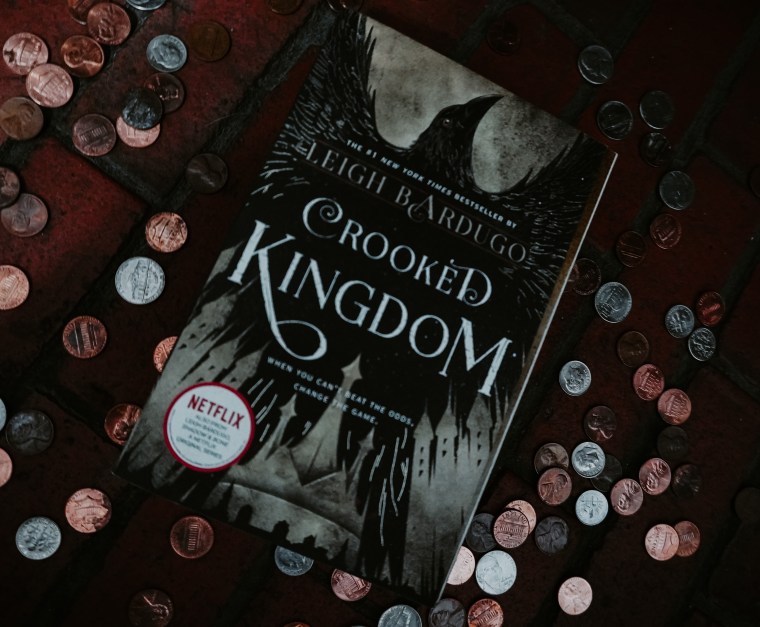
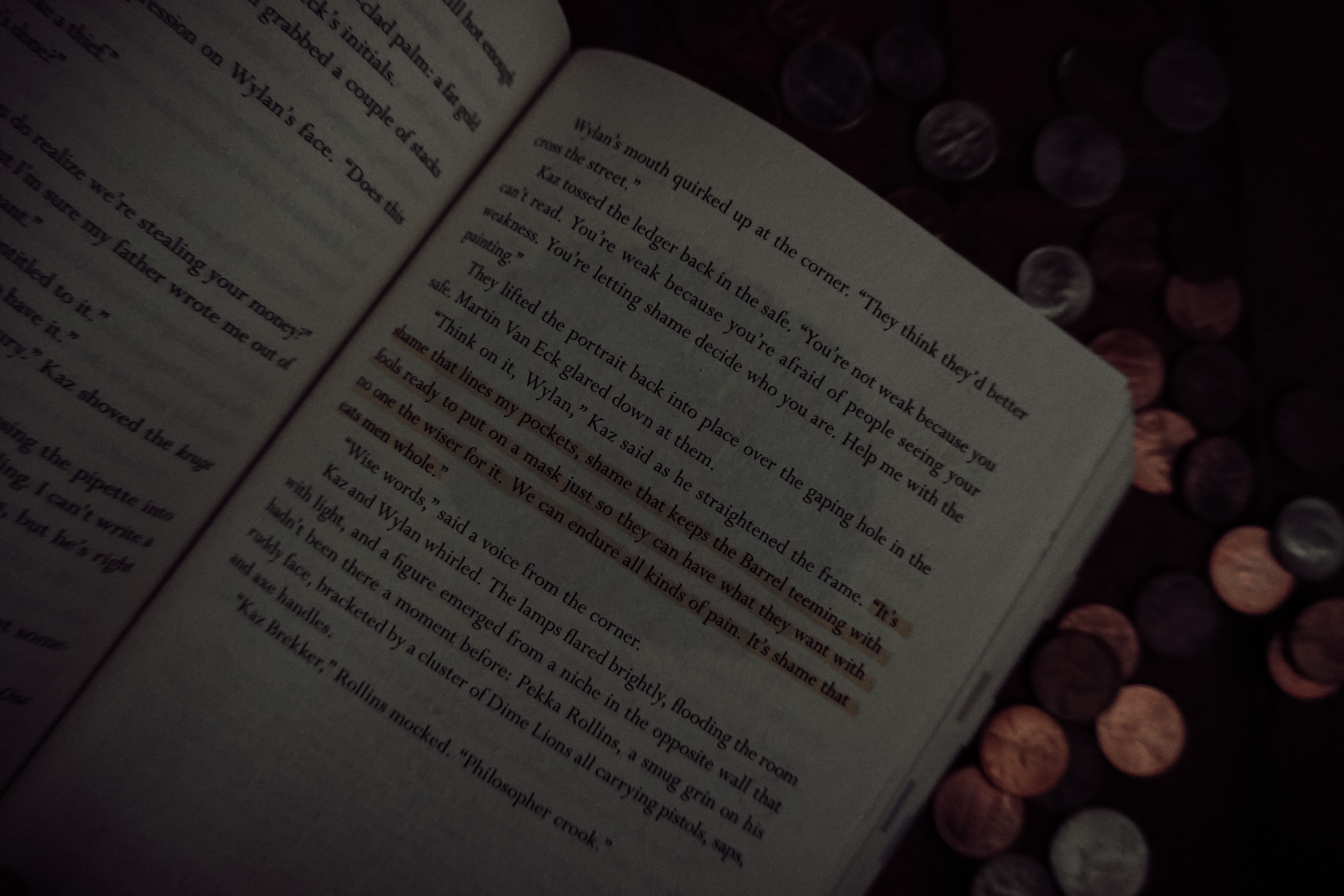
“I’ll tell you a secret, Hanna. The really bad monsters never look like monsters.” (Kaz, 30)
Wylan is horrified at the exchange between Kaz and Cornelius Smeet’s young daughter. Dirtyhands weaves himself into more of a legend than he already is by telling the little girl that he is an actual monster that resides under beds and in closets — sinking his claws into the next generation of Ketterdam.
This quote establishes the ongoing theme of the novel of moral ambiguity, which I talked about a lot in my Six of Crows analysis. Crooked Kingdom continues this line of questioning between good and bad, right and wrong; but with an emphasis on the people themselves. Particularly the pondering of what makes a monster.
Men like Smeet and Van Eck are deemed good men, because of their social status in Ketterdam. They are seen as honest merchants. However, it’s under this disguise of moral justness that they do their most devious work, because they have the resources to exploit in their favor.
Meanwhile, men like Kaz are labeled “the Bastard of the Barrel” simply for not hiding their finessing.
What’s interesting about this quote is that Hanna tells Kaz he doesn’t look like a monster.
This girl doesn’t know the myth of Dirtyhands, yet.
She sees a sharp-dressed man with a cane in her house and assumes he works with her father — an honest merchant. Her life has not conditioned her to see under the mask.
Kaz’s appearance isn’t what makes him a monster. It’s the actions he commits and the stories he tells, or allows to be told, that make him one.
In a way, Kaz is giving Hanna a very valuable lesson, just in a very traumatizing way. Her father is not the good man she believes; and, one day, she’ll figure that out — just as Kaz realizes the flaws of his older brother Jordie, and the resentment he holds because of it.
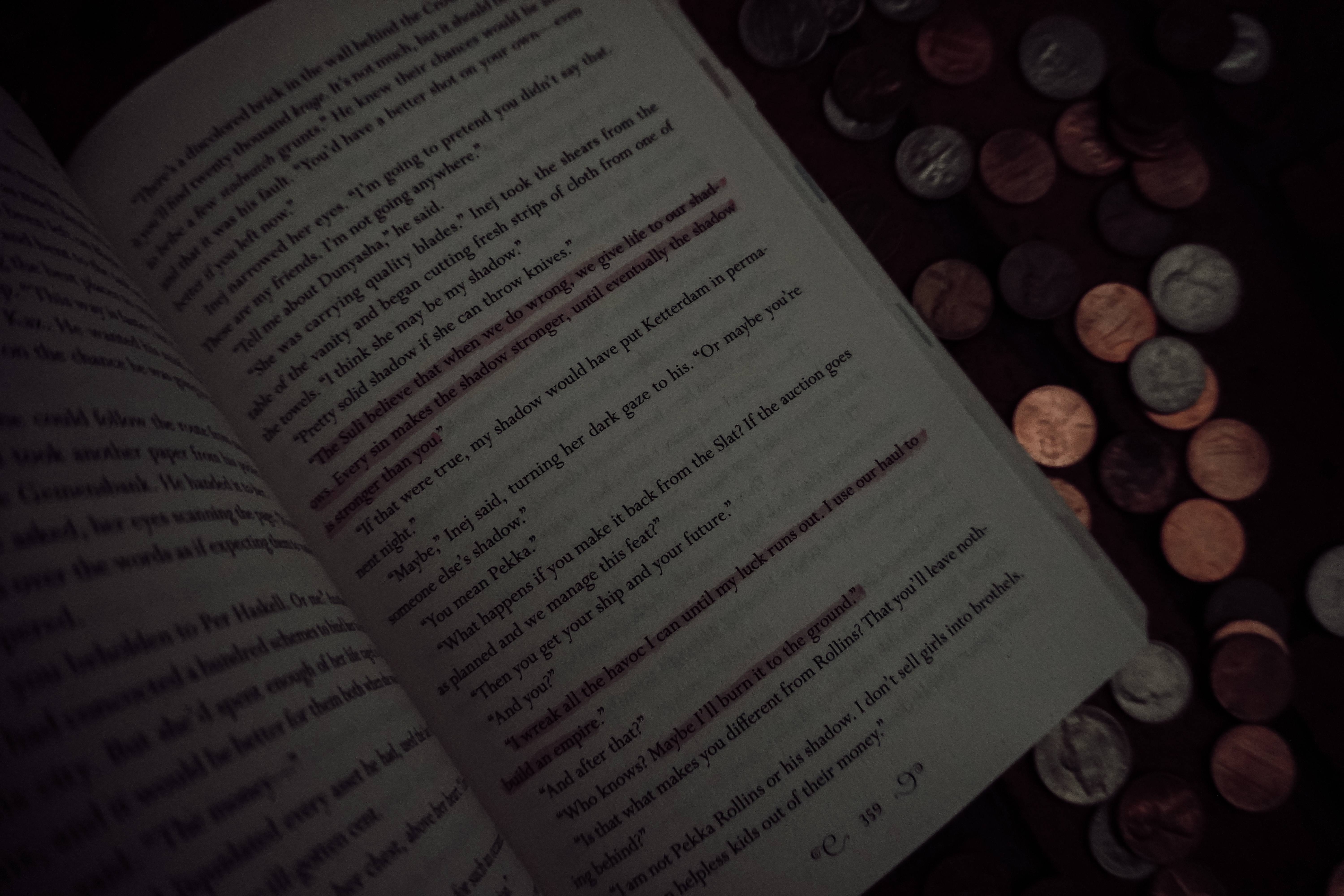
Coinciding with this quote are two others:
“There are no good men in Ketterdam.” (Kaz, 30) and “We were all children once.” (Kaz, 31)
The first is what Kaz tells the clerk he ends up killing for Smeet’s whistle commands. The clerk insisted he was a good man, but discloses the deets on how he’s been blackmailing a girl at the Menagerie to see him for free.
Good men don’t blackmail sex workers into seeing them for free out of fear they’ll be killed.
There are no good men in Ketterdam, because good men don’t survive in Ketterdam among the monsters.
It’s a lesson for Wylan, as well.
Wylan is still a naive boy, yet to be fully broken by the Barrel. If he believes that every person in a suit calling himself a merch is a good man, he’ll be swindled and killed — just like he almost was for trusting his own father.
The same can be said for the second quote.
Every single one of the Crows were children once — technically they are still children, but the Barrel has stripped away the last of their innocence.
They were children in the sense that they were naive, gullible and vulnerable. They became victims of their own decency through no fault of their own, except that they were kids who didn’t know any better.
It’s important for Wylan to understand this, to know that he has to say goodbye to the boy he knew he was and welcome the side of himself that does what it takes to survive.
Yes, we were all children once, and then we became monsters.
Monsters have different faces. The monsters that walk the street under trustworthy disguises are much more dangerous than those who flounce their monstrosities to the world. You know what to expect from a person you already suspect to be evil or bad, but it’s the masked individuals who do the most damage because you don’t expect it.
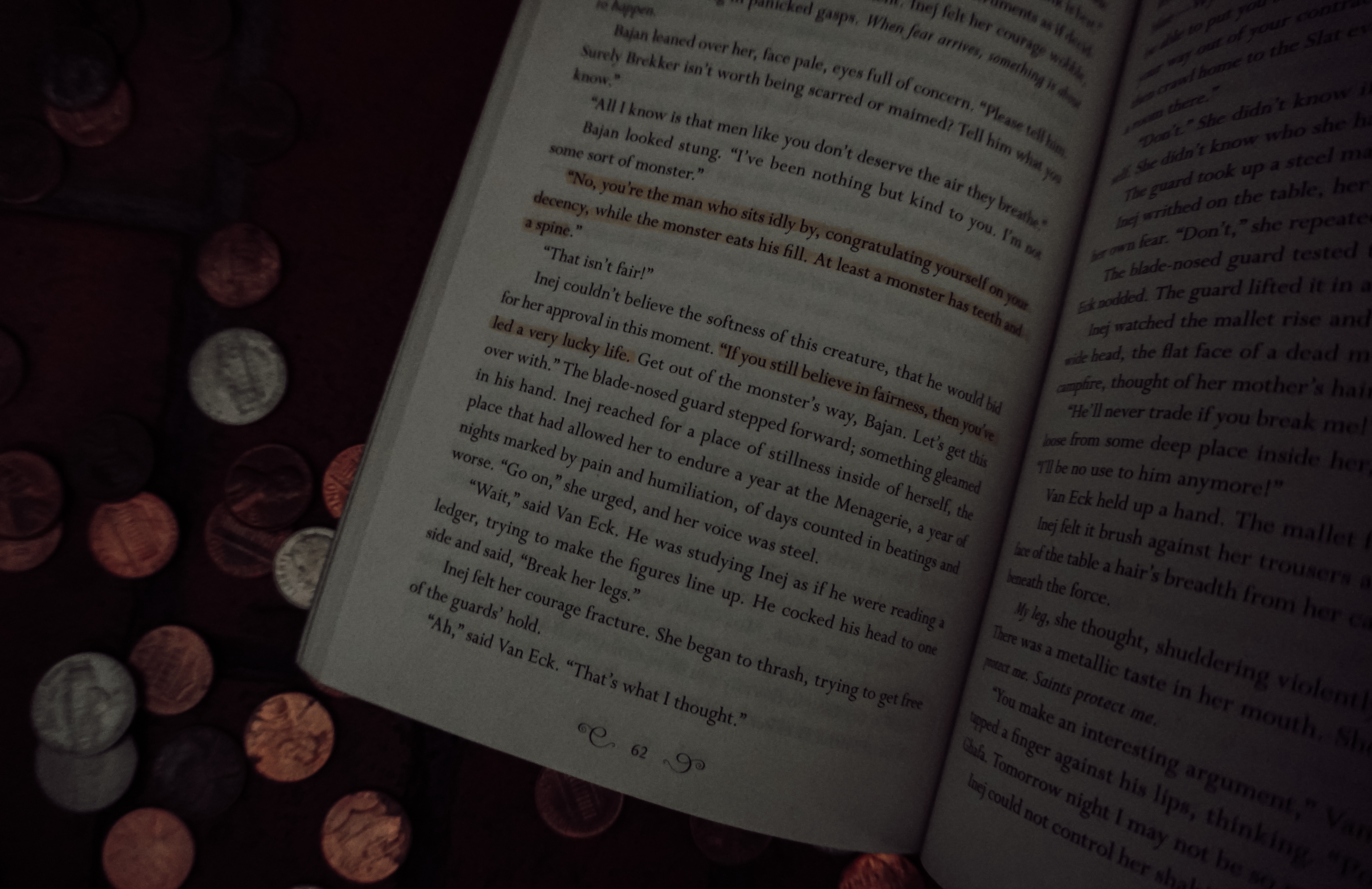
This notion is seen throughout Crooked Kingdom, but perhaps my favorite reflection of this theme is when Bajan is trying to convince Inej to tell Van Eck where Kaz is hiding out.
“I’ve been nothing but kind to you. I’m not some sort of monster.”
“No, you’re the man who sits idly by, congratulating yourself on your decency, while the monster eats his fill. At least a monster has teeth and a spine.” (62)
Once again, Bajan is not seen as a monster. He’s kind. He’s gentle. He’s trying to keep Inej from being hurt.
He’s not doing anything to stop Van Eck either. He was willing to stand by and watch Van Eck’s men shatter Inej’s legs. He would not have stopped them. His morality has a limit, and it’s self-preservation.
Just because you didn’t pull the trigger, doesn’t mean you didn’t load the gun and hand it over.
Bajan isn’t a monster, but he allows the monsters to thrive with no merit of his own to stand on.
Kaz is right, the really bad monsters never look like monsters.
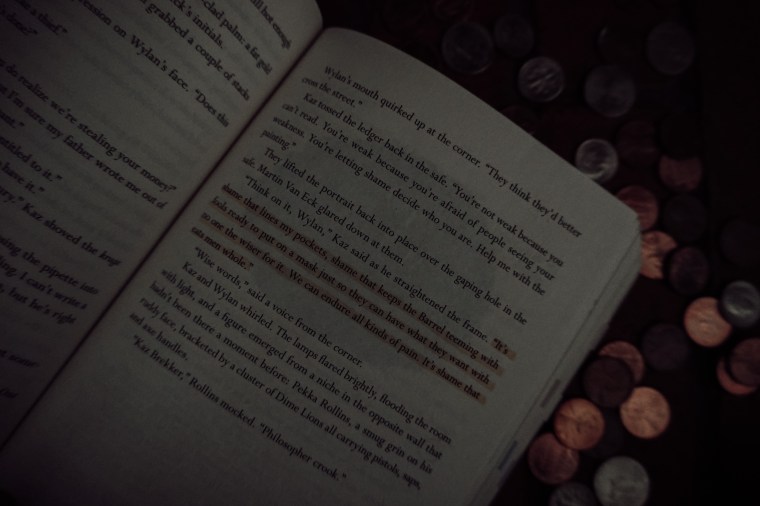
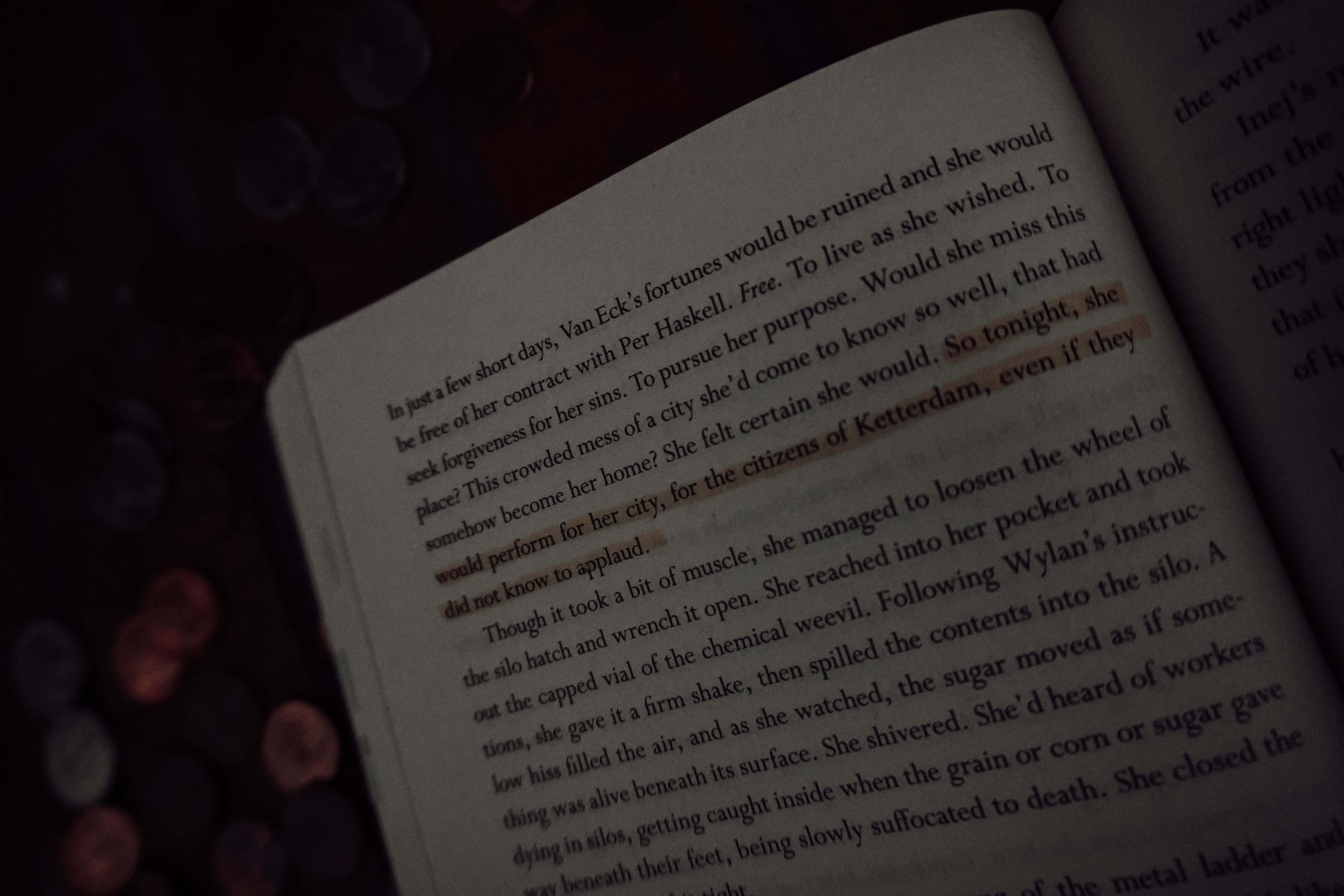
“So tonight, she would perform for her city, for the citizens of Ketterdam, even if they did not know how to applaud.” (Inej, 270)
Inej stands atop of Van Eck’s sugar silos, preparing to walk the tightrope between them, when she delivers this thought.
It’s a love letter to Ketterdam, a city where she was lost and then found herself, as she prepares to leave it for good.
Similar to Inej’s experience in the incinerator shaft in Six of Crows, this scene on the sugar silos is monumentous for her growth as a character in that it’s a centering of herself.
The scene blends between the present day and Inej’s memories of learning to walk the high wire as a child; melting the girl she once was into the woman she is today.
This experience as a performer growing up trained her for the horrors of the Barrel.
Inej had to put on an act for the audience to stay engaged, pretending to bauble and lose her footing to please the watching eyes; just as she had to smile and make the sounds her clients wanted at the Menagerie to avoid punishment.
She learned that working with a safety net made her careless enough to fall. There are no safety nets in the Barrel. You work in dangerous conditions and never drop your guard.
We see this mixing of her two selves — of past and present — yet Inej describes her worst night at the Menagerie as a time a client recognized her and she was unable to disconnect from her body like usual.
“Somehow his memory of her had tied her past and present together, pinned her there beneath him.” (Inej, 276)
It’s a symbol of her growth that she could connect her past and present selves during the sugar silos scene.
At the Menagerie, she could not be wholly herself. She didn’t want the image she held of her past life to be intertwined with what she had endured. It tainted its purity.
However, she has reconciled within herself who she wants to be as a person. She now has aspirations outside of survival, and she’s using the gifts given in her former life as tools to accomplish them.
The sugar silos scene is Inej allowing her past and present selves to collide to form the person she wants to be.
She is a performer, putting on what she believes to be one final performance for the city that took everything from her until she stole it back.
Inej now fights on her own accord for herself and her friends that have become a dysfunctional family. It becomes a major point of emphasis as she faces down her shadow in Dunyasha, who finds joy in killing to appease her gods so that she will be honored in the afterlife.
“Our work is death and it is holy,” Danyasha told Inej.
Because of this supposed holy calling, Danyasha believes is more morally just than Inej. She tells Inej that she hasn’t killed innocent people, something our protagonist cannot say. Danyasha delivers the moral dilemma that Inej already has within herself — a dilemma that Kaz has repeatedly tried to rid her of because there is no place for it in the Barrel.
Going back to my Six of Crows analysis, I talked about moral ambiguity and how our protagonists are disguised as antagonists because their tragic circumstances forced them to do incredibly heinous things to survive. This comes back into play throughout Crooked Kingdom, but especially with Inej. She is the character closest to her religion and most morally reluctant to kill, and she is faced with her literary foil in Danyasha, who Inej calls her shadow that is a part of Suli lore.
However, in a full-circle moment, the Wraith and the White Blade meet on top of the church during the auction and Inej doesn’t allow herself to be overcome with guilt for what she’s done to survive. Instead, we get this beautiful line:
“Innocence was a luxury, and Inej did not believe her Saints demanded it.” (458)
After wrestling with her virtue and its relativity to her religion for nearly two books, Inej has come to the realization that what she has done has nothing to do with morality and everything to do with survival. Her Saints will not hold it against her.
It’s the gavel landing for her final verdict on her characterization. Exquisit.
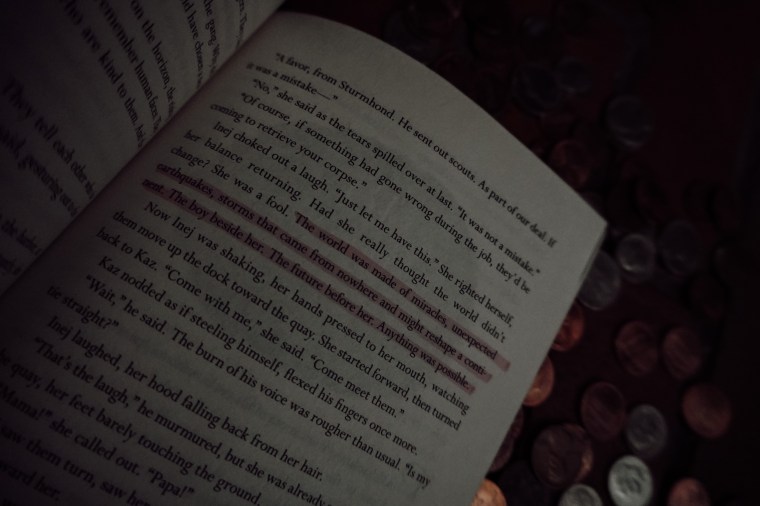
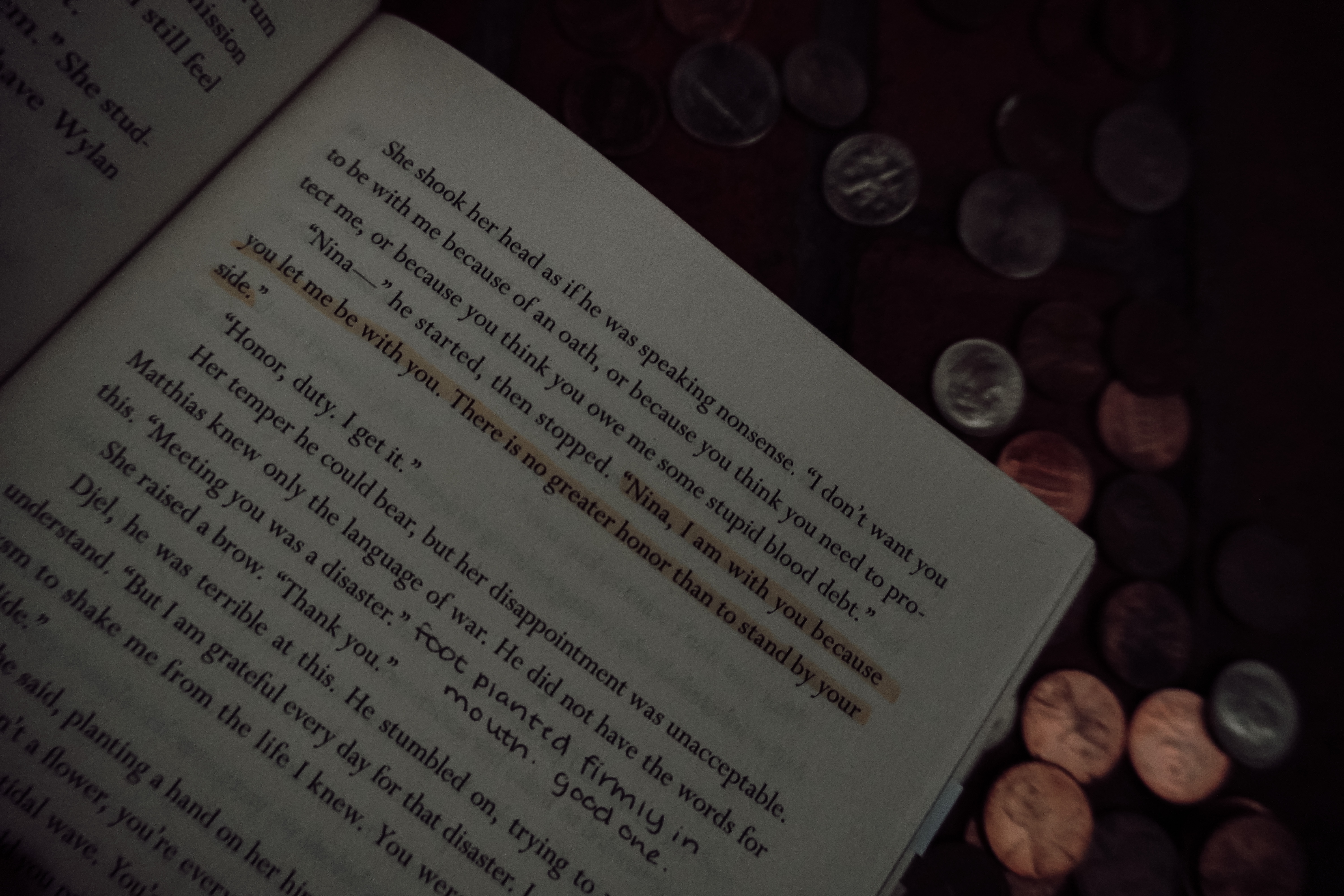
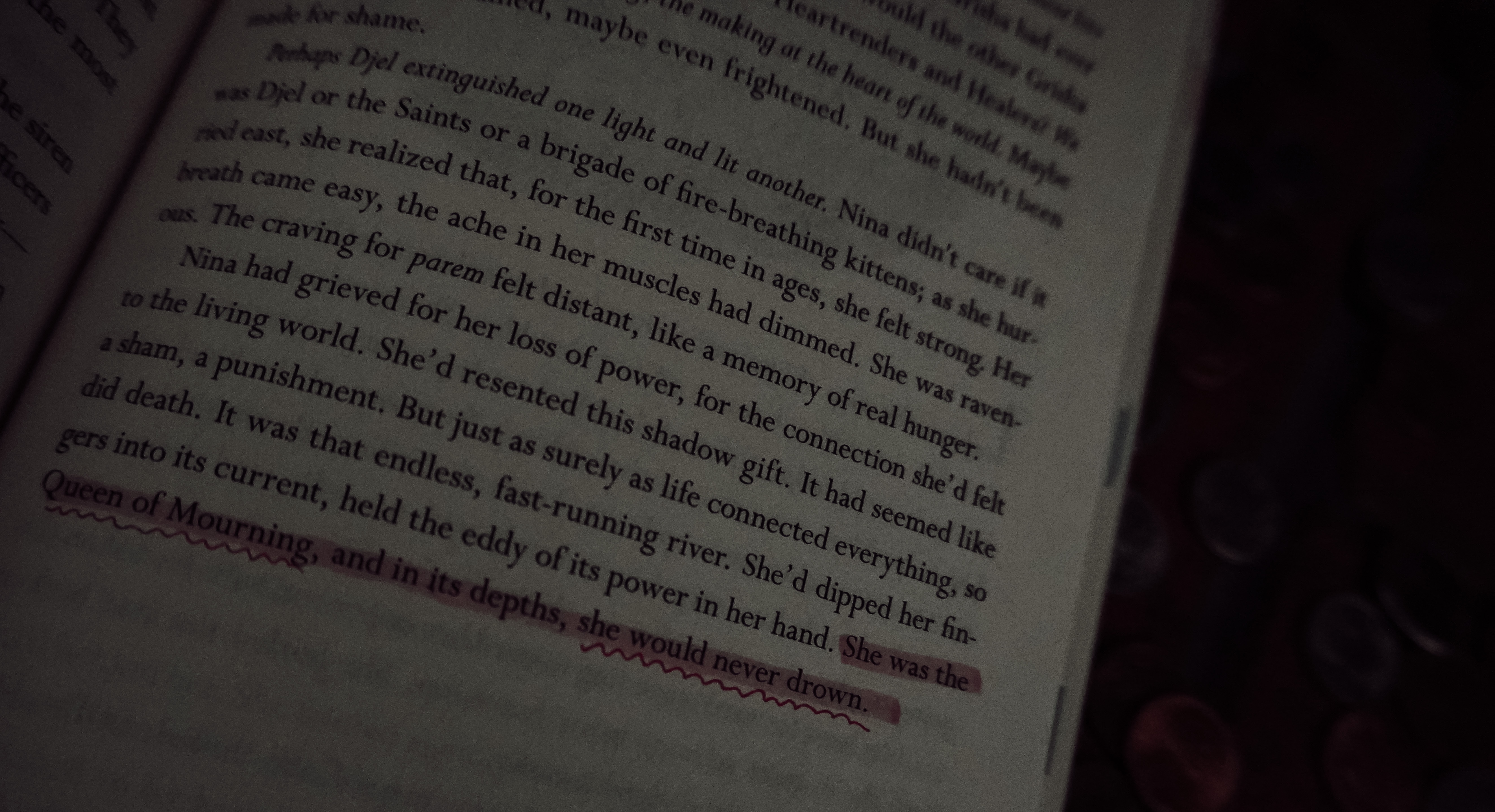
“Nina. I am already home.” (Matthias, 495)
Before I tear into this quote, I need it to be known that Matthias’ death absolutely wrecked me — not necessarily because someone died, but because of the layers of depth it added to the story. The thing is, somebody had to die in Crooked Kingdom to show just how dangerous of work the Crows were doing, and Matthias’ death was poetic justice for his character arc.
Let’s get into it.
Matthias delivers the above quote as he takes his final breaths in Nina’s arms. He requests to be buried so that he can go to Djel, when Nina says, “I’ll take you home.”
Home is a very important theme in this duology, but is most prominent in Nina and Matthias’ paradox of a storyline.
They are soldiers from opposite sides of a war, devoted to their home countries and its causes.
However, throughout the duology, readers get to see both Nina and Matthias realize that their predetermined prejudices of being raised as soldiers have allowed them to be blinded by the flaws of their own people and homelands.
In a way, Nina already knew that the Grisha could be cruel. That’s why she accuses Matthias of being a slaver in the first place. She knew the Grisha would do worse to him than just imprisonment. Then, in the Ice Court, Matthias begins to see how the Fjerdans were not as innocent as he was taught to believe.
Crooked Kingdom takes these seeds of doubt that were planted in Six of Crows and allows them to blossom into change.
Matthias comes to terms with how he was led to believe Grisha were evil simply because their powers were unique and unknown. Bardugo presents this wonderful realization:
“Unnatural. … No, miraculous. … What if it wasn’t even fear or anger but simply envy? What did it mean to aspire to serve Djel, only to see his power in the gifts of another, to know you could never possess those gifts yourself?” (Matthias, 291)
Just as Inej learned to blend her past and present lives to create her own future, Matthias does the same.
He contributes the gifts that Grisha possesses to the god he believes created everything. If his Djel controls all, then it was by his hand that he and Nina met.
He’s worked with Grisha, lived with them and loved them. He better understands the enemy, and he realizes that they aren’t the enemy after all. They are people. People with a deep love of their country and a willingness to protect themselves; which he knows very well.
On the flip side, Nina knows her people are defensive because of the druskelles’ forceful nature. They have been conditioned to believe all Fjerdans are despicable. Nina has seen for herself that not all druskelle are devious murderers. They are boys who were lost and taken in by men who trained them to hate.
With this new-found knowledge, Matthias and Nina want to work together to bring peace to Ravka and Fjerdan.
Together they want to use everything they learned about each other to make a difference — which is another huge theme in this duology as all of our characters fumble through figuring out their place in this messy world.
This turns into a journey Nina must take alone.
One of the most heart wrenching moments of this book for me actually came before Matthias’ death. It came as Matthias watched the Fjerdans take their seats in the church for the auction. He sees a young boy among their ranks and thinks, “What wounds had his commanders exploited to put that look in his eyes?”
This is an admittance that Matthias had his own insecurities — being a scared, lost boy after the death of his family — exploited by those who were meant to help him. He was once that little boy, looking for a way to prove himself worthy of serving a holy cause.
Matthias’ whole character arc leads to the moment he’s confronted by this very young druskelle after the heist is nearly complete. Instead of fighting or tricking the boy, Matthias attempts to reason with him.
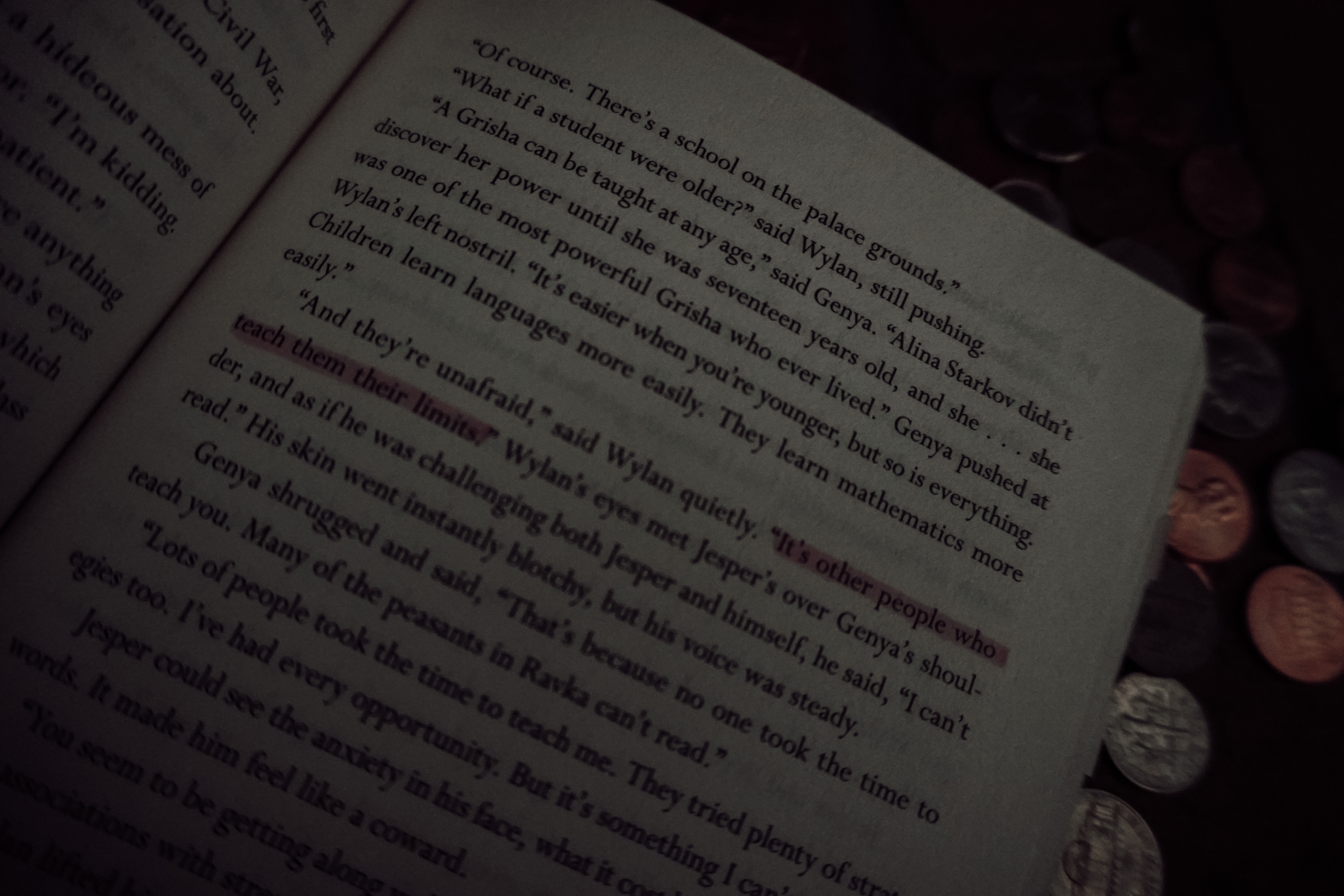
“There’s so much in the world you don’t have to be afraid of, if you would only open your eyes.” (Matthias, 487)
Matthias wants to help the boy holding the gun to him. Perhaps it’s him testing himself in if his latest life’s mission is a worthy one. You don’t just change an entire’s country’s beliefs overnight. You start with one life, one boy. You try to make them understand as you have, and then create a tide of change and rediscovery.
But also, Matthias is looking into a mirror. He wants to help the boy just as he wished somebody would’ve helped him before the druskelles tainted his mind with bigotry. He wants to save him from the future hurt of learning everything you thought was a lie for someone else’s agenda.
Yet, the boy still pulls the trigger.
This might be a spicy take, but I was HYPED that the boy took the shot. I think Matthias would have also taken the shot at that age. It shows just how sharp the druskelles’ claws are in their soldiers. It’s not easy to make that change of beliefs.
I love Matthias so much, but I loved his death.
It proves how hard this journey will be to create a cultural shift, and yet he still believes in the cause.
He doesn’t tell Nina who shot him, because he doesn’t want Nina to seek revenge and put the progress they’ve made in Jeopardy. He wants her to continue their mission even when he’s gone.
However, she’s not going to be alone.
Even in death, Matthias will be with her.
Because home isn’t a country or a place at all.
Home is about the people you surround yourself with and all the lessons they’ve taught you.
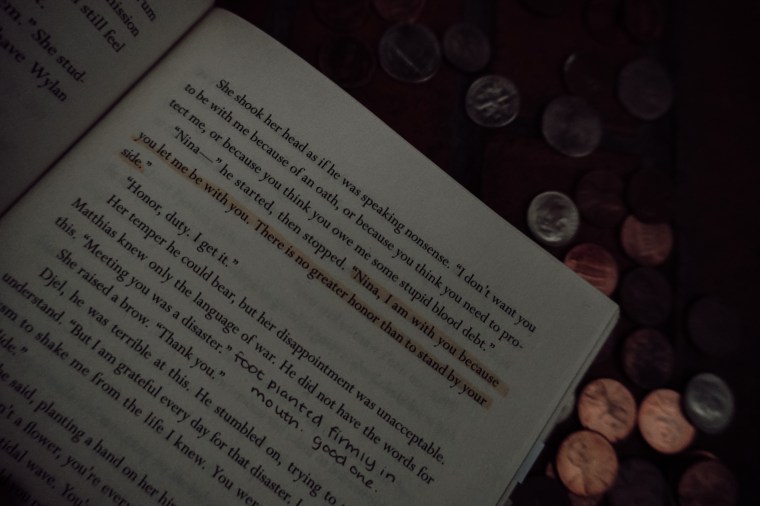
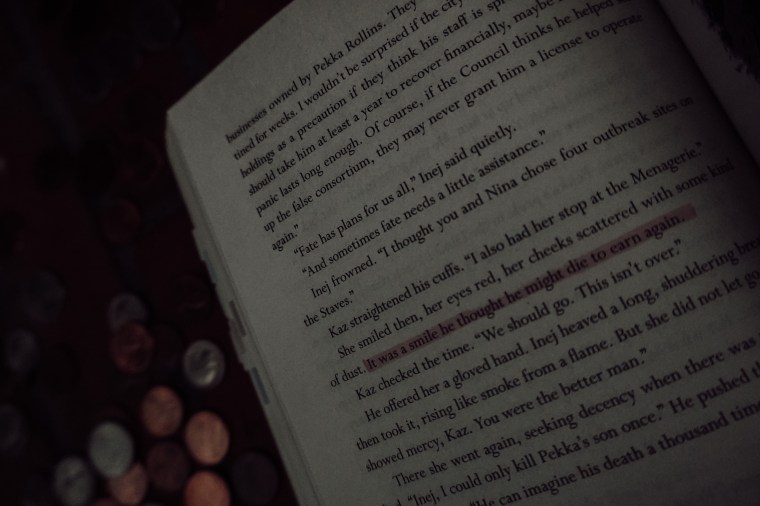
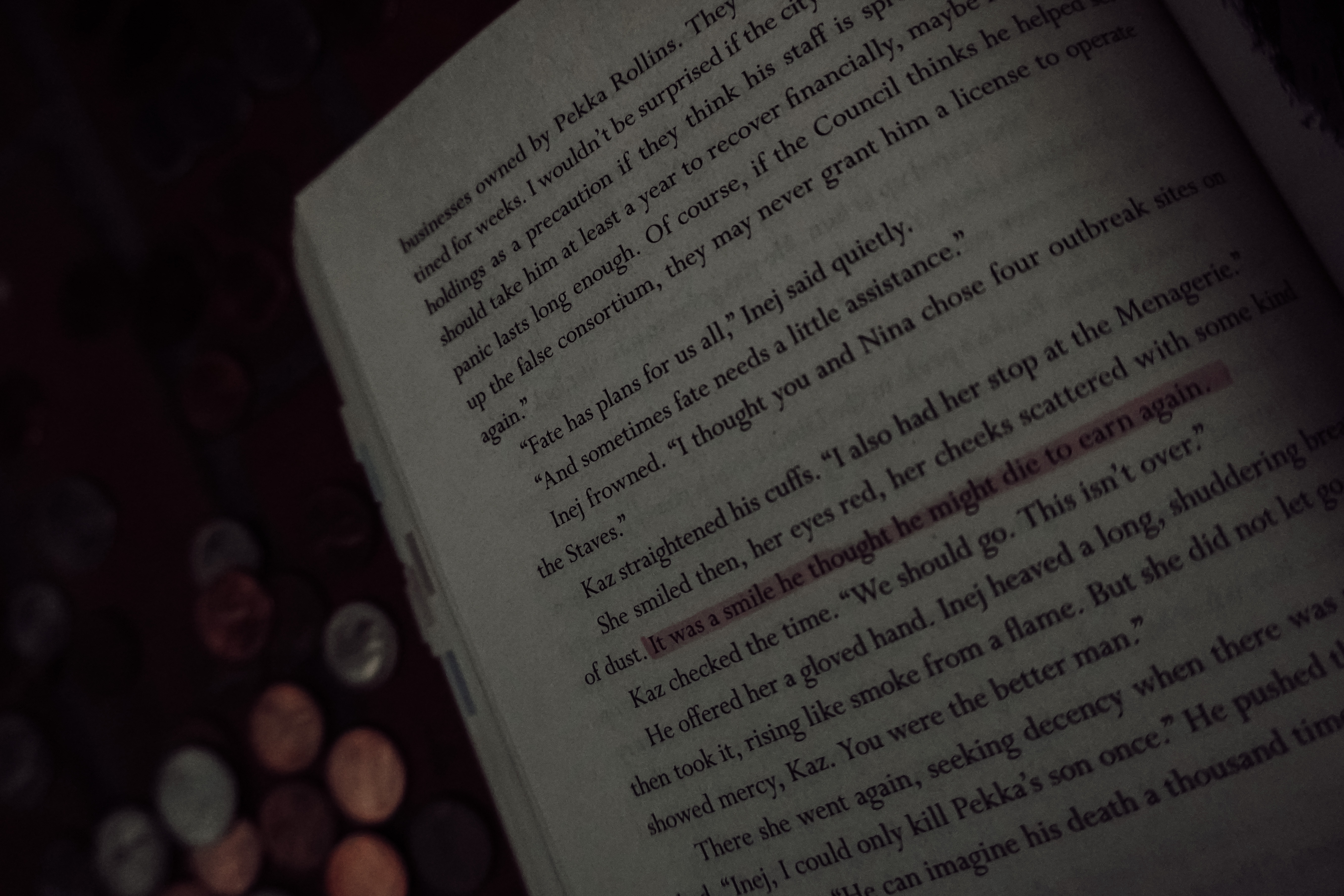
“I could only kill Pekka’s son once. He can imagine his death a thousand times.” (Kaz, 480)
I keep a mental list of my Top 10 favorite book moments, and the scene where Kaz gets Pekka Rollins on his knees at the end of Crooked Kingdom is making a case for a spot on it.
This moment was abhorrent, but also so mischievously clever.
I loved it.
Dissecting this quote is less about these words exactly and more about the context around them.
Kaz gives this response to Inej, who tries to congratulate Kaz for not actually being a monster that would bury a child alive.
He wants her to know that this decision has nothing to do with his own morality and everything to do with revenge.
Dirtyhands is not trying to be a better man. He’s being a smarter man.
Kaz’s whole arc is about bringing down Rollins brick by brick. It’s his life’s mission to get back at Rollins for leading to his brother’s demise. He wants revenge, and it can’t be quick. It must be slow and painful and lasting. Just like how the pain of Jordie’s death has lingered with Kaz.
That’s exactly what Kaz has done, which we actually get to see with Rollins’ POV at the end. The idea that his son is a target will drive Rollins from the Barrel for good.
Killing a little boy is seen as this incredibly heinous act, but isn’t the psychological damage done by the trick just as bad? Absolutely.
The psychological after-effects of losing Jordie were worse than his brother’s death. It’s that trauma that has haunted Kaz more than not having Jordie, because Kaz understands that Jordie wasn’t fit to survive the Barrel.
However, the insecurities brought about by the tragic circumstances of Jordie’s death have hindered Kaz emotionally. It has made him intolerable to touch and distant from people. Dirtyhands knows that mental anguish is distinguishably worse than anything physical.
This also traces back to when Inej called Rollins Kaz’s shadow.
Maybe that is what attracted Kaz to this plan of mind games. He saw himself in Rollins and figured out that there’d be no way to draw blood and win, because that wouldn’t work on himself.
So, what Kaz says with this quote is that he’s not done being Dirtyhands. There’s still no hope for Inej that he will clean up his act. He has firmly ingrained his legend and lore into the soil of Ketterdam, and he can’t remove it. He doesn’t want to. The mental wounds won’t allow it. He’s done his worst trick yet, and this is her final warning of sorts to leave if she can’t accept that part of himself.
Only, Inej doesn’t want an innocent man. She’s not innocent either. She has her own wounds to heal.
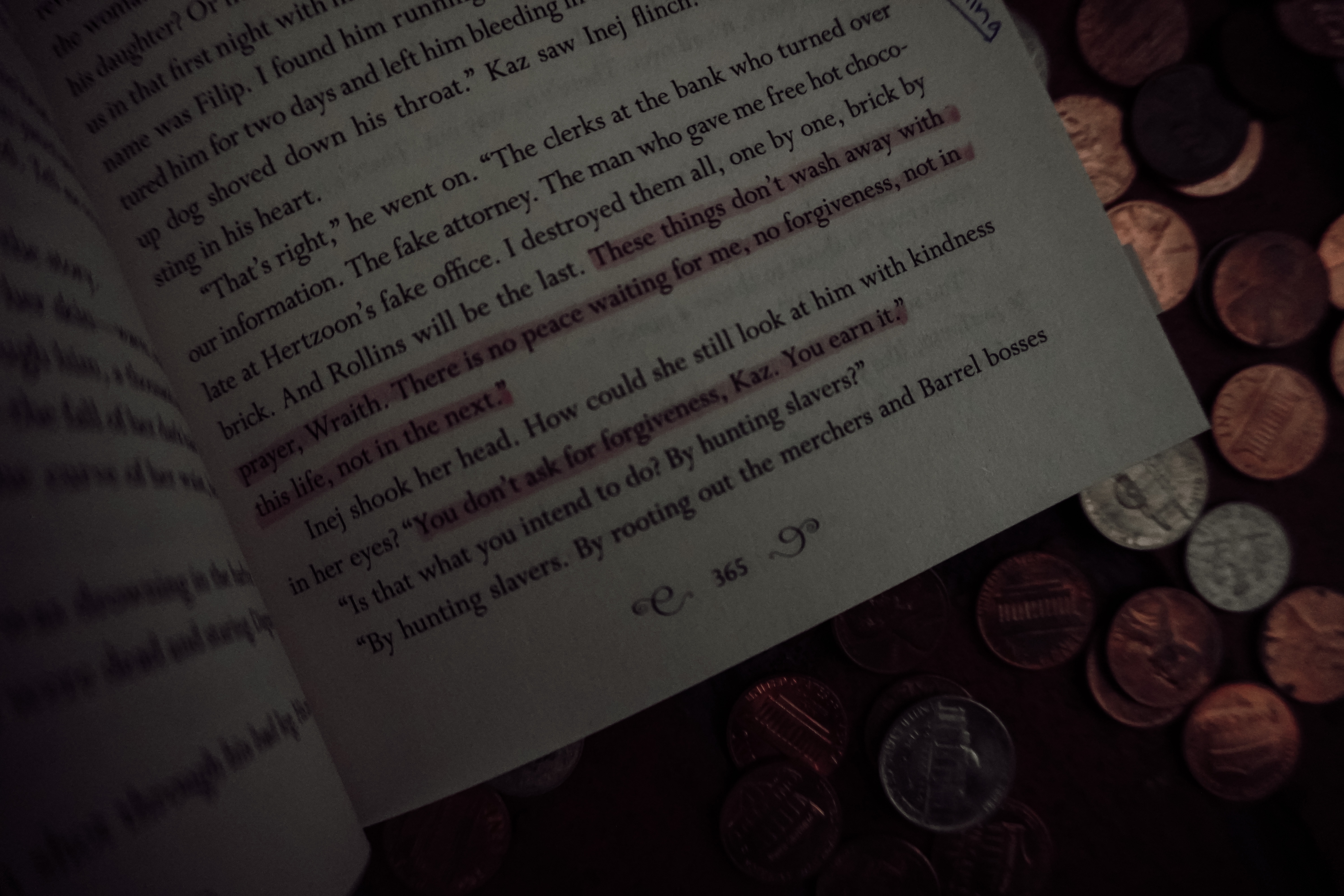
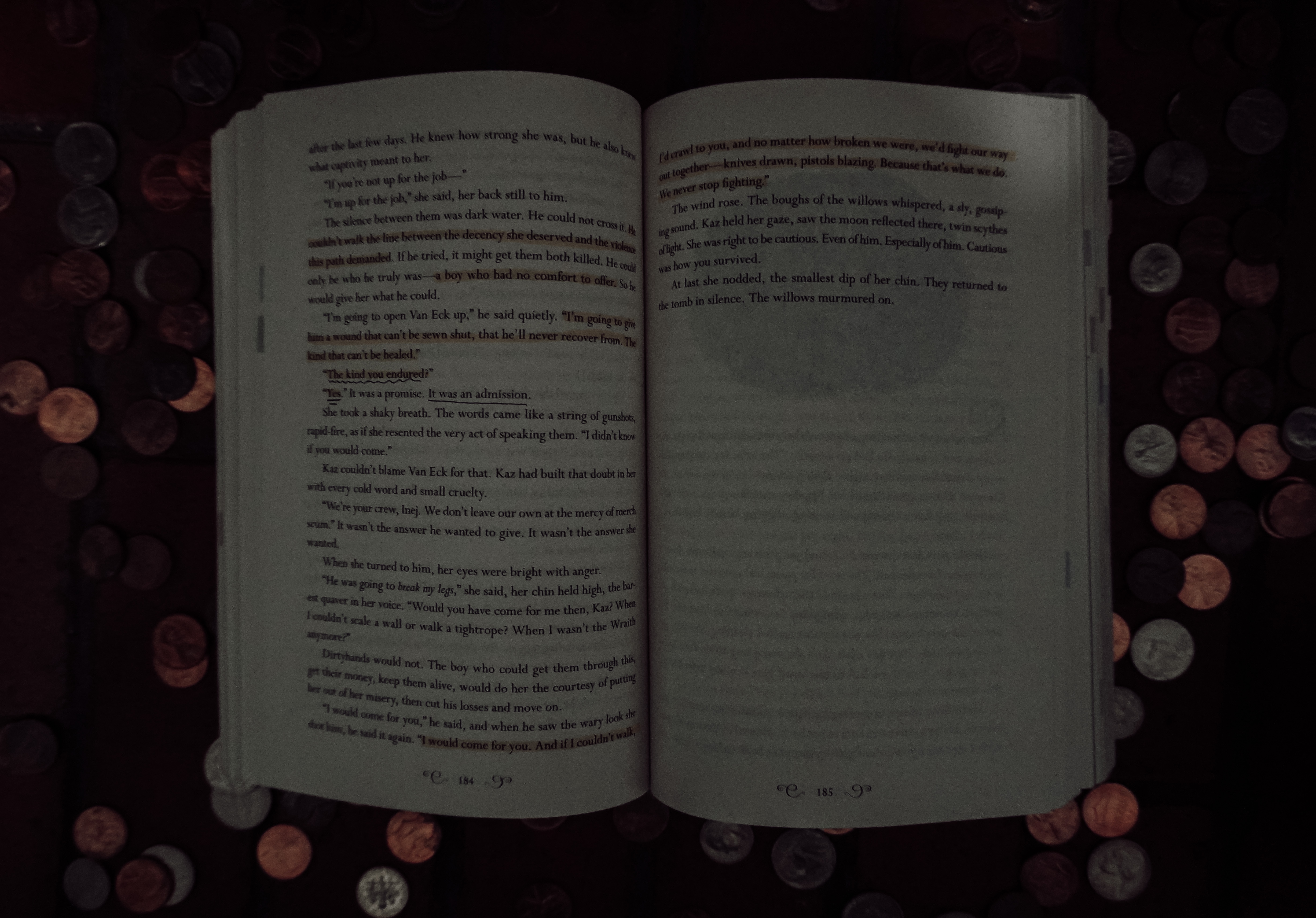
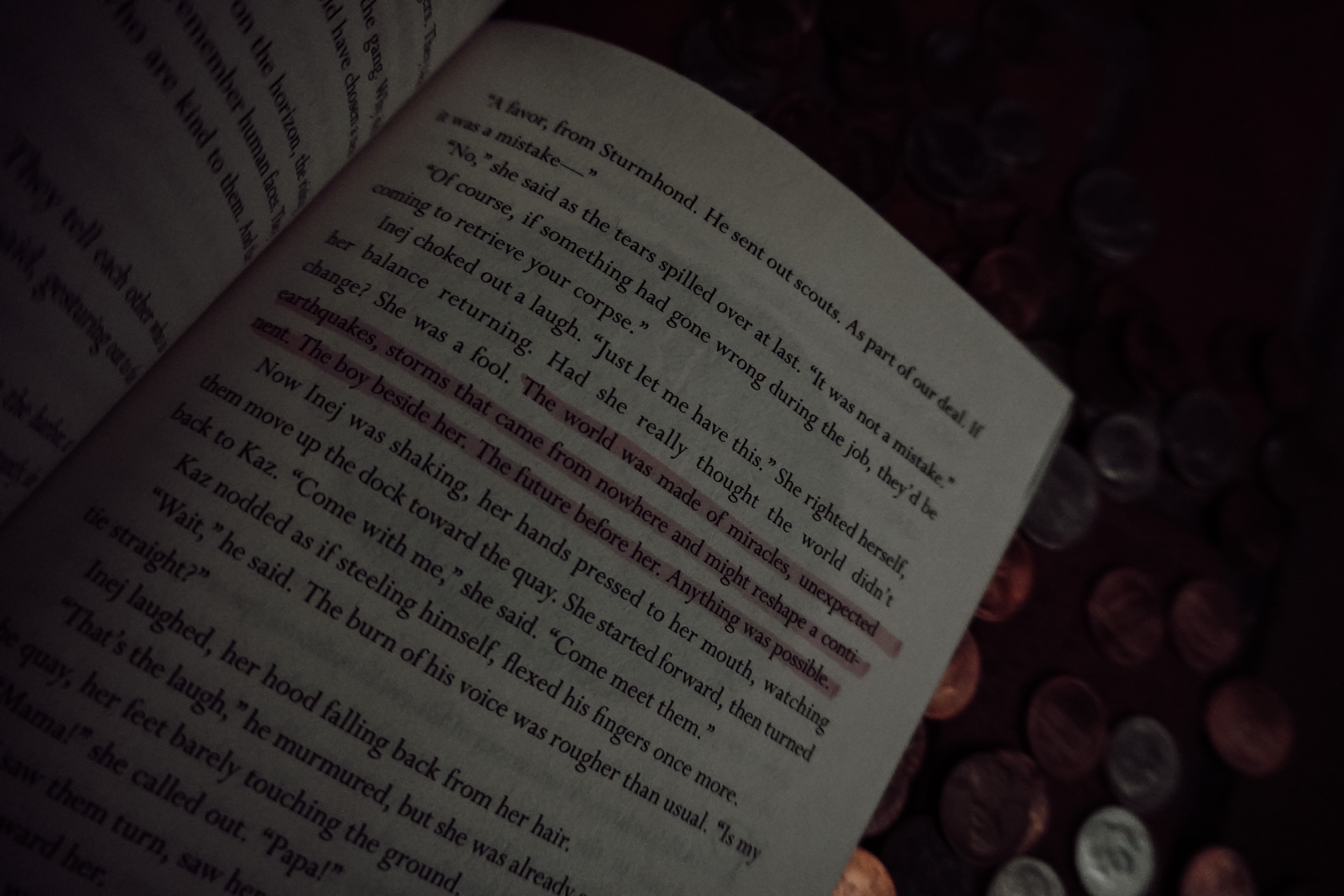
“This city doesn’t need a good man. It needs you.” (Inej, 550)
No matter how despicable Kaz claims to be, Inej knows he has a good heart. She asks for his help tearing down the slaver industry. She wants him to use his persona of being a monster to stop the real monsters in the Barrel.
Inej knows what Kaz is, and she wants him as he is.
As she extends this offer, he extends one of his own in the form of an uncovered hand. It’s a show of good faith and a willingness to work on healing his wounds for himself and for her.
It might be a personal reach, but I saw this quote as the official starting point of the bridging of Inej and Kaz. If I’m correct in that Kaz chose psychological torture rather than physical for Pekka because of his own experiences, then this is Kaz offering the knowledge of his insecurities to Inej — who is the one who made the connection between the two Barrel Bosses to begin with.
This opening up of trauma is all Inej ever wanted. She wants a Kaz without his typical armor.
Thus, this confession leads to the moment where Inej pays Rollins a little visit to further instill the fear Kaz ingrained with his trick. She finds where Rollins is hiding, breaks into his house and cuts Rollins’ chest in warning; then, she swaps out little PK’s stuffed lion for a crow just to prove that he will never be safe.
I also saw this entire end of Crooked Kingdom as Kaz realizing that caring for Inej isn’t a weakness, which he thought in Six of Crows when he looks at her before the money, leading to her kidnapping. Unlike a child, Inej doesn’t pose the same liability to topple Kaz’s empire. She is capable of taking care of herself, but Kaz is also willing to risk it all to protect her, if needed. She makes him stronger, which we see in that scene where she visits Rollins.
Just as a side note, it was so refreshing to see physicality set aside in a blooming relationship in a YA novel. So often YA couples are oversexualized and there’s too much emphasis on the physical. I loved seeing how Kaz and Inej were really focused on being there for each other emotionally, despite their scars and trauma. It created a deeper connection between the two characters, and it was really interesting to see the pieces fit together as their separate arcs merged together. Bravo to Bardugo for creating one of the most interesting couple dynamics in YA literature.
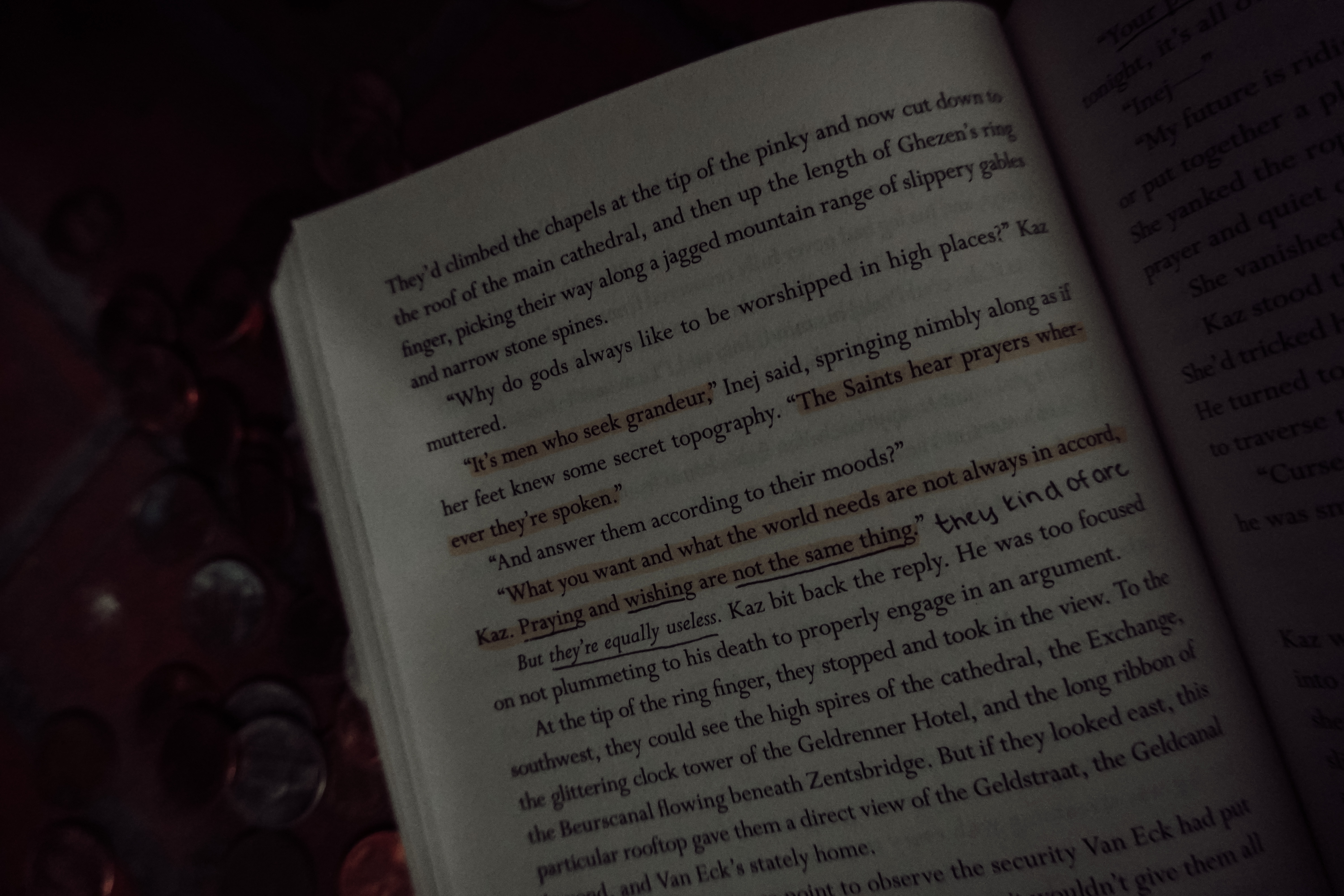
Should I do more??
It took me a few weeks to put this together, so I really just wanted to get it off my metaphorical desk before the book felt too stale in my head; but I have a whole list of quotes I could tear into. If there’s a particular quote I didn’t hit that you want me to analyze, leave a comment to let me know. Maybe I’ll make a series of short posts with them.
I didn’t do any Jesper quotes, which is a shame. He quickly became one of my favorite characters. So, maybe I’ll do a Jesper-specific post. We’ll see.
Final Review
I called Six of Crows a puzzle of a book in my review.
If SoC was a puzzle, then Crooked Kingdom is more like a Labyrinth of twists and turns as a million little heists unfold within its pages.
If I’m being honest, this second installment is the better book of this duology.
Crooked Kingdom fixes what Six of Crows lacks and adds even more.
The world building is leaps and bounds above what Bardugo presented in Six of Crows as the countries of the Grishaverse collide for the auction of Kuwei Yul-Bo, the detailing is more intricate in developing all of these wonderful characters and the romantic side plots don’t overtake the story like so many other YA novels. Bardugo really digs into her characters’ back stories and convolutes their stories even further, while keeping the high-velocity and ever-changing plot at the forefront.
It’s more than just a book about crime and magic.
Crooked Kingdom is about looking deep within oneself and the lens in which you were raised to see the world. It’s about accepting who you are, with all your faults and flaws. It’s about understanding that sometimes you must put aside the moral high ground in order to survive. It’s about how love can grow in even the most brutal of conditions.
I think if there’s any complaints to be had, it’s that I don’t care to read any of Bardugo’s other novels that follow this duology. The ending for these characters was so intensely satisfying to me that I worry that their stories will be tainted by being included as sort of side characters in a new series.
It’s going to take me a while before I pick up the King of Scars duology.
Maybe that’s just a testament to how good this duology is.
5 waffles out of 5.



 Life of Bry
Leave a comment