Analyzing book No. 1 in The Eldest Curses trilogy
“The cult was a joke. Life was a joke, and the fact that his life would never end was its bad punchline.”
Magnus Bane, 282
If you’ve been following my reading journey through Cassandra Clare’s Shadowhunter Chronicles, you know I hold a special place in my heart for Alexander Lightwood and Magnus Bane. Which is exactly why I was equal parts excited and nervous to dive into The Red Scrolls of Magic, which is book No. 1 in Clare and Wesley Chu’s The Eldest Curses trilogy.
TRSoM follows Magnus and Alec during their European vacation that took place at the beginning of City of Fallen Angels in Clare’s initial series The Mortal Instruments.
Valentine Morgenstern is dead, the war is won (for now) and Magnus believes a beautiful vacation across Europe with his new Shadowhunter boyfriend is the perfect way to grow their relationship and relax after a hard fought battle. While seeing a bit of the world outside of New York is great for Alec, he’s more intent on learning about his boyfriend who has centuries worth of secrets.
However, their vacation is interrupted by the threat of a demon-worshipping cult called the Crimson Hand, which may’ve been started as a joke by our High Warlock of Brooklyn many years ago. The thing is, Magnus can’t remember.
Memories or not, Magnus must find the cult’s new leader and put a stop to their murderous ways before the Clave finds out and imposes judgement. Alec is faced with the choice of protecting Magnus or upholding the Laws of the Clave. The choice is easy: protect Magnus Bane.
I was so immensely worried where Clare and Chu could take Magnus and Alec’s story. These are two characters that have been fleshed out incredibly well throughout The Shadowhunter Chronicles. I’d even go as far as to say that Alec has one of the best character arcs I have ever had the pleasure of reading. I was anxious going into this book that it would feel like Clare was pandering to her audience of rabid Malec fans without giving these characters a proper story.
Thankfully, I was wrong. This book was so wonderful, I read it in two days.
Here are all my thoughts on The Red Scrolls of Magic.
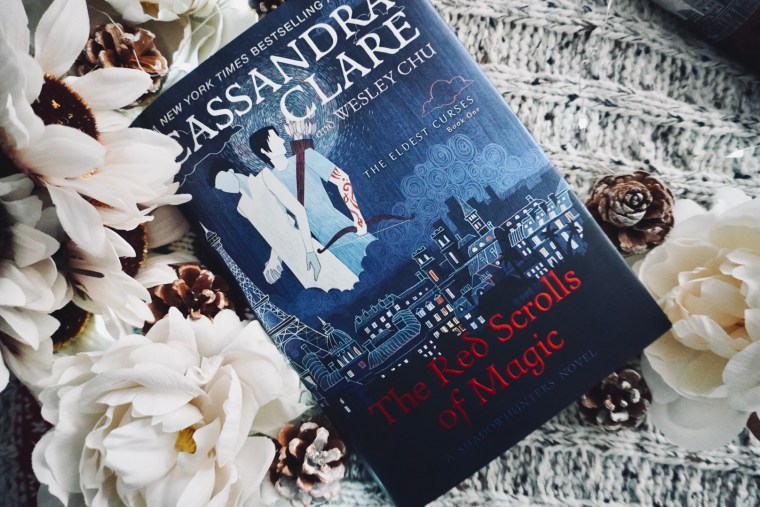
SUBSTANCE … FINALLY
After being thoroughly disappointed with Ghosts of the Shadow Market, I needed substance. I needed a book with at least a decent plot and characters with some depth and growth. Clare and Chu DELIVERED.
The Setting
It was so incredibly smart to start this trilogy during the European vacation because there’s a gap in the story from that moment. Readers familiar with TSC already know Magnus and Alec went on vacation, saw what happened in New York while they were away, and were curious what happened on the other side of the postcards and text messages. Clare created a window and simply climbed through it with Chu.
It’s also clever in that readers unfortunately know what happens after Malec arrives home from their vacation. Alec gets mixed up with Camille Belcourt, an ex-lover of Magnus’s, due to his insecurities around his own mortality, which ends with Magnus calling it quits on the relationship.
The Red Scrolls of Magic gives long-time fans an insight into how and where these seeds of doubt were first planted that ultimately led to betrayal on both sides despite their obvious love for each other. It was just an overall fantastic premise to base the start of the trilogy around.
Also, setting this story throughout Europe kept things fresh and exciting and new. It was a stray away from the usual Institutes and typical settings of New York, Los Angeles and London. It was an adventure.
The Crimson Hand
I will say this: TRSoM wasn’t as dynamic as Lady Midnight was to kick off the near perfection that was The Dark Artifices. Instead, this first installment felt more lighthearted and less earth-shatteringly devastating. It was just an enjoyable read. It kept me smiling as I flipped through pages, which is exactly what I needed to heal from the disappointment of GoTSM.
The plot was good — not spectacular or groundbreaking. It was enough for the story to cleanly unfold before boxing itself back up and tying a ribbon around itself.
I thought the Crimson Hand was intriguing and made sense to Magnus’s character. He’s been alive for over 400 years, and most of it was spent drinking and partying to forget the weight of loneliness from immortality. He’s going to have a few slip ups.
It’s bigger than just a drunken mistake that can be laughed at. Clare and Chu made the message of the Crimson Hand meaningful to Magnus as a character. It’s not just a joke, it was a way for Magnus to cope with his past and his parentage in a way that could help others.
When they find the Red Scrolls of Magic, the sacred text of the Crimson Hand, it’s clear that Magnus wrote the book and most of it was meant as a joke. However, one line holds more weight than the others:
“Seek the children of demons. Love them as you love your lord. Do not let the children be alone.” (183)
Magnus may have created the cult as a joke and slight to his father Asmodeous, but he did actual good with his followers before they were corrupted. It’s a reflection of the warlock’s character. However, the Crimson Hand turning to the Dark Side is a reminder of the person Magnus was, the consequences of the lifestyle he chose and its impact on others.

It also served as a test for Magnus and Alec’s relationship. Would Alec be willing to disobey his angelic duty to protect the son of a demon? How far did Alec’s love and protection go? Turns out pretty far.
He keeps Magnus’s possible involvement with the Crimson Hand a secret from the Clave. He steps outside his comfort zone to attend the Downworlder party in Venice. He risks his own life to save Magnus’s by taking down a pack of demons on the Orient Express. When Magnus is about to be sacrificed by the Crimson Hand, Alec fights his way through the cultists and demons to once again save the warlock from death.
The Crimson Hand served as a train to carry Magnus and Alec’s relationship forward through mountains and valleys, while also shuffling the story along.
It was smart, intriguing and funny. Plus, I’m really interested in the concept of the eldest curses, the children of Greater Demons, and how they often don’t survive because of their own power.
No complaints here for this part of the plot.
My Dark Mirror
I’m a harsh critic when it comes to villains. I expect more out of antagonists than I do protagonists. A good villain can carry a plot in a way that a good hero simply can’t. The villain moves the story forward because their actions are what causes the protagonist to rise to the status of hero. Without a villain, there’s really not a story to be told in fantasy.
My favorite villains are the ones who resemble the hero, ones you can sympathize with, ones you can rationalize their actions.
Shinyun Jung was a fabulous villain and checked off my top boxes for what I want out of an antagonist.
She has a very similar backstory to Magnus. When her warlock mark showed itself, she was buried alive. The Crimson Hand saved her from a cruel death and gave her a home, much like how the Silent Brothers and then Ragnor Fell took in young Magnus. The difference is Magnus found kindness and love amidst the tragedies of his long life. Shinyun did not.
“She is my dark mirror, Alexander. She is in some ways what I could have been, had I not been lucky enough to have experienced love and caring — my mother’s and then Ragnor and the Silent Brothers. I could have been so desperate I too would have joined something like the Crimson Hand.” (200-201)
This parallel allows Shinyun to establish trust with Magnus. She plays on his emotions, including the guilt he clings to because of his past mistakes and the effortless kindness he holds in his heart. It allows readers to consider Shinyun part of Team Good, despite reservations on this mysterious stranger.
She disposes of the octopus demon on the Orient Express and helps save Alec from the poison. She tries on elaborate outfits with Magnus and plays an unspoken game with the warlock on who can be the most extraordinary. She gives our heroes valuable clues — leading them to the Red Scrolls of Magic in Venice and claiming she has an informant in Rome.
It was all to betray Magnus and sacrifice his life to raise Asmodeus so Shinyun could take her place alongside the Prince of Hell as his adopted daughter — only she doesn’t know that Magnus is the Greater Demon’s actual son.
Asmodeus used and deceived Shinyun, just as he had done to Magnus. Another parallel between these two warlocks. The thing is, Shinyun wants a place at the side of the Greater Demon, while Magnus has refused the offer throughout his immortal life.
“I’m not alone. But even if I was, my answer would be the same. I understand what faith is. I know who I am, and I know who I love. My answer to you is no.” (308)

I really enjoyed the constant reflection between Shinyun and Magnus. As readers, we are being fed Magnus’s inner-dialogue of self doubt and guilt. He sees the worst in himself. Shinyun exhibits those doubts and shows readers that Magnus is wrong about who he thinks he is. While he puts on a show of being careless and selfish, he’s quite the opposite.
Shinyun is Magnus’s dark mirror — a reflection of what he could be. The term dark mirror is perfectly symbolic for this character, and we love some good symbolism.
As much as Shinyun is the villain, she’s equally a victim. She’s a victim of a society that allows warlock children to be murdered for simply being born. She’s a victim of neglect and loneliness and cruelty. She’s a victim of Asmodeus, who used all of her insecurities and desperate needs — a family, power, an end to pain — to get what he wanted.
“She’s lost. She’s desperate. I was once all those things too.” (Magnus, 317)
According to Clare, Chu conceived and wrote Shinyun. He should be commended. She was a pretty great villain in the scope of this series. She’s not a world-shaker like Sebastian Morgenstern, who’s dramatics and ruthlessness was unmatched, but she has the motivation and potential to become a truly terrifying antagonist. She’s too damaged, too wounded to take this second chance at life that Alec afforded her to do anything but continue the cycle of suffering. I’d say she’s a solid B-tier villain.
I’m really excited about what Chu and Clare have planned for Shinyun going forward. I hope they give more of her backstory and continue to flesh out her personality. This is something Clare often struggles with, in my opinion. She did an incredible job with Sebastian — probably because she established his character in three books leading up to his spotlight role in the later half of TMI — but then dropped the ball with Malcolm Fade and Annabel Blackthorn in The Dark Artifices and Axel Mortmain in The Infernal Devices simply by not doing enough with them by killing them off before exploring their full potential or hiding them too far in the shadow of mystery to spark attachment or interest.
I’m crossing my fingers that Chu gives Shinyun a little razzle dazzle to make her extraordinary moving forward.
I was put on this earth to photosynthesize Malec content
OK … so I definitely had huge reservations going into TRSoM because I didn’t know how it would feel to read about characters whose stories I already knew. I didn’t quite know how Clare and Chu could make Alec and Magnus’s journey and perspectives fresh and impactful when their relationship has developed for nearly 10 years over the scope of nine books.
There was a moment before I opened this book that I asked myself, “What’s the point of reading a book if you already know the ending?”
The point is the adventure, the small insights on why and how these characters mold themselves into what they become, the beginning of that ending and all the little details in between.
Clare and Chu did a wonderful job at establishing another layer of depth for these beloved characters, and I ate it up. Character development is No. 1 on my personal rubric while reading. Writers can sneak by with a sub-par plot if the characters are strong and well-developed enough, and Clare is an expert at doing just that.
The Red Scrolls of Magic explore the awkwardness of the beginning of Alec and Magnus’s relationship. They’re both insecure in themselves and their ability to make the other happy. They are filled with self doubt and anxiety over this infatuating love that is both new and terrifying. They are each trying their best to be the person the other expects them to be while wishing for the other to see themselves as they do.
Let’s start with Alec.
Alec has a very internal personality type. He’s an introvert because he was conditioned to be. He gets lost in his head because he spent his adolescence believing if he spoke his true feelings he’d be punished and lose what he loves most.
We see an example of why Alec felt this way in the conversation he has with his father prior to leaving on the vacation.
“I — I understand you feel like you have to be true to yourself, but sometimes it’s best to be wise and take a different path even if you feel — feel tempted. I don’t want your life to be more difficult than it has to be. You’re so young, and you don’t know what the world is really like. I don’t want you to be unhappy.”
“What about lying is supposed to make me so happy? I wasn’t happy before. I’m happy now. … Telling the truth makes me happy. Magnus makes me happy. I don’t care if it’s difficult.” (66)
Alec is trying to break out of this hole he was pigeoned into. As he accepts who he is, he wants to be more straightforward, more honest, more adventurous. He wants to be more for himself and for Magnus.
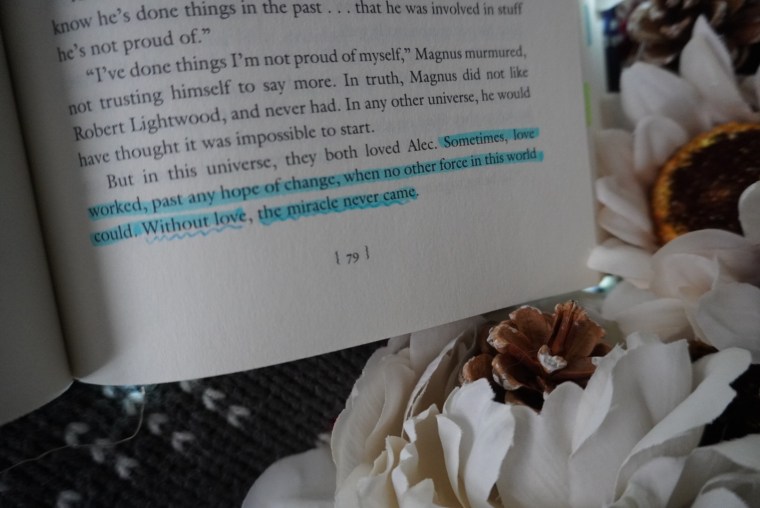
Throughout TMI and into TDA, readers can see Alec’s personality shift from shy and bitter to confident and happy. Clare and Chu dig deeper into this transformation, and it’s so strikingly beautiful to be along for the journey of Alec’s growing confidence.
One of my favorite scenes of TRSoM is when Magnus and Alec dance at the masquerade party.
“He’d always assumed that storybook moments like these were meant for Jace, Isabelle, anyone but him. Yet here he was. … Maybe his life could be amazing. Maybe it always could have, and he’d needed Magnus to open the door and let him see all the wonders he held inside himself. All the capacity for joy.” (Alec, 153)
I’m emotional just typing that quote out. Alec had accepted his life wouldn’t have a happy ending. He was destined for a miserable existence of pretending. This is the first moment where Alec sees himself worthy of happiness. This is growth at its finest.
Side note! This actually reminds me a lot of Izzy’s quote, “But I watch my brothers give their hearts away and I think, Don’t you know better? Hearts are breakable,” in City of Fallen Angels. Much like Alec, Izzy didn’t see a path to happiness due to the burdens her parents put on her shoulders. Maryse and Robert Lightwood definitely weren’t winning any “Parent of the Year” awards.
Clare and Chu continuously give more little nudges at Alec shattering the shell of his former self. Our Shadowhunter, who strictly followed the Clave’s motto of “the Law is hard, but it is the Law”, starts to bend. Alec questions the Law as he witnesses the strain between Shadowhunters and Downworlders firsthand, and we start to see the man destined to become Consul, especially in these three quotes sprinkled throughout TRSoM.
“Alec had always believed in the Law, but if the Law didn’t shield Magnus, the Law should be changed.” (149)
“We change the Clave. From inside. We make new Laws. Better ones. … I’ve realized — I don’t need to change. And neither do you, Helen, or you, Aline. It’s the world that needs to change, and we’re going to be the ones to change it.” (318)
“Alec knew who he was. He knew what he had done and what he had fought for, and he knew what he would fight for in the future. And he knew exactly who he loved.” (329)
A few key things happen within these three moments: Alec decides to put Magnus’s life above the risk of punishment, he recognizes the deep corruption within the Clave and vows to make a change, and he accepts who he is.
Side note! That last quote actually parallels the Magnus quote from above where he refuses Asmodeus’s offer because he knew who he was. These two are growing together, which is important.
It honestly makes Alec’s character development a bit smoother. In TMI, it was difficult to focus too much on Alec’s personal journey because there was so much going on with the plot and other characters. Parts felt rushed or out of place, but still managed to be coherent and impactful.
TMI set the table for Alec’s character development, while The Eldest Curses served the meal.
However, Clare and Chu leave the nuggets of doubt for that awful moment in City of Lost Souls where Magnus watches Alec walk away after ending the relationship.
“Alec wondered if loving a mortal was like that to Magnus, bright but brief. Maybe this was all just a short, insignificant episode in a long, long story. He wasn’t just an open book, he thought. He was a short one. A slim volume compared to the chronicles of Magnus’s long life.” (201)
While growing Alec’s confidence is important, it’s equally essential to include moments like the above to fit TRSoM perfectly into its rightful place among the larger story of TMI. Alec’s worries about Magnus’s immortality don’t overpower his feelings of love, but it’s a subtle nod to the dangers that lie ahead.
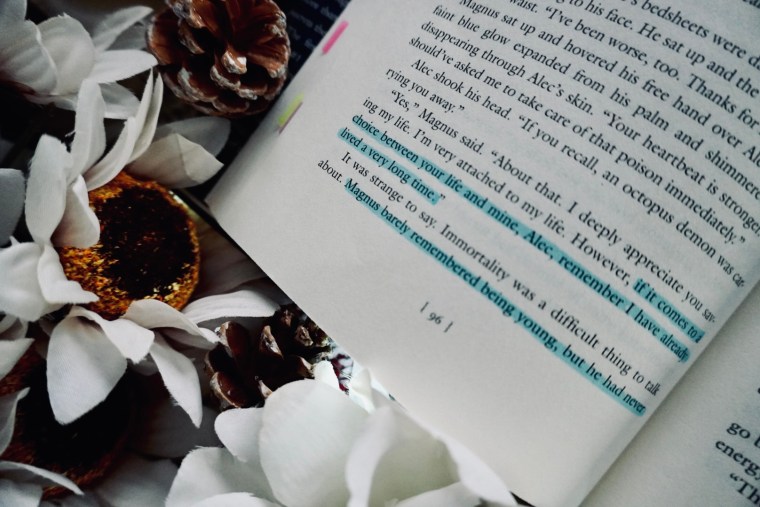
In a twist I didn’t expect, it’s Magnus whose inner thoughts are a jumble of worry and doubt.
Magnus has one of the most intriguing POVs, in my opinion.
He has centuries of life behind him and ahead of him. He’s loved and lost and been hurt repeatedly throughout history. He’s created a near impenetrable armor of masked confidence with a glamorous life of aloofness where if the drinks keep flowing, the music keeps playing and his feet keep moving, nobody can see the pain hidden underneath the elaborate clothes and body glitter.
“If Magnus could make everyone else laugh, surely he would feel like laughing himself. If he was enough fun to be around, he would never be on his own, and if he pretended he was all right, surely that would become the truth.” (281)
I didn’t expect to be singled out when I opened this book. Oof.
Magnus is learning that you don’t always need to put on a show to be valuable enough to keep around. You don’t need to pretend to be someone you’re not to ease the pain of existing.
That’s another similarity between Magnus and Alec, also. They both created alternate realities for themselves, in a way. As Magnus would put it, these two characters are beautiful contradictions. Magnus hid behind the glitz and glamour of his partying lifestyle where he never stood still enough for anyone to notice the kinks in his armor, while Alec hid himself in the shadows underneath worn out sweaters and scowls — afraid that if he stood out too much, people would see through his facade.
Together they can help the other ditch the disguise and see themselves for who they truly are: kind, caring, compassionate, fierce, loving and everything in between.
Despite his centuries of experience, Magnus is still weary in his deep feelings for Alexander. He’s facing doubts and genuine concerns from all angles.
From himself:
“Other lovers had told Magnus that he was impossible to take seriously, that he was terrifying, that he was too much, that he was not enough. Magnus might disappoint Alec. He probably would.” (9)
From his best friend Catarina Loss:
“The Nephilim do not admit weakness. There is no room in their hearts for pity or mercy. I have seen the children of the Angel murder their own for breaking their precious Law. Magnus, we’re talking about your life.”
“Catarina, I love him.” (127)
From his father Asmodeus:
“He could never love something like you. Alight with magic from Hell, and burning everything you touch. He may want you now, but you never told him about me, did you? Which was wise of you. If he did know, I’d have to kill him.” (307)
Side note! That very last line is IMPORTANT. The fact Asmodeus threatens to kill Alec makes the leadup to the breakup make more sense. Magnus didn’t divulge his parentage, not just because he was embarrassed or worried about what Alec would think, but because he feared for the Shadowhunter’s life. Maybe for Magnus, breaking up with Alec at the end of City of Lost Souls was more of a necessity to keep Alec safe.
Just as Alec risks his safety and spot in Nephilim society by loving Magnus, the warlock is in danger for his love of this Shadowhunter. Alec could turn on Magnus. He could put the warlock at the mercy of the Clave for any of his past slip-ups, which would ultimately end in his death. Magnus chooses to put his life in Alec’s protective hands despite his reservations and fears.
“Love changes you. Love changes the world. You cannot lose that love, no matter how long you live, I think. Trust love. Trust him.” (Tessa, 334)
I thought Clare and Chu did a fantastic job at building the trust between these two and negating the negative emotions they had about themselves and the less than flattering preconceived notions that surrounded them based on their positions in the Shadow World.
Alec goes out of his way to protect Magnus around every turn. He cradles the warlock’s body under his own when the hot air balloon crashes and fights through poison to save Magnus from the Raum brood mother demon on the Orient Express. Magnus is not used to being the one who’s being protected. He’s usually the protector. He thought that allowing yourself to be protected would make you weak, but he’s learning to accept the protection from Alec — mostly because he has no choice. Alec is wild.
We also see Alec continuously offer his protection to others, as well. He flung himself on Catarina to shield her from the building collapse in Venice, he defended the werewolf Juliette from demons on the train, and he stood up for the New York vampire clan when they were being accused of killing Mori Shu.
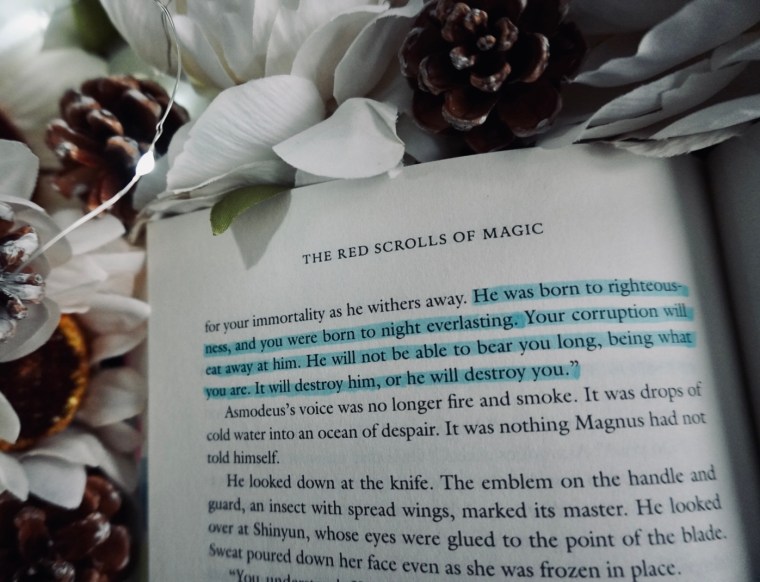
Alec repeatedly proves to Magnus that he’s not like the Shadowhunters the warlock has met in the past who could be carelessly cruel, especially toward Downworlders.
This Shadowhunter is compassionate and kind and understanding, and he sees the same in Magnus. As the warlock’s head is filled with guilt for the Crimson Hand and all his wrongdoings, Alec is holding onto all the little things that prove Magnus had not gone cold with his centuries of life.
He focuses not on the demon-worshipping aspect of the cult, but how Magnus created the Crimson Hand with an intent to help warlock children who were abandoned by the world like himself. He realized that Magnus had helped Raphael at some point, though the vampire wouldn’t be caught dead admitting it and the warlock would downplay his impact. He’s not even surprised that Magnus saved Catarina from being burned at the stake. When Alec is tasked with finding the real Magnus in the face of dozens of illusions, he picks out the warlock who drops the dagger before defending himself against Shinyun.
“Alec was now absolutely sure that in the bright chaos of his long, strange life, Magnus had stayed kind.” (174)
Most importantly, Alec listens to the story of how Magnus had killed his stepfather to save his own life and offers validation and reassurance.
“You saved yourself. You saved yourself, and then you saved so many people. You couldn’t have saved anyone if you hadn’t saved yourself. I would never have found you.” (204)
Magnus is the one with centuries worth of wisdom, yet it’s sweet, young Alec who delivers exactly what this warlock needs to find a string of comfort to start pulling himself out of the dark chasm of guilt. Alec’s constant voluntary goodness allows Magnus to slow down.
“Magnus had always had a wanderer’s heart. Over the centuries, he had adventured in so many different places, always looking for something that would fulfill his restless hunger. He never realized how all the pieces could fall together, how home could be somewhere and someone. He belonged with Alec. His wandering heart could rest.” (344)
Before I close off this section, I need to point out a few quick things I thought were valuable to the character arcs of Magnus and Alec.
First, Magnus persistently gives Alec positive affirmations throughout TRSoM. Alec isn’t used to being complimented, so every time Magnus points out he’s handsome (well, hot) or says he never misses an arrow, it’s a way of showing this Shadowhunter that he’s worthy of those sentiments. It helps build his confidence in an elusive way that isn’t cringey or in-your-face.
Second, a huge trope throughout TRSoM is Alec wants to lose his virginity to Magnus, but they keep getting interrupted. He’s ready to take this relationship to the next level, but the warlock is being extremely careful with his Shadowhunter. Magnus understands he has a position of power in this department due to his age and experience, so he’s waiting patiently for Alec to make the first move.
Fantasy novels so often fall into the trap of mystical, ageless beings seducing very young, naive mortals; so it was refreshing to have Clare and Chu really set boundaries between Alec and Magnus. (I still hate that Clare had these two meet and start “hanging out” when Alec was only 17. It’s just icky.) Magnus hands the power he has over to Alec to make sure the Shadowhunter is comfortable and ready.
Finally, the relationship between Alec and Izzy was adorable. Alec mentions a couple times throughout the book that he always knew Izzy would accept him no matter what. She knew he was gay before he’d allow himself to accept it, but she never pushed him. She would try to start conversations about buys, but never called him out when he hastily shut it down. Alec found comfort in knowing if everyone else in his family disowned him for being gay, he’d at least have Izzy by his side.
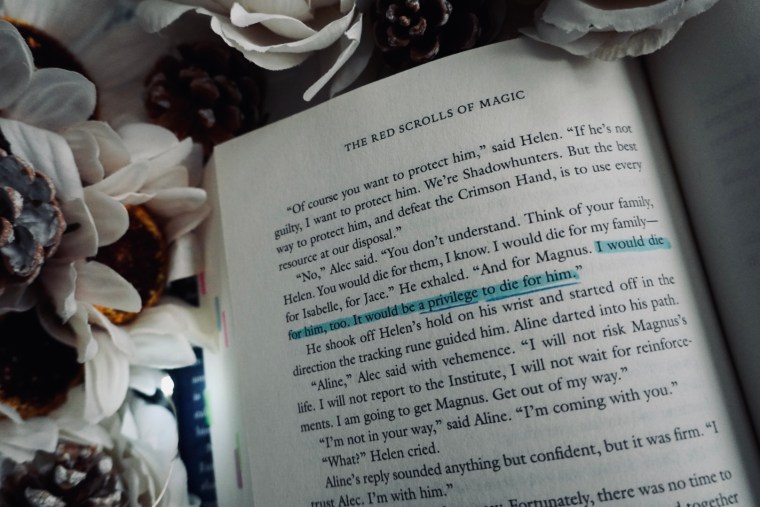
So many cameos it feels like a Disney Channel crossover episode
While The Red Scrolls of Magic primarily focuses on Alec and Magnus, we get appearances from various characters throughout the Shadowhunters’ universe. I’m usually not a fan of cameos as it can often feel awkward or out of place, but I thought Chu and Clare did it in a way that flowed naturally and gave actual useful insights to characters.
Readers get the calls and texts between Alec and his siblings, which were just so fun and adorable. It showed the sibling dynamic between Alec, Izzy and Jace. From Izzy asking deeply personal questions with innuendos to Alec’s attempt to get sex advice going completely over his parabatai’s head, it was perfection. Also, this one conversation between Izzy and Alec had me cry laughing:
“Do you think Simon invited Jace to hang out with him?”
“Bro, I do not.” (191)
Poor Simon. Jace just wants to be his friend without saying he wants to be your friend. That recurring joke of Jace trying to force a friendship while Simon thinks the other boy hates him is my absolute favorite. It gets me every time.
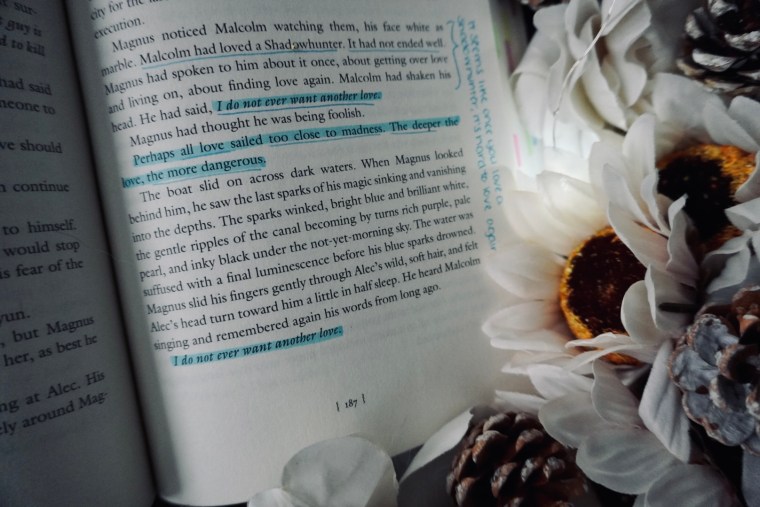
We also get to see Malcolm, who just became the High Warlock of Los Angeles and seems to already have the respect and trust of Helen Blackthorn. Magnus also acknowledges that Malcolm had once loved a Shadowhunter, and it didn’t end well — furthering the notion that loving one of the Nephilim isn’t easy on the heart.
There’s also appearances by Tessa Gray, Barnabas Hale, Hypatia Vex, Raphael, Lily Chen and Elliot; which are important to establish their connections to Magnus as friends and colleagues and how the warlock’s relationships will be impacted by his affiliation with Alec.
My favorite cameo was Johnny Rook.
I find him to be such a fascinating character. He gave Magnus information on the Crimson Hand in exchange for a lotion that would allow somebody to be concealed from the eyes of the Nephilim and expressed a genuine fear from the faerie deaths. I liked that Clare included this very brief encounter to better construct Rook’s character as a fairly prominent member of the Downworld. It also bridges the gap between TMI and TDA. But it begs the question, who’s watching 10-year-old pickpocket Kit while his dad is at the Paris Shadow Market?
It did feel as if Clare was trying to force readers to see Johnny in a better light, which I’m not buying into. I understand he’s heartbroken from Rosemary leaving and is detached to keep his son safe, but he still neglected and abused Kit. Yes, he’s actively trying to take precautions to protect Kit, but it doesn’t excuse the fact that his son felt unloved his entire life. We’re not going to make excuses for ole Johnny Rook being a shit dad.
The most noteworthy cameo isn’t even a cameo. They’re more like side characters: Helen Blackthorn and Aline Penhallow.
YES.
Readers familiar with TSC know Helen met Aline while on her travel year, and the rest is history. The Red Scrolls of Magic shows the very beginnings of Heline, and I didn’t know I needed it until I got it. Bless your soul, Clare.
Helen is also investigating the Crimson Hand after a warlock comes to her personally requesting help. Since Helen is half-fae, she feels as if she has to prove her loyalty and worth to the Nephilim. She’s skeptical of Magnus, and, in return, of Alec. It’s Aline, a family friend that Alec bumps into in Rome, that convinces Helen that Alec is trustworthy.

It was interesting to see a much different Helen than the one depicted in TDA. She’s a bit colder because of her mission to establish herself as reliable. She’s very willing to bring Alec in to face the Mortal Sword and even goes as far as to accuse Magnus of seducing Alec to be a member of his demonic cult. It almost feels like an act, because Helen is constantly backtracking her statements from accusatory to understanding. After her wild seduction theory, she follows up with an apology.
“I’m sorry. I understand you trust Magnus Bane. I get it, I do. I trust Malcolm Fade and many others. I have no reason to distrust Downworlders, as you might well understand. But you have to see this looks bad.” (227)
Much like how Magnus and Alec have built personas to hide behind, Helen does the same. She’s trying to uphold the Law to validate her place among the Shadow World. Seeing the effort Helen puts in to prove herself just makes knowing that she’ll later be exiled feel even worse.
As for Aline, she hasn’t changed much. Perhaps she’s a little more shy and less bold, but is still feisty and fierce as ever. She asks Alec for Helen’s number, it’s Helen who expresses outward interest first with the declaration that Aline is “hot like hellfire”, and it’s Aline who holds Helen’s hand and tells her she’s a great Shadowhunter. Aline even fumbles over herself as she rambles trying to be smooth, which is absolutely adorable and so unlike the woman who intimidated the Blackthorn children into respecting her in TDA.
“You are the most beautiful person I’ve ever seen, Helen Blackthorn. And you fight like poetry. When you talked about your family, you made me want to cry. So let’s get coffee, or dinner, or we could go on a weekend trip to Florence. Wait, no, or I could say something more suave and sophisticated than that. I’ll read some romantic books and learn to phrase things better.” (327)
Representation is important.
Helen and Aline may not be the lead couple in TRSoM, but their inclusion allows for another vital story to be told. Love comes in all shapes and sizes because people come in all shapes and sizes. This book tells the story of accepting yourself despite the expectations of society, and it was beautiful to watch the emotions blossom between Helen and Aline and have that representation included for young girls/women who can see themselves in those characters. Everybody deserves to know they are worthy of a happy ending.
Also, Alec being the reason Helen and Aline had a long-standing impact. When Alec becomes Consul in Queen of Air and Darkness, the very first thing he does is permanently reverse Helen’s exile, bringing Aline and Helen back home to their families for good. Alec never forgot what they did for him by helping him save Magnus, and he returned the favor. It all comes full circle, which is very satisfying.
Too bad this meeting never happened. (IYKYK)
(Super side note! Helen mentioned that her little brother Julian was so smart “he could be Consul one day”, and it really punched me in the chest. Julian is only about 11 at this point, and Helen already sees the greatness he has in store for him. She just doesn’t know that greatness will be formed out of tragedy.)
Final thoughts
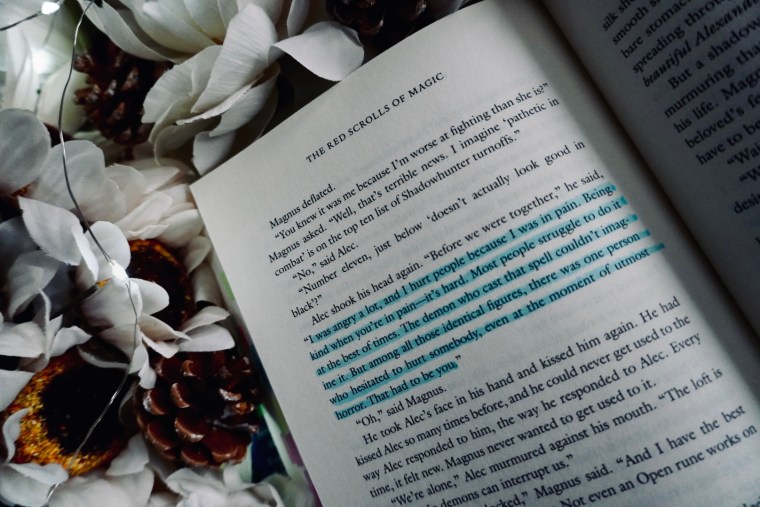
The Red Scrolls of Magic was a satisfying, endearing and thought-provoking adventure full of laughter and love as Magnus Bane and Alexander Lightwood tested the limits of their new relationship. Together the warlock and the Nephilim had to overcome the expectations set by society that planted seeds of doubt in their ability to make each other happy or to be worthy of happiness themselves.
The plot is humorous, interesting and easy to follow, while also tackling heavier topics such as guilt, the weight of life, abuse and more. TRSoM manages to be both light-hearted and emotional without being overwhelming.
Clare and Chu managed to make these beloved characters’ stories fresh, as Alec gains a quiet confidence as he begins to accept who he is and recognizes his self worth and Magnus learns to break down the walls he spent centuries building to conceal the pain of eternal life. These characters are complex, inspiring and relatable with arcs that help them grow both as individuals and as a couple.
Chu also created an emphatic antagonist in Shinyun, who draws sympathy from readers from the symbolism of being Magnus’s dark mirror and a potential to be a dangerously powerful villain.
I want to call TRSoM a casual read, but that feels wrong.
Sure, it’s not as dramatic and weighty as Lady Midnight and it doesn’t drive as much of an emotional response as Clockwork Princess, but it does feel like an essential and impactful part of the greater Shadowhunter Chronicles timeline. Alec and Magnus are prominent members of the Shadow World moving forward, it doesn’t feel right to boil their story down to something as aloof as the word casual.
However, that’s the best way to describe this first book in The Eldest Curses trilogy.
Coming in at 345 pages, it’s shorter than many of Clare’s other works. It also only has two POVs, which is significantly less than other TSC installments. It’s joyful and funny, despite its depth. You don’t have to think too much about the story telling or the plot, you can just sit back and enjoy as the adventure unfolds. It’s a book that made me smile with every page turn.
As much as I hate to say it, it’s a casual read. A really great casual read, and sometimes you need a casual read to cleanse your palette.
Bring on The Lost Book of the White.
4.2 Chairman Meows out of 5.
P.S. No thoughts, head empty … just Alec’s pure joy of driving that red Maserati through Italy. When has he ever done anything for reckless exhilaration? Probably never. Buy that man a Maserati, Magnus.

 Life of Bry
Leave a comment