A deep dive into the novella collection by Cassandra Clare, Sarah Rees Brennan, Maureen Johnson, Kelly Line and Robin Wasserman
“Life was full of broken hearts and missed chances.”
Jem Carstairs, “The Land i Lost”
*sigh*
I’m just going to say right out of the gate that I’m conflicted about this one. Ghosts of the Shadow Market is the first Cassandra Clare book since Clockwork Angel that was kind of … unsatisfying. It wasn’t bad at all, but it wasn’t as complete as some of Cassie’s other novella collections. It left me feeling as if something was missing that I somehow looked past.
*sigh*
OK, let’s jump into everything.
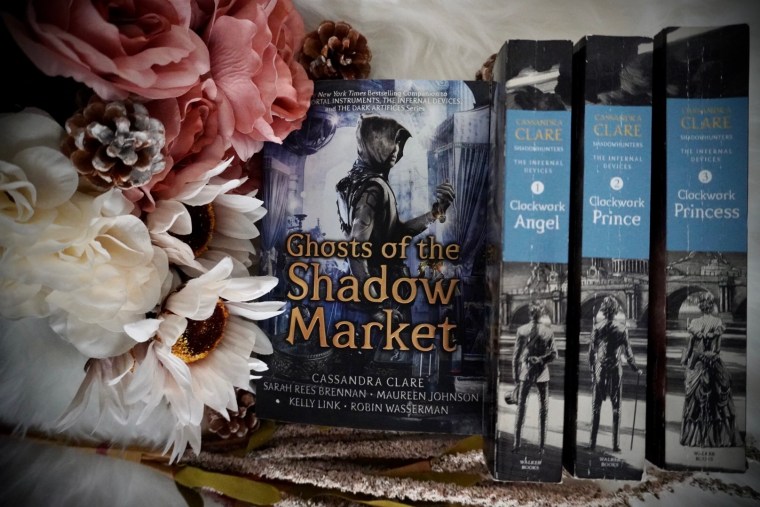
GoTSM, co-written by Clare, Sarah Rees Brennan, Maureen Johnson, Kelly Link and Robin Wasserman, is the third novella collection in The Shadowhunter Chronicles and was published in June 2019.
In 1878, Jem Carstairs had a choice: die young from the yin fen that burned his blood for years OR become a Silent Brother and swear to hold the Nephilim’s secrets for eternity to evade death. Unable to leave his parabatai, Will Herondale, and true love, Tessa Gray, behind, Jem chose the latter and became Brother Zachariah.
Ghosts of the Shadow Market features 10 short stories following Brother Zachariah’s journey through various Shadow Markets around the globe on assignments for the Silent City and a personal mission to protect those he loves and find a lost line of Herondales. For 129 years, Brother Zachariah clings to humanity and hope, meets old friends and makes new ones along the way, serves as a protector of the innocent and spreads a message of loss and love throughout the Shadow Markets that he has become such a familiar presence at.
That is until his salvation is brought by none other than a Herondale, and he is once again mortal. The wheel has spun and Jem has received a second chance at life.
Here is the good, the bad and the best from Ghosts of the Shadow Market.
The Good
I feel like I say this in every single one of my reviews, I’m going to say it again: There was so much to love about this collection.
Shadow Markets
The backdrop of the different Shadow Markets was a fun way to tie the short stories together, while also giving readers a look into how these different markets function within the Shadow World.
I was positively obsessed with the not-so-secret creepy carnival market in Chattanooga from “Learn About Loss” and how the Downworlders lured in mundanes that were devastated by the Great Depression with promises of food, fun and forgetting the outside world with little to no cost to them. It’s simply the perfect atmosphere for a Greater Demon to feast on the fears and vulnerability of mundanes.
While the Chattanooga market was my favorite overall, the most intriguing “modern” Shadow Market was definitely New York City’s. I liked the aesthetic of it being in an abandoned theater (very New York), and how it felt a little more mysterious yet casual than the others. On one hand, Jem buys Kit candied moonflowers to eat, which establishes trust in the vendors; and on the other, Janus is able to pay to see some weird illusion of Clary, which shows that there’s vendors that don’t ask a whole lot of questions. I’m bummed Clare didn’t include the Shadow Market in The Mortal Instruments, because I feel like Jace would’ve definitely hung out there during his more angsty days before Clary.
The setting of Shadow Markets also allowed Clare and Co. to establish differentiating tones between the Nephilim and the Downworlders at the separate markets, along with how they can be places of great escape and also personal ruin. Shadowhunters aren’t necessarily welcome at any of the markets, but there’s differing degrees of unwelcome.
Matthew Fairchild dances with the faeries and makes the market a place where he can lose himself in the reverie of mischief; however, he’s sold a misleading potion that nearly kills his mother and causes her to miscarry. Céline Montclaire found safety in the Paris Shadow Market when she would run away from her abusive parents, but, when she returns on a mission with the Circle, she finds she’s the danger to herself for what she wants but can’t have … Stephen Herondale.
Then, there’s the Buenos Aires market that is more of a refugee camp than the whimsical markets seen in prior stories, where Shadowhunters are refused entry due to the strained relationship between the Nephilim and Downworlders since the Dark War. Shadowhunters are despised and feared to the point a young orphaned Nephilim is left uncared for within its walls after the boy’s werewolf guardian is kidnapped.
The different Shadow Markets around the world are all a mix of wonder and horror, driven by the Downworlders who have molded an escape from the peering eyes of the ever watching Nephilim. They’re a safe haven for those who find their place among the stalls, and a deadly trap for those who are far too arrogant to be wary of tricks. Back in Lady Midnight, Julian Blackthorn told Emma Carstairs that the Followers at the Lottery were simply looking for a place to belong with people similar to themselves, and I think the same can be said for Shadow Markets. The market offers mundanes with the Sight and Downworlders a space where they feel less alone.
I’m really curious about other Shadow Markets. Is there one in every major city or are they more regional — like the U.S. only has one in Los Angeles and one in New York? I lived in Pittsburgh for awhile, and now I’m just thinking about where its Shadow Market would be. Maybe Market Square? The Strip District?
Jem’s Personality
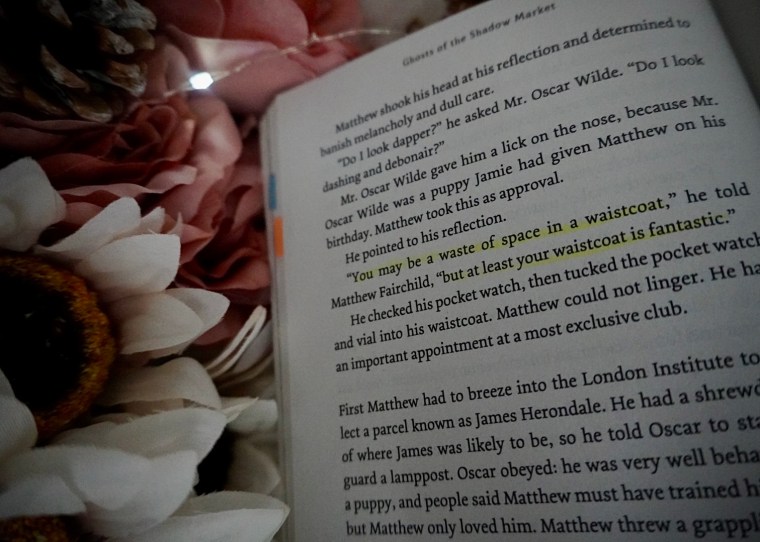
Will Herondale kind of steals the show in The Infernal Devices. He’s a wild soul full of reckless angst, wonder and one-liners. However, it took me time to warm up to Will’s exaggerated personality, while I immediately fell in love with the soft, subtly of Jem Carstairs.
I loved that throughout GoTSM, Jem’s personality shines through, even as Brother Zachariah. He’s kind, sweet and funny; and it’s about time that he gets the appreciation he deserves.
In “Learn About Loss”, Brother Zachariah jokingly tells Sister Emilia that Silent Brothers collect knock-knock jokes, and then utilizes one to distract her from Belial’s magic. It’s so dumb, but such an expert way of showing Jem’s soft humor.
Then, in “Son of the Dawn”, Lily Chen starts her infamous line of nicknames for the Shadow World’s most handsome Silent Brother, and Jem eats it up in his own humble way.
“I hardly think Brother Beast-with-two-backs-ariah needs a love charm.”
Thank you, but no. I’m very flattered, though Brother Enoch is a fine figure of a man. (292)
The way Jem appreciated Lily’s nicknames was adorable. I felt as if Lily joking with Brother Zachariah was a way for Jem to hold on to his humanity. People do not joke with Silent Brothers, so Lily’s amusing taunts are a way to differentiate himself from the coldness of emotionless immortality.
The nicknames become a staple throughout the rest of the collection, and Tessa at one point calls Jem “Brother Snackariah”. So funny, so cute. I was in love. Peanut-butter-and-Jem sandwich was my absolute favorite.
Plus, Kit also gets in on the action. When a faerie vendor hits on Jem at the NYC Shadow Market in “Forever Fallen”, Kit starts choking before calling him “Brother Hauntingly Attractive” and saying he’s going to tell Tessa. He knows she loves it.
And if we thought 129 years as a Silent Brother would make Jem any less awkward, we were wrong. I thought it was so sweet in “The Land I Lost” how Jem seemed very uneasy around little Rafael. He just KEPT losing him. You were a silent angelic ninja for over 100 years, and you can’t keep track of a singular child?
He’s also still a super innocent, sweet cinnamon roll that’s clueless. I lost it when the girl at the bakery said Kit was a beast, and Jem told him to stay away from her because he thought she was being rude. Of course Jem is out of touch with current slang; he’s been cooped up in the Silent City for over a century.
Since we met Jem back in Clockwork Angel, he’s always been a symbol of blissful innocence in contrast to the forced treachery of Will. Clare and Co. really brought out the intrinsic goodness of Jem throughout all 10 stories with the subtlest details, and it was marvelous.
Love and Loss
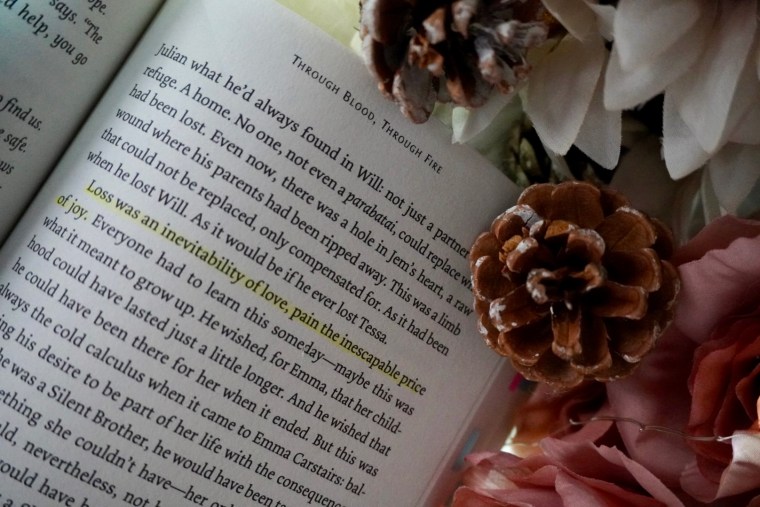
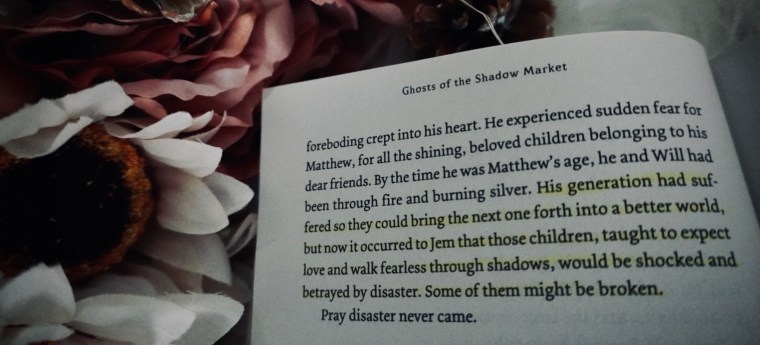
I think it’s safe to say that Clare really likes to hit home the themes of love and loss in every single piece of work, and the same goes for GoTSM. As Jem goes through life as a Silent Brother, his emotions are muffled but he still feels the impact of loss and love — from the pain of losing Will to the pleasure of still having Tessa with him in some capacity.
However, it’s not just Jem that goes through these experiences.
Clare, Brennan, Johnson, LInk and Wasserman deliver 10 stories packed with how love and loss affects the Shadow World in different ways — from Rosemary Herondale and Jack Crow’s love being their own demise to how unconditional love started to heal the jagged edges of Kit’s heart after a life of feeling undeserving to Matthew’s downward spiral to forget his hand in the loss of his baby sister to Jace learning to love and be loved by the Lightwoods.
There’s so many types of love and so many different ways to handle loss, and GoTSM delivers heartbreakingly beautiful tales of each.
I’m going to talk more about Rosemary and Jack (and Celine and Stephen) later, so I’m going to skip over their insight on love and loss — which is PROFOUND and made me SOB. For now, let’s hit on some of the other impactful moments that drive these themes.
In “Cast Long Shadows”, Brother Zachariah knows it was Matthew who poisoned Charlotte by accident; however, he doesn’t tell the family the boy’s secret. It is Matthew’s sin to confess, and Jem’s admittance of the knowledge would only cause an already troubled boy more grief.
This is very reminiscent of Magnus Bane not telling Will and Tessa about James Herondale’s girl problem in “The Midnight Heir”. It wouldn’t help anybody to have the knowledge, so why indulge?
“I will not tell anybody, but you should. A secret too long kept can kill a soul by inches. I watched a secret almost destroy a man once, the finest man ever made. Such a secret is like keeping treasure in a tomb. Little by little, poison eats away at the gold. By the time the door is opened, there may be nothing left but dust.”
“I’m sorry. I do not know what you are talking about.” (49)
Matthew’s refusal to speak about what he has done will affect him for the rest of his life. Anna Lightwood even notices in a later story that Matthew’s demeanor shifted. His normal overexaggerated personality was tainted by a dark sadness.
Side note! “Cast Long Shadows” ends with the bells chiming to mark the death of Queen Victoria. Jem notes, “A new age was beginning.” I LOVED the symbolism of the bells chiming in the dawn of a new age as Will and Jem walked together. It’s a new age for Matthew, who will now carry the heavy burden of accidental murder on his shoulders. It’s a new age for Shadowhunters as this new generation grows up unprepared to be hurt by the world. It’s a new age for Will and Jem, who must learn to accept that their time together would soon come to end as the Herondale got closer to death.
Speaking of Anna, we learn a little about love in “Every Exquisite Thing”, which follows Cecily Herondale and Gideon Lightwoods’ daughter as she discovers who she truly is. Anna knows she doesn’t fit the status quo for what a woman should be in 1901; she doesn’t like the fussiness of women’s clothing (SAME) and finds herself stealing glances at other women in hopes to catch a spark. She falls head over heels for the Inquisitor’s daughter Ariadne Bridgestock, who feels similarly to Anna but isn’t willing to accept it and risk the consequences.
Ariadne plans on marrying Charles Fairchild in a political move to earn favor with her adoptive parents and within Nephilim society, while Anna is unwilling to hide her true self — though it must be acknowledged that she was raised within a safer environment to allow her to be herself. Nevertheless, this very first heartbreak for Anna is a doozy … and it never gets any easier.
“Someone else will come, and she will treat your heart as the precious gift it is. … Even where laws are unjust, hearts can find a way to be together . If you love someone, I have no doubt you will find a way to spend your life with them, Anna.” (Cecily, 117)
I adored everything about Anna. She’s such a powerful force of nature. I found myself smiling so hard it hurt when she expressed the confidence she felt from wearing men’s clothes, and I teared up when Cecily presented her with a perfectly tailored suit of her own. It was just a phenomenally beautiful story.
No wonder Isabelle Lightwood is such a baddie when she has Anna as her ancestor. Lightwood men are hopeless, but the women are powerful. Also, these two stories made me more hyped to read The Last Hours, which I previously had little interest in. I guess they did their job.
The next example of love and loss is in “Son of the Dawn”, where we see baby Jace Herondale’s (before anyone knew he was a Herondale) journey to stay with the Lightwoods, along with the friendship between Lily and Raphael Santiago.
I didn’t know I needed this story, but I absolutely did. I fell in love with little Izzy and Alec, who both stared at posters of mundane pop stars and weren’t too sure about their parents bringing an outsider into their family. It was also interesting to see how Maryse fought with Robert on taking in the boy, at first. All of them fell in love with Jace almost instantaneously with his signature sarcasm and irresistible charm.
It shattered my heart to see how broken Jace truly was when he first arrived at the Lightwoods. Readers saw how his past affected him after seven years of being loved and taken care of by his new family, but it doesn’t even touch how the years of abuse and trauma were so fresh in this 10-year-old boy.
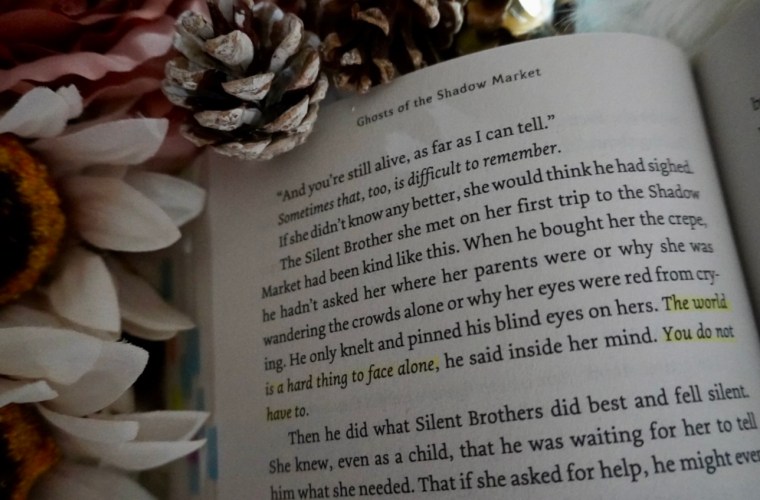
He doesn’t want the Lightwoods to know he was injured during the fight on the boat from Idris, because he thinks they’ll send him away for being an inadequate soldier. Baby Izzy and Alec patching up baby Jonathan made my heart hurt. This was probably the first time in the boy’s life somebody had taken care of him so gently. Then, to see Maryse and Robert were not angry at him for getting hurt must have given him a bit of relief. He was finally in a home where he would be met with love and kindness, rather than cruelty and coldness.
Don’t even get me started on how Jace was so willing to change his name to please the Lightwoods. That punched the air out of me. Baby, they just wanted to give you a nickname, so you’d feel more at home with them. Also, little toddler Max hugging Jace’s leg and calling him “Jonathing” was so adorable.
Jace found a family so full of love for him. We see the love of parents for their children and of siblings toward each other.
In that same story we meet Lily and Raphael, who are clearly super close friends despite Raphael’s insistence otherwise. Raphael steps in front of Lily to protect her from a lethal werewolf attack, he calls her a valuable member of the clan, and later Brother Zachariah points out that she’s in love with him — though he’s clear that he’s not interested in romance. Love doesn’t have to be labeled or admitted in words. Sometimes it’s best to prove our love with actions.
“There are more kinds of love than stars. If you do not feel one, there are many others. You know what it is to care for family and friends. What we keep sacred keeps us safe. Consider that by trying to cut yourself off from the possibility of being hurt, you shut the door on love and live in darkness.” (Brother Zachariah to Raphael, 311)
Finally, the biggest hit for the themes of love and loss come in the form of William Herondale.
Will’s impending death and official loss truly changes Jem. Just when you get comfortable in a story, Clare and Co. slap you in the face with a reminder that Jem is alive while Will is dead.
Well, he’s not dead for a few stories at least, which is kind of worse. In “Learn About Loss”, Jem is just beginning to come to terms with the fact that he will lose his parabatai soon. The magic mirrors in the fun house showed him images of himself and Will both young and happy together — his deepest desires. I realized reading this story that Jem never expected to live longer than Will. Jem always did his best to prepare Will for the day he would go where the other could not, but never the other way around. From the day these two met, Jem was dying. Will knew this and accepted it in some fashion, though delaying the inevitable for as long as he could.
Nothing prepared Jem to lose Will. I think that’s why Jem threw himself into unearthing and protecting the Lost Herondale line. If he could not keep Will, he could at least work to protect another Herondale in his honor.
This story ends with Belial granting Sister Emilia’s request to give Brother Zachariah and Will a dream of sorts where they could be young and free one last time before death separated them. It shook me with sobs. Nothing is more unfair than these two only having five years completely together.
“The face of the one you love is the best mirror of all. It shows you your own happiness and your own pain and it helps you to bear both, because to bear either alone is to be overwhelmed by the flood.” (162)
I’m just going to say it: the love between Will and Jem is stronger than in any other couple or parabatai duo that Clare has written. That’s not up for debate. I will not listen to arguments. These two are soul mates.
After Will dies, Jem lives on with his memory as a guiding light. In “A Deeper Love”, Tessa tells Jem, “As long as you live, we keep Will alive.”
It’s the truth. Jem keeps Will’s spirit alive through sharing his story indirectly in advice he delivers to Shadowhunters throughout time. He tells little Jace the power that comes with being parabatai, and why Will’s initials are carved into his staff.
“We battle hardest when that which is dearer to us than our own lives is at stake. A parabatai is both blade and shield. You belong together and to each other not because you are the same but because your different shapes fit together to be a greater whole, a greater warrior for a higher purpose. I always believed we were not merely at our best together but beyond the best either of us could be apart.” (315)
We probably have Jem and Will to thank for Alec and Jace becoming parabatai.
Then, Kit asks Jem to train with him, much like how 12-year-old Jem had asked the same question to another Herondale boy over a century earlier.
“Will? Do you … Do you still think about him a lot?”
“I loved him better than I loved myself. I still do. I think about him every day.”
Kit blinked quickly. There was pain behind his eyes, the hidden kind, the sort Will had carried along with his secrets forso many years. …
“Whoever you have loved, and however you loved them, anyone you loved would be lucky.” (603)
Will may be gone, but his spirit lives on through Tessa and Jem and the love they share in the wake of his loss. He can be found in Jace’s effortless sarcasm and love of literature, in Alec’s black hair and blue eyes and unwavering kindness, and in Kit’s inner pain from a life believing he is unlovable. Just as Tess and Jem taught Will is he deserving and worthy of love, they will do the same for Kit in his memory.
The presentation of how Will’s death affected Jem and the Shadow World was simply magnificent, and I’m totally not crying into a Baja Blast right now.
The Bad
It’s time for honesty hour here at Life of Bry dot com.
I have a problem.
I often find it hard to write about parts of books I don’t like. I ALWAYS try to reason with myself that something I didn’t like is due to my misunderstanding and not an actual criticism. I also have ADHD with my main symptom being hyperfixation, so, when I read a book, I pick what I like about it and really hone in on those aspects. My brain pushes away what I disliked to make more space for this new cool, shiny thing I love.
I’ve been working on being more critical about what I read, and GoTSM is my first victim. While I enjoyed a good bit of this novella collection, I found there was a lot I didn’t.
The plot? What plot?
Tales from the Shadowhunter Academy spoiled me.
That is the best novella collection I’ve ever read, and it set my standards high for what an anthology of this sort can be. What I enjoyed most about TFTSA was how all of the short stories were strung together seamlessly by the overarching plot of Simon Lewis (now Lovelace) making his way through the Academy on his journey to ascension.
Unfortunately, there’s nothing similar in GoTSM to tie these stories together.
You can argue that the search for the Lost Herondale is what binds them into one singular unit, but it still doesn’t feel complete. The discovery that there is a line of missing Herondales isn’t even made until the third story, and even then it takes a backseat to other (far more interesting) tales being told.
Jem’s search for the Lost Herondale acts more of a catalyst for other stories rather than its own developing plot line. It’s the reason why Jem is injured in “A Deeper Love” so that readers get to see how both he and Tessa are coping with Will’s loss, then it’s the reason he spots Celine in the Paris Shadow Market in “The Wicked Ones” so we can learn more about how her and Stephen became a couple. Again, it’s used in “Son of the Dawn” as a reason behind Raphael finding Brother Zachariah in the New York Shadow Market to bring readers the story on how Jace came to the Lightwoods, and again in “The Land I Lost” to get Alec out to Buenos Aires to see the adoption of Rafael unfold.
You get the point.
The search for the Lost Herondale never felt like a big enough plot point to bind the stories together. It felt more like a ribbon, carelessly draped over the pages. Or, to put it in a less elegant way, it felt how La Crioux tastes — like somebody ate a strawberry and breathed in your face.
It was interesting, but it wasn’t substantial; which frustrated me. I wanted more details about leads and searches, but instead we got casual references to off-page discussions and agreements (like every single time Ragnor is mentioned to be helping Jem, but we never get anything of substance in words).
The only true thing that connects all of these stories is Jem/Brother Zachariah, and even then he’s also pushed aside halfway through each story to make room for somebody else. He’s a drifter and wanderer, bringing the story to the forefront before sinking back into the shadows. The few stories where Jem truly becomes more of a focal point are masterful, like in “Son of the Dawn” and “Forever Fallen”.
I just wanted more. I was so excited to learn about Jem’s adventures as a Silent Brother, but I closed GoTSM feeling as if I didn’t learn much of anything about one of my favorite characters.
Frustrating. That’s the best word to describe it.
Something’s … off?
Maybe it was because there were so many authors with their hands in these stories, but at points I felt as if Jem’s characterization was … off?
I associate Jem with intrinsic goodness. He is unbelievably kind and understanding, along with undeniably selfless. I think this way because Clare conditioned me to do so. She’s always written Jem in a positive light. There’s never been a single instance where his morality has been questioned by anyone other than himself.
This changed a bit in GoTSM.
“There were those who believed that because Jem was so kind, so capable of gentleness and generosity, because Jem loved so selflessly, that Jem was weak. There were those who suspected he was not capable of violence or vengeance … Those who believed this were wrong. Those who acted on it would be sorry.” (Tessa, 463)
My criticism isn’t with the few scenes where we get to see Brother Zachariah kick ass and take names. Those are amazing. We rarely get to see that side of Jem, so when he fought the faerie in “A Deeper Love” and the werewolves in “Son of the Dawn”, I was overjoyed. He’s a super sweet cinnamon roll, but he’s a super sweet cinnamon roll who can and will kill you if you try to hurt those he loves.
The issues I had with Jem’s characterization feeling off came in “A Deeper Love” and again in “The Wicked Ones”.
First, in “A Deeper Love”, Brother Zachariah is injured while fighting off a faerie who wished to kill him for searching for the Lost Herondale (and First Heir). He manages to get himself to the hospital that Tessa and fellow warlock Catarina Loss are working at during WWII. Tessa drops everything to save Jem’s life, which means taking herself and Catarina away from a hospital full of mundanes in desperate need of healing hands.
Of course I didn’t want Jem to die, but I also couldn’t help but feel that he wouldn’t want to be so selfish as to let mundanes lose their lives so that Tessa and Catarina could save him. The Jem we met in The Infernal Devices would’ve at least attempted to convince Tessa to let him die.
The lone protest comes in the ambulance after a house collapse on a group of men, and, even then, Tessa ignores Jem’s insistence for her to help those men instead. Maybe my issue falls solely on Tessa? She inherently makes Jem appear selfish through her actions. However, Jem is the one who initiates this meeting by seeking Tessa out at the hospital instead of returning to the Silent City. BUT he doesn’t want to ask the other Silent Brothers for help to keep the identity of the First Heir a secret to protect them, which is super unselfish.
I’m running myself in circles. It simply didn’t feel right for so many mundane lives to be risked and possibly lost in order to save Jem. He wouldn’t have stood for that, and it felt out of place for his character. This was my least favorite story in the collection.
“The Wicked Ones” was definitely one of my favorite stories from GoTSM, but there’s one scene in particular that made me despise Jem a little.
When Brother Zachariah is buying the heron pendant at the Paris Shadow Market, he notices Celine and engages in conversation. She’s ready to ask him for help and to tell him of the abuse she endured, but he abandons her when he sees Jack Crow running through the market.
It KILLED me that Brother Zachariah ran from Celine to pursue the Lost Herondale. She needed somebody to listen to her and to extend a hand to lead her away from a life of senseless tragedy. Instead, Brother Zacharaiah ran after someone who didn’t even want his protection.
Jem put Rosemary’s life ahead of Celine’s because of a last name, and it felt very un-Jem-like.
Now, don’t get your pitchforks out quite yet. I’m not going to reach as far as to say that Jem directly caused Celine’s death. That’s untrue. Valentine is the only one to blame for Celine’s tragic death. However, Jem did have the opportunity to save her from her own insecurities and from Valentine.
“How foolish, how weak, wanting to be heard. Wanting to be truly seen by anyone, much less a man with his eyes fused shut. Her parents always said she was stupid and weak. Maybe they were right.” (Celine, 227)
Going nowhere
The final criticism I have is the lack of character development in Jem, particularly when it comes to his role and acceptance of being a Silent Brother. In the other two novella collections in TSC, there is still an overarching “problem” and then a “resolution” in some way within the main protagonist.
In The Bane Chronicles, readers are introduced to a Magnus Bane drinking his troubles away as he dances through life never stopping in order to escape the weight of loneliness brought by a life of immortality; but, by the end, he finds stability and comfort in the arms of Alexander Lightwood, allowing his wandering heart to rest.
In Tales From the Shadowhunter Academy, Simon is without his memories and unsure of who he is and why he wants to become a Shadowhunter in the first place, but through his time at the Academy he discovers that he wants to become Nephilim to bring positive change within the Shadow World.
I didn’t find that same resolution in Ghosts of the Shadow Market, and it’s because Jem’s character remains stagnant despite his physical changes.
The No. 1 thing I wanted out of this collection was to see Jem become more confident in himself and his choices. I finished GoTSM very disappointed.
Part of Jem’s characterization is his deep-rooted insecurity. This is the man who felt that Tessa could never love him even when she practically jumped him in the music room and who had doubts even in his marriage proposal. Jem’s insecurities are only exemplified when he becomes Brother Zachariah, because he feels as if he is an emotionless monster who is barely human.
In “A Deeper Love”, Jem tells Tessa:
“I am a Silent Brother. I am no use to you. … Being what I am, how can I comfort you? … I am not what I was.” (198)
In “Son of the Dawn”, Jem thinks back to his decision to become a Silent Brother:
“He had not wanted to die, but he would have chosen death rather than the awful severing from love and warmth. If only he could have had a death in Tessa’s arms, holding Will’s hand. He had been robbed of his death. It seemed impossible to stay anything like human, in among the bones and endless dark.” (317)
This frustrated me beyond measure. Jem had a choice. He could’ve chosen death. He was dying, yet he made the choice to become a Silent Brother to remain with Will and Tessa. Yes, he was robbed of his ideal death, but how many of us get a death we’d choose? Jem essentially chose his hand not knowing which game he’d be playing and is now mad that he’s struggling with the rules.
Maybe I could’ve looked past this if we ever received any development, but we simply didn’t get it. Even when he’s mortal again, Jem is insecure and unable to accept the goodness that his being a Silent Brother brought to the world. I don’t care as much about his insecurities because I think that’s a pretty relatable character trait, but I genuinely wanted at least an ounce of confidence.
In “The Land I Lost”, we get a brief mention of a bit of gratitude from Jem for what the Silent Brothers taught him during a conversation with Alec on how he can help the Shadow World without being an active Shadowhunter.
“We all have different ways to serve. She has the secrets from the Spiral Labyrinth, and I those of the Silent Brothers, and we have combined our knowledge and saved lives that I believe couldn’t have been saved by any other means.” (384)
Perhaps this would’ve been more impactful if readers ever got to see these lives being saved on page. At this point, they’re still looking for Rosemary and Kit, so these imaginary lives they saved are unknown to us readers. This doesn’t punch me as a revelation that Jem is grateful for his time in the Silent City despite its obvious setbacks.
Even in “Forever Fallen”, Jem can’t even comprehend that his and Tessa’s child, Mina, could look like him because she was so beautiful. Kit and Tessa both think he’s an idiot for believing that.
“But — she’s so beautiful.”
“And where might she get that from? I love you forever James Carstairs. But you are a fool.” (560)
In the end, Jem finds happiness, which, I guess, is something. He has his wife, his daughter, a found son, and a life he never felt possible ahead of him. Still, I wanted more.
Give us a whole conversation or inner-monologue from Jem about how his time as a Silent Brother was like a wheel where he could help Shadowhunters for generations as it spun, how the years in darkness taught him to see the light in the world no matter how dim, how he maintained his humanity for over a century despite the glass separating himself from his emotions and how that barrier being lifted allowed him to feel more deeply and connect better with those around him.
We didn’t get that. Instead, Jem remained stagnant, which is a huge disservice to his character.
If you think otherwise, please tell me in the comments. I love discourse and Jem, so tell me why I’m wrong!
The Best
Unlike the above, this part I love to write and have no trouble with. Despite feeling frustrated and dissatisfied after reading GoTSM, there were certain aspects throughout the collection that were extremely moving and captivating. There are certain stories that now that I’m aware of them, I’m not sure how I could live without that knowledge — like the backstories of two Herondale couples.
Always a Herondale
“The Wicked Ones” was an absolute masterpiece.
Getting more information on how the Circle operated has become one of my favorite aspects of Clare’s novella collections. Honestly, I didn’t think Valentine was that impressive of a villain while reading The Mortal Instruments, but it’s fascinating to read about how he found so many broken, young Shadowhunters and used their insecurities and fears to manipulate them into carrying out his atrocities.
Celine’s story tore me to absolute shreds. Clare and Wasserman did an amazing job at showing the incredible vulnerability of this young girl who spent her life being abused and being told it was love.
“So this is how it feels to be loved too much.” (218)
She feels inadequate due to the abuse inflicted on her by her parents, and it allows Valentine to recruit her for the Circle and feed off her insecurities. In the Circle she’s not just some stupid kid, she’s a valuable member of a cause greater than herself — even if it’s simply being able to navigate the streets of Pairs.
Celine has such a big crush on Stephen that she studied mundane pop culture just to find common ground with him. The thing is, Stephen and Celine actually felt as if they had some chemistry at moments, like when they joked about the pigeons and she made Stephen smile with a Cyndi Lauper joke. She also wants to be Stephen’s “yes” woman, unlike Amatis who is much too opinionated for Celine’s taste.
Most of all, Celine wants to feel worthy and loved — something she spent a lifetime without — but she associates love with pain.
“I sometimes think there is nothing more painful than love denied. To love someone you cannot have, to stand beside your heart’s desire and be unable to take them in your arms. A love that cannot be requited. I can think of nothing more painful than that.” (Brother Zachariah, 225)
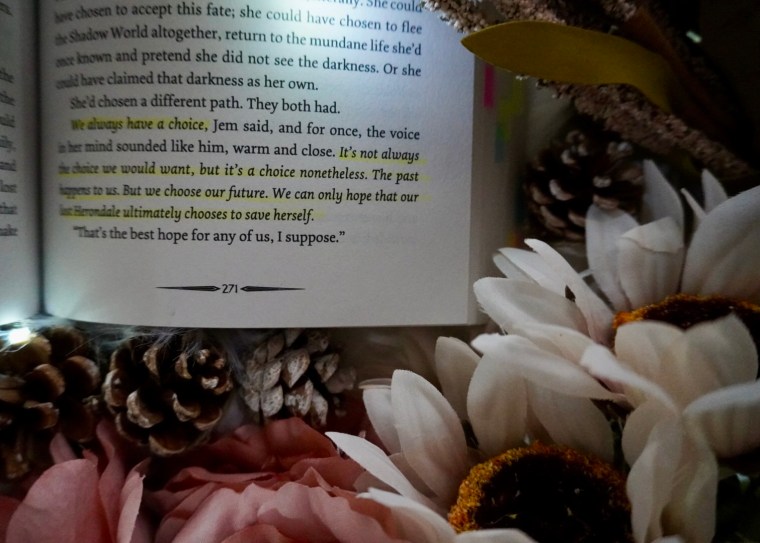
I got the impression that perhaps Celine fixated on Stephen because it pained her that she couldn’t have him. We learn later that she welcomes pain as something she could control. With that logic, it makes sense for her to follow Stephen around with heart eyes, knowing he’s married and knowing he sees her as a child.
I don’t think Celine ever actually thought she had a chance to be with Stephen, which is why she hesitates when Valentine offers the Herondale’s hand in exchange for secrecy. It’s also why she accepts the offer, and allows for her parents to be sentenced in the eyes of the Clave for crimes they did not commit and sent to their deaths by the hands of Valentine unbeknownst to anybody but herself and the murderer.
She’s well aware Stephen will never truly love her, but she’d rather have a part of him than nothing.
“She could close the door on the past, start again. She could choose a life without pain, without suffering or fear. But who would she be without pain? What was strength, if not the endurance of suffering?” (276)
Love is pain, and, as long as it hurts her, there’s confirmation that there’s love between them.
Side note! My heart can’t help but shatter at the thought of how excited Celine would’ve been to bring her child into the world. This little boy growing inside her would love her unconditionally as she always wanted, and she would be a better parent than her own ever were. She would swaddle this baby in the warmth and love she never received. Instead, she lost her life before she ever had the chance to bring him into the world, and her precious baby was raised without love and with the same cruelty she experienced until her death.
I also thought it was clever to have the trio be Celine, Stephen and Robert as a nod to the Lightwood being the savior for the other’s child.
The other couple we meet is Rosemary Herondale and Jack Crow, who are entirely different from the above relationship. While the demise of Stephen and Celine was essentially their lack of love, Rosemary and Jack both die because they loved each other too much.
(I want to take a moment to point out that I immediately wrote in my notes that Jack reminded me of Kit Herondale, so I’m going to pat myself on the back real quick.)
Rosemary and Jack may just be my favorite part of this entire collection. I adored them with every ounce of my being. They had a Bonnie and Clyde aura about them with an “us against the world” attitude. They were two young kids, dumb and in love, swindling their way through the Shadow World.
They even thought they could pull a fast one over Jem by pretending Jack was the Herondale, but you can’t fool Brother Zachariah. This man knows a Herondale when he sees one. He has Spidey Senses for Herondales.
Jem had finally found the Lost Herondale and the First Heir to the Seelie Courts, but she didn’t want to be saved. Brother Zachariah had to trust her, as he had with all other Herondales, that she would call on him when she needed him most — when, not if.
We love a strong, stubborn Herondale lady.
Sidne note! I really loved the way Clare and Wasserman included a brief meeting between Celine and Rosemary in “The Wicked Ones” as a way to contrast these two women who are both Herondales. Rosemary is very confident, she’s a fighter, she was raised in a loving home and she found a man who loves her deeply. She’s the exact opposite of Celine.
The two take down a demon together, and Rosemary trusts Celine enough to put an iratze on her — Rosemary’s first rune. Celine trusts Rosemary enough to keep Rosemary’s existence a secret, as well. She just had a question first.
“You love him, and he loves you, right?”
“I guess he must, because there are some dangerous people out there looking for me. And he’s done his best to make sure they think they’re looking for him instead. … He loves me. I love him. Why?”
“I just … I just want to make sure you have someone to take care of you.”
“We take care of each other. That’s how it works.” (250-251)
In a way, Rosemary delivered exactly what Celine needed to hear. Love was taking care of each other, not causing the other pain. Rosemary also tells Celine to stay away from Valentine, but the younger girl listens to neither piece of advice. Both girls end up dead.
The best moments come in “Through Blood, Through Fire”, where unfortunately Rosemary is killed by Fal, one of the Riders of Mannan. (FYI: Fal is the Rider that Emma Carstairs kills in The Dark Artifices, which contributes to the whole the Carstairs owe the Herondales thing Jem started. Emma avenged Rosemary’s murder.)
Tessa shapeshifts into Rosemary and struggles to change back, taking readers on the journey through the Herondale’s memories.
We get to see the rebellious nature of these two wild kids as Jack steals a convertible and Rosemary runs away from her parents when they attempt to move to keep her safe (only for them to be immediately murdered).
“She simply says there’s a lot he doesn’t know about her. He says he knows enough. He says, I think I’m in love. She whacks him, hard, tells him it’s rude to say that as a joke, even to a girl like her, hard as adamas. He says, What makes you think I’m joking?” (484)
They travel the world, never settling long enough to be found. They change cities and identities. They lean on each other and no one else. Then, we get to see the joy they have in giving birth to Christopher Jonathan, the hard decision to live apart to keep him safe and then Rosemary’s commitment to protect the baby extending to her leaving for good.
“She would let the world burn if it meant keeping Jack and Christopher safe.” (466)
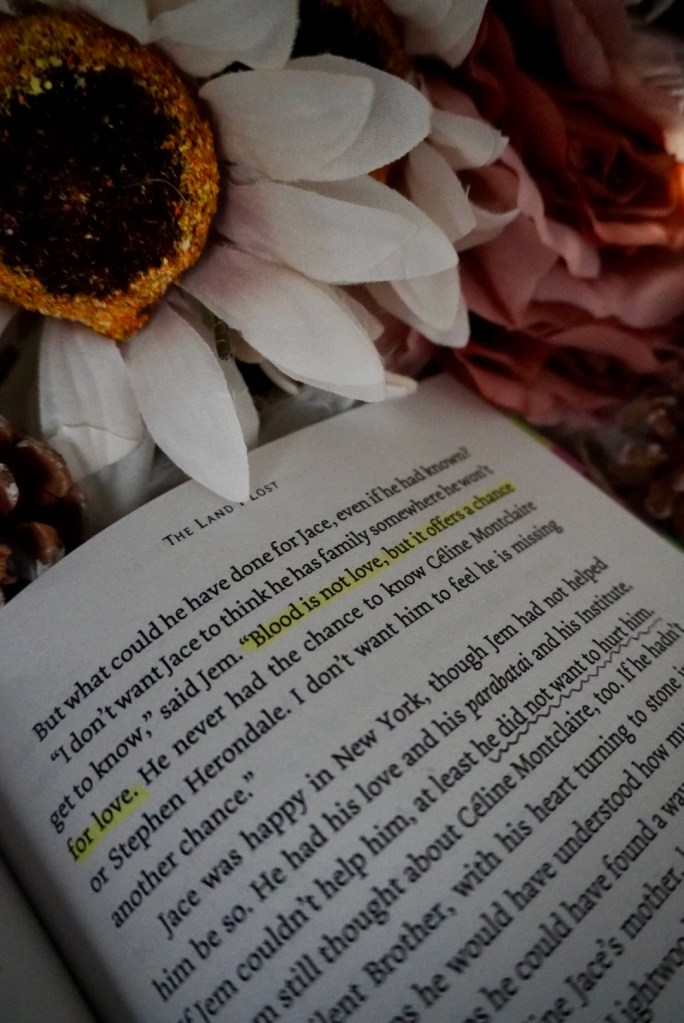
Before leaving her husband and son behind, Rosemary makes Jack promise to protect Christopher at all costs and to raise him unaware of his true identity. There’s no room for hope for them to be a family; all of their focus must be on keeping this child safe.
This story filled in a major gap from TDA for me. I always wondered why Johnny Rook (AKA Jack Crow) was so cold toward Kit. Now it makes sense. There’s no excuse for how Johnny treated his son, but I am more understanding. I believe Johnny’s heart broke beyond repair when Rosemary left him, and Kit was a reminder of that loss. I don’t think he resented Kit for Rosemary leaving, but I think he focused more on protecting his son than loving him. Keeping Kit alive was the only thing Johnny could do for his wife with their distance, and he wouldn’t fail her.
Rosemary couldn’t keep her distance and moved back to L.A. to feel closer to her husband and son, while Jack remained in the same city and changed his name to something so painfully obvious that there would be no way his wife couldn’t find him if she changed her mind.
“If they’d only loved each other a little less, Rosemary might still be alive, and her son might have a better chance of staying that way.” (493)
While Rosemary and Jack could not be saved, their son could. Kit is now in a place where he is safe and loved. A tragically beautiful end to a tragically beautiful love story. I’m still sobbing.
Side note! We do get a tiny sliver of the Lost Herondale Roland (the Astonishing) meeting the First Heir Auraline, and it was adorable. “Roland said they were both lost children, and they could be lost together. He said he didn’t mind being lost, if he could be lost with her. … He doomed her and called it love.” Herondales really hit differently, but Roland did begin a long line of tragedy with that smooth line.
Speaking of Kit Herondale …
I’m currently crying just thinking about writing this section. When Kit agreed to stay with Tessa and Jem at the end of Queen of Air and Darkness, I was so happy that he would be surrounded by the unconditional love that he so desperately needed and deserves. I was equally proud of Ty Blackthorn for making the decision to go off to the Scholomance to follow his dreams of solving mysteries and help move on from the disastrous events of TDA.
Readers get to see the progress Kit and Ty are making in “The Lost World” and “Forever Fallen”.
To be honest, “The Lost World” was probably my least favorite story in this collection. I genuinely forgot it existed. However, it does fill in some gaps left behind from QoAaD, especially about the consequences Ty will face from performing corrupted necromancy. We already knew that Ghost Livvy was tethered to Ty, but in “The Lost World” we get to see what happens when they push the limits of separation. They both face ill effects with Ty passing out and Livvy becoming less of herself and more a vicious spirit. She nearly possesses Tessa’s unborn child in an effort to become human again, which could’ve killed the baby and Tessa.
“If I took the place of whoever the baby is going to be, if I wanted a do-over, it wouldn’t hurt Tessa and Jem at all. They would be good parents to me. And I would be a good daughter. I was good when I was alive! I could be good again. And it isn’t fair. I shouldn’t have died. I ought to get another chance. Why shouldn’t I have another chance?” (531)
Heartbreaking. Livvy raises a good point. So many people around her have been given a second chance at life, and yet she remains dead and trapped as a ghost to watch the world move forward without her.
Mark was returned to the Blackthorns from the Wild Hunt. Helen returned home from exile. Jem returned to the world after a life as a Silent Brother. Emma and Julian would return home after their travel year and Ty after graduating from the Scholomance.
“Why was she the only one who could not return and take up her life again?” (529)
I think this story did a really good job at showing readers the dynamic between Livvy and her current condition and how that will play into the story moving forward. She doesn’t like being a ghost, but it’s comforting to be able to stick with Ty even after her death. We also get to see Ty adapting to life outside of his familiar family unit. He’s kind of isolating himself at the Scholomance, which is what he’s been taught to do for his entire life. By the end of the story, he has a pet lynx and a possible new friend in Anush. We love that for him.
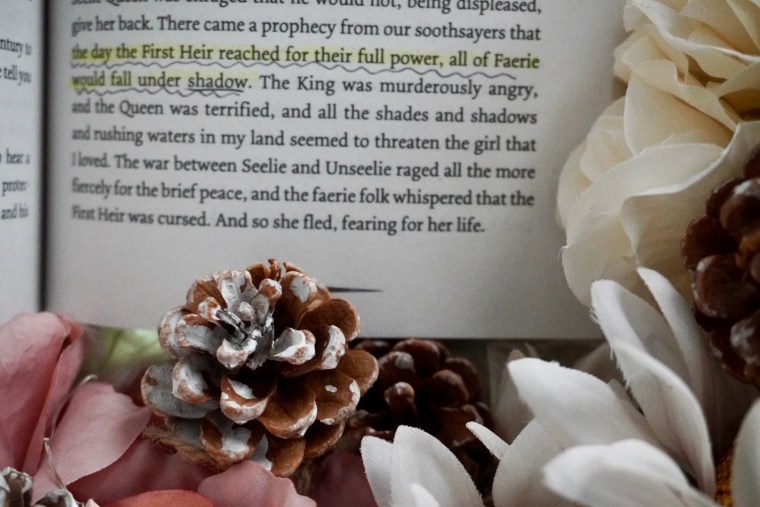
We also get to see how Kit still cares for Ty despite everything. He gives Magnus his mother’s heron necklace to enchant for Ty to help divert some of the ill effects of being tied to Livvy. What I found most interesting about this exchange is how Kit tells Livvy that he holds a grudge against the necklace because it didn’t save his mom. It’s fitting that Kit gives the necklace to Ty, who he doesn’t exactly hold a grudge against but was definitely hurt by, to protect him. Maybe he hopes the necklace will save Ty’s life in the way it couldn’t save his mom’s to take some of that pain away.
Oh, we also learn that the Cohort is running out of food and supplies in Idris and are planning an attack on the Clave-in-Exile. So, that will be fun in TWP.
Now, “Forever Fallen” obliterated my heart in so many ways.
It was so sweet to see how Jem and Tessa were doing their best to show Kit he was loved, including putting all their valuables in his room to prove he’s the most precious thing in their home.
This boy felt he was unlovable for so long, and now he is being showered in it. It’s truly what he deserves.
Jem takes Kit to the Shadow Market, he buys him candied moon flowers, he knows his favorite pastry. Tessa sings to him and plays a game with him about moviesand books. They bought him superhero jammies. They gave their daughter a middle name that commemorated Kit’s mom because she trusted them with her precious son. Now, Kit gets to hold and comfort his baby sister and give her the love he never had growing up.
Stop, I’m gonna cry again.
Tessa and Jem know something is weighing on Kit’s shoulders from his time with the Blackthorns, but they don’t pry. Instead, they give him trust and love and a space where he knows he’s safe. And we see real progress with Kit! He learns to trust his adoptive parents. He doesn’t tell them directly about Ty, but he does confide in Jem about his pain.
“Tessa says my mom loved me, but I never knew her. She didn’t know me. My dad knew me, and he didn’t care. Don’t say he did. I know he didn’t. But he loved my mom, apparently, so it wasn’t that he couldn’t love anyone. It was that he couldn’t love me. And — and the — and — nobody else has, either. I wasn’t enough, not for anyone, and I’m trying, but I don’t know if I ever will be.” (604)
In TDA, Kit says he didn’t cry for his father or for Livvy after their murders; but as Jem wraps his arms around his found son and tells him he loves him, Kit allows himself to cry into his shoulder. It’s such an impactful moment because it means Kit finally feels safe and loved. That’s character development at it’s finest.
Side note! “Forever Fallen” is split between two storylines, one that follows Kit and Jem and another that follows Thule Jace (AKA Janus). Janus is such a cool concept for a character, and I’m so excited to see what Clare does with him in later books. He has the makings to be an S-tier villain. His plan was to study this world’s Jace until he could pass as him, before killing him and taking his place. This gets shifted around when Janus realizes he’s incapable of doing that, so he wants to bring Clary to Faerie instead and have a weird family with Ash.
I liked Janus because you can sympathize with him. We can see inklings of the Jace we know and love in him. He’s so proud to see Alec happy and in love with Magnus and as Consul. (“Alec had died when he was still a boy always a little afraid to be in love.” 567) He literally kisses the ground Clary walks on. It hurts him to remember how happy he was with her and to see the life he could have had.
Another genius move by Clare. I love a villain that you can’t help but feel sorry for and understand. Janus didn’t deserve to lose everything he loved. He was manipulated and forced to turn against everybody he held closest to him. He was dealt a fate worse than death. I can’t wait to see more from him.
Alec’s a DILF and Lily Chen is my f*cking hero
“The Land I Lost” is the Shadow World’s hottest club, and IT. HAS. EVERYTHING. (Bonus points if you get this reference.) There’s domestic Malec content for days, Lily Chen’s horrific backstory, horny Jem Carstairs and Alexander Lightwood radiating confidence.
This story was probably the most cohesive and flowing one in GoTSM. It has a clear beginning, middle and end. It doesn’t jump around too much, and it wraps itself up in a neat little bow.
Everything about this story was PERFECTION.
It was so much fun to see how different the relationship between Downworlders and Shadowhunters in New York is now that Alec had established the Alliance. The vampires and werewolves hang out together, the vampires try to convince Jace to join their ranks to stay beautiful forever and lead them for eternity, and they all respect Alec — who has gained so much confidence since we met him in City of Bones. (Alec has to be Clare’s most well-developed character.)
I adored the friendship between Lily and Alec. They trust each other, they understand each other, they support each other. Alec sees that Lily is struggling to cope with Raphael’s death, so he extends the offer to talk about feelings — even though they both hate it. He refuses to stay at the Buenos Aires Institute when they disrespect Lily. She trusts Alec with her backstory, which made me weep into the pages of my book.
Lily tells everyone she’s a jazz baby, but she was actually born into the sex-trade in Hong Kong in 1885. Her father sold her and her mother to the House of Eternal Pearl that kept vampire women in the cellar for the clients who were willing to pay extra. Lily promised one of the vampires that she would free them all if they turned her. The vampire took the deal, but Lily burned the house to the ground with everyone inside. She never felt truly safe in her entire immortal life until she found Raphael …
It’s such a tragically dark backstory to one of the Shadow World’s brightest characters. Lily is a sweetheart. She’s funny, she’s smart, she knows how to party. She deserves to feel safe and free of guilt. It was soothing to know she got to redeem her conscience by helping Alec and co. free the encaged werewolf women being forced to breed warlock children.
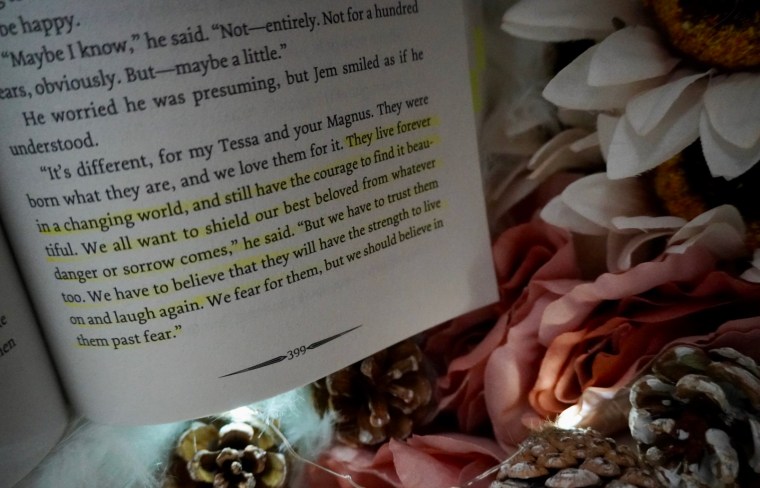
Her story comes full circle.
It’s hard to transition away from that. You kind of just have to sit with it for a while, like I did while reading it. It’s heavy. I wasn’t expecting it. OK. Let’s continue.
I think it was smart for Clare and Brennan to give readers a glimpse of a part of the world that didn’t fare as well as others after the Dark War. Sebastian destroyed the Institute, killing nearly all of its inhabitants and leaving room for the Cohort to reach its bigotry outside of Idris and put one of their own in charge. I liked the contrast between the Nephilim/Downworlders relationship in NYC to the strained, barely tolerance exuded in Buenos Aires. Things don’t always work out for the best. There’s always work to be done.
The relationship was so tense that the Downworlders at the Shadow Market were afraid to take in an orphaned Shadowhunter, Rafael, after the boy’s werewolf guardian was kidnapped.
“The laws were all wrong, and children were paying the price.” (Alec, 374)
This quote could be a summary for TSC, honestly. In the end, the villain always ends up being the Clave and its laws, and the victims are always innocent children.
The Law left Julian Blackthorn to raise his four younger siblings alone when he was 12 years old. The Law forced Catarina Loss to steal a Shadowhunter child and raise it away from the Clave to save it from death before it ever had the chance to live. The Law didn’t protect Jace from a childhood of abuse. The Law had Alec living in fear and unable to accept his true self.
The children always pay the price.
While we’re here, I might as well scream about how adorable Alec and little Rafael were. I loved that it wasn’t an instantaneous feeling like Alec had with baby Max. This was a gradual learning between the two as Alec earned Rafael’s trust.
One tiny detail I LOVED was Alec says at the beginning of the story how he was waiting to be sure before adopting a second child — “… when he’d first held Max, how the world and Alec’s heart had gone quiet and certain.” Then when Rafael sees the picture of Magnus and Max, the boy’s face lights up and Alec says: “He’d had a sick unsteady feeling in his chest since he realized what the Shadowhunters might be doing here, but the world felt steady again now.”
I thought it was so cute how Rafael constantly called Alec an idiot in Spanish, but then would wrap his arms around him and let him tuck him in. He’s stubborn, just like Raphael Santiago was. It was the perfect match. No wonder Magnus immediately had his heart stolen by little Rafe. This boy had all the attitude of Raphael, but only used it against Alec while channeling his adoration toward the warlock.
When Alec dropped to his knees outside of the burning house and called Rafe “my baby”, my heart shattered into a million pieces and I still haven’t been able to put it back together.
Perfection.
Jem was also at his best in “The Land I Lost.” I thought he had way more dimension in this story compared to others, which might be because it’s the first story since he was released from the Silent Brothers. He just felt a little more personable and complex because he’s feeling so much.
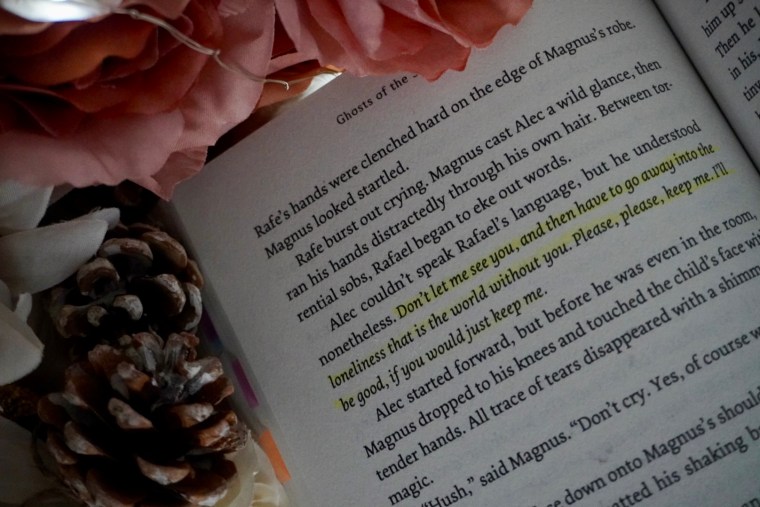
Jem’s jealous of Alec, because he has Magnus, his parabatai, a child and a place to call home; while Jem has Tessa but can’t bear to ask for a child knowing the pain it will cause her to lose them, his parabatai is gone and he’s a drifter from his search for the Lost Herondale.
I never realized how similar Jem and Alec are until this story. They’ll both die and leave their warlock loves behind, and they’re both fierce protectors who lead with kind hearts and gentle understanding. They both know what it’s like to handle angst-fueled, feisty Herondale boys, though Jem’s was taken from him long ago.
“When you fight, you should fight with your whole heart. I don’t have the heart for life among the Nephilim, for that particular fight, not any longer. Too much of my heart is in a grave.” (385)
He also feels so much guilt for not being there for Jace and not knowing the young boy he encountered was a Herondale that needed help, along with not helping Celine and not being able to save Rosemary when he had the chance.
“He’d imagined a hundred scenarios where he did better by Jace. … If Jem couldn’t help him, at least he didn’t want to hurt him.” (383)
However, Jem’s also more determined than ever to find Rosemary and rescue the Lost Herondale line. I liked seeing Jem so desperate as he realized just how serious protecting Rosemary had become. He couldn’t bear to fail Rosemary and her child after so many missed chances throughout his long life.
He’s usually so calm and collected, that even that tiny moment of him running off in panic made him feel more realistic and relatable. It’s probably the best character development he had in the entire collection and it was only like a page and a half. *sigh*
Final Thoughts
Ghosts of the Shadow Market is what I expected out of novella collections before I read The Bane Chronicles and Tales from the Shadowhunter Academy — a modge podge of stories that add insights into larger texts but without much substance as a complete book.
Clare and her band of co authors showed me the power a novella collection could hold as an impactful body of work, but then pulled the rug out from under me and laughed in my face. I went into GoTSM looking forward to reading about one of my favorite characters’ journeys throughout a unique life, but I closed the book feeling disappointed and frustrated with the lack of an overarching plot and character development from our main protagonist, Jem Carstairs — who I adored in The Infernal Devices.
I felt cheated.
But there was still so much I found enjoyable within the pages. The stories were fun to read and filled in gaps while answering questions I raised while reading through Clare’s various works. There were gorgeous moments full of tragedy and beauty, as the various characters learned how love in all forms could be both a shield and a sword with the power to hurt and heal.
Ghosts of the Shadow Market wasn’t revolutionary in terms of novella collections, but it was impactful. It left a mark on my heart and is a wonderful addition to the ever growing world of The Shadowhunter Chronicles.
3 candied moon flowers out of 5.

 Life of Bry
Leave a comment