Analyzing the final book in The Dark Artifices trilogy
“Grief can be so bad you can’t breathe, but that’s what it means to be human. We lose, we suffer, but we have to keep breathing.”
Magnus bane, QoAaD
I’m not sure what I expected when I first opened Queen of Air and Darkness, but it wasn’t to be repeatedly punched in the gut with words until I was rendered breathless from endless grief, tragedy, anger and hopelessness.
QoAaD, the last book in Cassandra Clare’s The Dark Artifices trilogy, picks up right where Lord of Shadows left off … with Julian Blackthorn’s younger sister Livia dead in his arms. This gut-wrenching finale follows Julian, his parabatai Emma Carstairs, the remainder of his siblings and the rag-tag team of honorary Blackthorns they’ve accumulated along the way, as they all endure the grief that losing Livvy left behind and search for a way to end the political theater that has taken over, not just the Clave, but the entire Shadow World. Pretty much, the fate of the world lands on the shoulders of a group of teens, but when has it been anything else?
If you’ve been following my Shadowhunter analyses, you know the drill. … I quickly get carried away with these, so this will be part one and part two will follow soon.
First up, I’ll be dissecting Julian and Emma’s characterizations and developments so profusely and enthusiastically that Cassandra Clare will personally beg me to stop.
In part two, I’ll jump into the spiciest take I probably ever had about the Shadow World. Spoiler alert, it involves Kit Herondale and Ty Blackthorn. Then, I’ll tear apart the plot and the overarching themes, before taking time to give some quick hits on everything else (King Kieran, our first official throuple, Dru’s middle child syndrome, etc.) and laying out my final thoughts on the series as a whole.
This might actually end up being three parts. *sigh* I have a problem.
Here are all my thoughts on Queen of Air and Darkness.
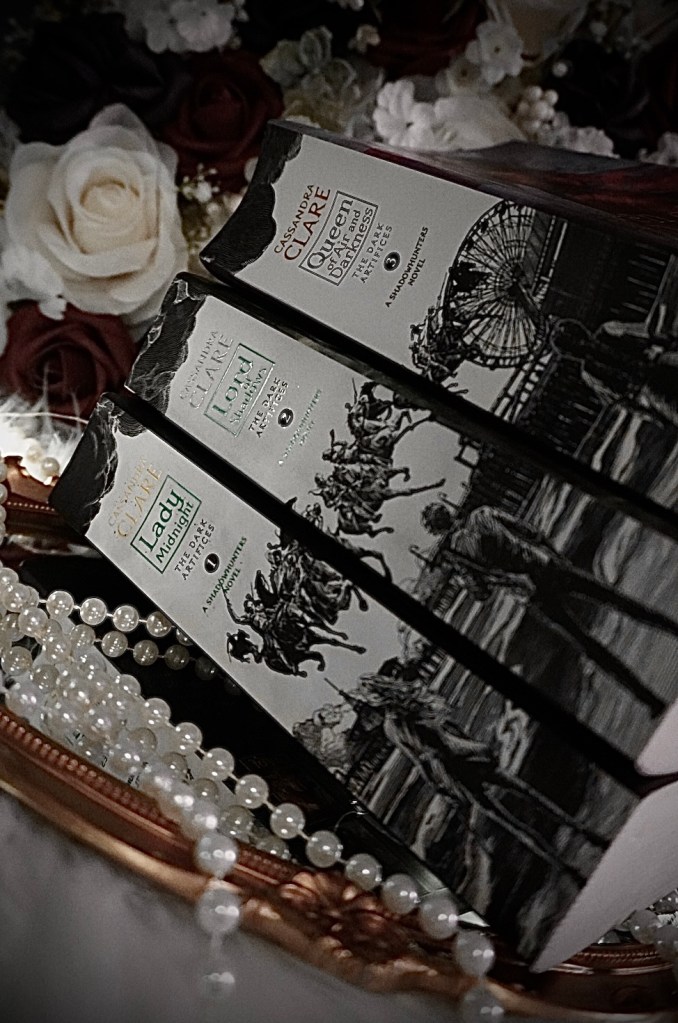
50 Shades of Morally Gray
My original plan was to start out with the plot like I did for Lord of Shadows, but, I can’t wait, so frick the plot. (Not really. TDA was Clare’s best plot yet.) Julian and Emma are hands down Clare’s most fleshed out and well-developed characters and couple, and I found myself hanging onto every tiny detail mentioned to build my own wall of crazy in my mind.
I’ll start off with a warning of sorts.
Do I think that Julian is a perfect person? Nope. He’s deeply flawed, he’s selfish in the fact he cares more about protecting his family and Emma than the world at large, he can be cynical and manipulative to the point of toxicity, and he has a very real problem of bottling his emotions up until they can’t be controlled.
Do I think that Julian is a perfect parent to his siblings? Nope, and he shouldn’t have to be. He took on the role of parent at age 12. Most adults have difficulty caring for four children, let alone a 12-year-old boy still reeling from grief from the death of his father and loss of his older siblings. Julian loved his siblings endlessly and made sure they had the necessities in life, but he also kept them isolated and unprepared for a world that would chew them up and spit them out. Julian didn’t pass on the hard lessons life taught him to his children. But don’t all parents want to make sure their kids don’t have to struggle as they had?
With both those things being said, I think Julian is an absolute masterpiece of a character, and Emma is right up there with him. These two were thrust into the unfair game of life at such a young age and were forced to learn the rules on the fly. They leaned on each other, as they did even before the Dark War, for the support and love and understanding that they could only receive from each other while they devoted their time and energy on protecting the kids and avenging Emma’s parents. In doing so, they created damaging coping mechanisms: Julian in suppressing his emotions and developing a need for control and Emma in training herself to be an avenging angel regardless of the physical or mental toll.
So, QoAaD starts off with an immediate twist in personalities for both Julian and Emma.
Clare gives readers this tiny moment where Consul Jia Penhallow refuses to allow Emma to go to Julian unless she gives up Cortana — the sword she carries not just for protection but also as a comfort object that is one of the few things she has left of her parents. While it’s not without pain and quite a bit of anger, Emma hands over Cortana in order to be with Julian when he needs her most.
I took this moment as Emma shedding her previous identity a bit. She has always solved her problems with Cortana in her hand and revenge in her heart, but she couldn’t fight the despair with a sword. Instead, she had to be gentle and soothing. She quickly knew that she would be the only one who would know what Julian needed in those moments or be the one to ask and receive an honest answer.
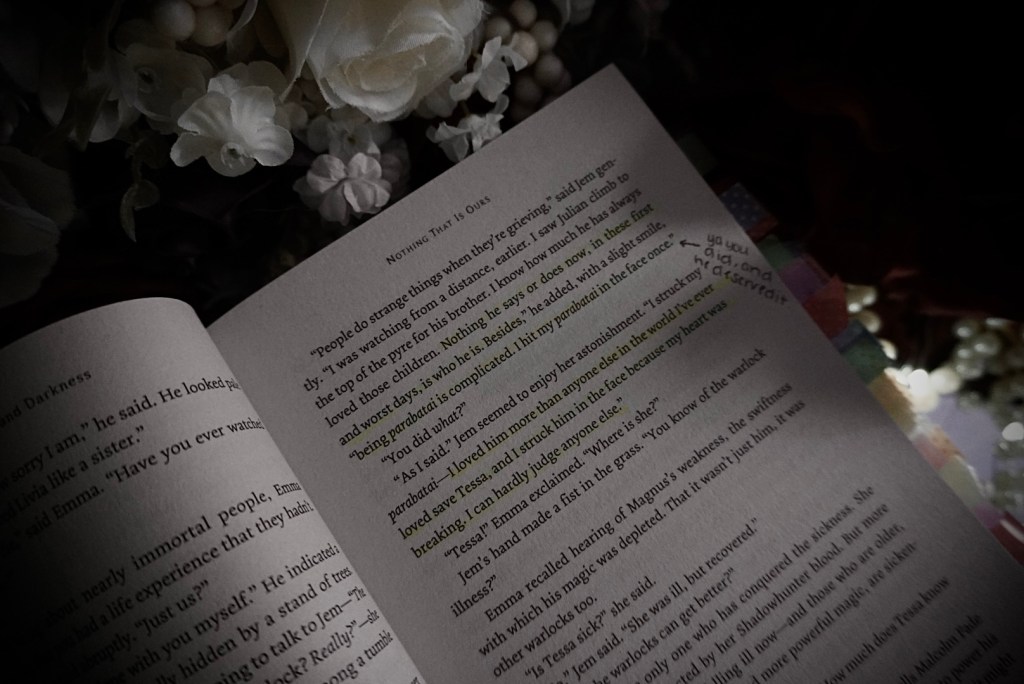
Without a single spoken word, Emma knew that Julian wanted to carry Livvy to the Silent City. He wanted to be the last one to carry his little sister who had become his daughter. Then, when Julian arrives back at the house in Idris after laying out Livvy’s body, Emma sees that Julian is drowning in misery and sorrow and anger, and, for once, he doesn’t have a plan.
She knows the basics of what she can do for him. She tears his blood-soaked clothes off, ushers him to the shower and scrubs his sister’s blood from his skin and hair.
“Julian’s chest was rising and falling fast, as if he were close to collapsing after a race. Dry sobs, she realized. He didn’t cry — she couldn’t remember the last time she’d seen him cry. He needed the release of tears, she thought, but he’d forgotten the mechanisms of weeping after so many years of holding back. … These were the tears he couldn’t cry, the words of grief he couldn’t speak. This was the relief he could only allow himself like this. In the annihilation of shared desire.” (30-31)
I sobbed when I first read it, and I’m sobbing now. I appreciate that Clare made the decision to not have Emma and Julian try to bury their grief in sex. It set a precedent that their relationship wasn’t just a distraction from the pain and tragedy they so often found themselves surrounded by, and that Julian’s need to protect his children couldn’t be completely forgotten by desire.
“They had forgotten, reaching for each other in the abyss of grief, as they had always reached for each other all their lives.” (37)
Plus, Emma would be immensely hurt if they did have sex, only to find out Julian ran to Magnus for the emotionless spell immediately after. It would be a slap in the face to share such intimate emotions and have them taken away so quickly.
What Clare does show in this scene is the continuation of Emma swapping identities with Julian. She was willing to allow Julian to lose himself in pleasure if it meant he could feel relief from the sorrow, because she didn’t know what else she could do to help him. She was simply doing what nobody else could do, which is what Julian has done his entire life. He doesn’t have control of the current situation, so Emma takes control of what she can.
Also, later on in QoAaD, Emma remembers a time when she had to get stitches because she was too young for an iratze. She wanted to be brave and strong, so Julian cried for her. Julian had always been so sensitive and sweet, but a cruel world forced him to bury that tenderness behind a wall of thorns. Now strong, fierce Emma is the one crying for a guarded Julian.
OK, so after nearly having sex with Emma to forget the grief of losing Livvy, Julian arrives at the Lightwood’s doorstep soaked from rain and begging Magnus Bane to help him.
“I’m here on my own account. I need your help. There is absolutely no one else that I can ask. … Another night, a different boy with blue eyes. Wet weather in London, but when was it anything different.” (38)
This is a direct callback to the plea that William Herondale made to Magnus over 100 years prior. A boy with striking blue eyes and dark unruly hair that was stricken by grief from a curse he thought caused those who loved him to die. A boy that Magnus was able to help. A boy who became a friend. A boy nearly identical to the one standing in front of him.
This parallel, along with the warlock being sick, gives a reason as to why Magnus would agree to do something as reckless as casting a spell on Julian that blocks emotion.
Magnus has always been so meticulous in deciding whether or not he could help the many young Nephilim that have crossed his path pleading for help whether with their words or the utter despair in their actions. Under normal circumstances, Julian would be turned away with a few words of wisdom and a promise to help in a less traumatic manner. However, in his worst lapse of judgement since Peru, Magnus casts the spell.
I’ve seen so much hate toward Clare’s choice of presenting an emotionless Julian, but I think it may have been the absolute best plot device she’s ever bestowed upon readers. Julian already conceals and buries his emotions. The spell simply exemplifies it.
Everything questionable Julian has done up until that point was because of his love for his siblings and Emma, his fear of them being separated and his desperation to keep them all together. Julian’s plans have always been equal parts heart and necessary ruthless strategy, so what happens when you take the heart out of the equation?
You get a boy driven by pure instinct, who puts practicality over morality and who doesn’t consider how his actions affect others. You get 50 shades of morally gray.
“Entreat me not to leave thee, but you left me. You’ve left me, Julian.” (95)
Jules had always taken Emma’s feelings into consideration. She has always been Julian’s heart and soul, his light in the darkness. She was the one who drew the line of what they would do to protect the kids. Without that emotional pull holding him back, there’s nothing Julian isn’t willing to do.
Emma is clearly and justifiably hurt. The plan was never to stop loving each other. It was to find a way to safely love each other. They’ve always been a team, making decisions together or at least with the other’s best interest in mind — like how Julian kept it a secret that he ran the Institute for Arthur or how Emma fake dated Mark in fear of the curse. Jules blindly and desperately going to Magnus for the spell without a thought to how Emma would feel is a way for Clare to turn this couple upside down and create a fresh perspective for both their relationship and their individual characters.
Readers now get a Julian that doesn’t depend on Emma’s glorified goodness to temper him and an Emma that doesn’t fully trust Julian’s cunning cleverness. It’s just smart writing, honestly. Emma and Julian would’ve become stale and predictable. They’ve always leaned on each other, always trusted each other, always had faith in the other to do what’s right. They were children whose worlds were destroyed and shattered until all that was left was each other and the heavy burdens of a life without parents and the weight of secrecy.
Clare stripped that away, forcing these two to earn each other’s love and trust all over again, which is important as their relationship sways from platonic to romantic.
As Emma and newly emotionless Julian head into Faerie on a clandestine suicide mission to find the Black Volume and kill Annabel Blackthorn, readers get to see rather quickly what this Jules is capable of doing.
This boy kills Dane Larkspear. He stabs another Shadowhunter in the heart without a second thought. The new inquisitor, Horace Dearborn, sent Centurions into Faerie to follow Emma and Julian with the intention of stealing the Black Volume from them before killing them. The goal was to make sure Emma and Julian never left Faerie alive.
The initial thought after Dane’s death is horror at what Julian has done, but, the more I thought about it, the more I made excuses for him. I think that’s what Clare wanted readers to do. Dane wouldn’t have hesitated to kill them. If he successfully murdered them, he was planning on preying on Dru, Julian’s 13-year-old sister, and Horace would’ve used their deaths as another actor in his political theater. They didn’t have many other options. Even Emma was struggling to figure out what they could do with him.
Would tying him to a tree and allowing the Cohort to find him, then send more Centurions after Emma and Julian help the situation?
“Emma, be practical. … He was a problem, and now he’s not.” (160)
It’s actually hard to argue with the practicality of Julian killing Dane. The guy didn’t deserve to die because he was sexist, bigotted and just an overall asshole. He’s still a child, and he’s simply a reflection of the world he grew up in — much like Emma and Julian. In LoS, Kit mentioned that his father told him, “The world isn’t the way you want it to be. It’s the way it is.” You adapt to the world, the world doesn’t adapt to you. However, Dane had to die because he would’ve killed Emma and Julian otherwise. I’m with Julian on this one. Practicality over morality.
Side note! Something I absolutely loved about emotionless Julian was how he didn’t give a f*ck about anything. He throws his boots up on the Inquisitor’s desk. He tells Emma that killing Dane was “practical”. (That one killed me.) He dismisses the Seelie Queen’s seductive advances and tells her he has something she wants, not caring about disrespecting immortal royalty. His whisper of “Jesus Christ” after the UnSeelie King calls OfficeMax a powerful wizard had me rolling. He had a dry humor to him that made my sides stitch even though I knew it wasn’t meant to be that funny. It wasn’t the cringey, cutesy, sarcastic comedy that Clare usually drives home in her novels.
Maybe Emma could have gotten past Julian killing Dane. She would’ve reasoned with herself as I did that they had no other option. However, immediately, she discovered that Julian had another plan all together. He figured out quickly that Horace was sending them to their deaths, so he decided to take them to the Seelie Court with an OfficeMax printed copy of the Black Volume of the Dead to strike a deal with the Queen. While Emma admits it’s a solid plan, she’s hurt that he didn’t include her in it. They’re parabatai. They’re a team. This is the first true disregard for the bond they share.
“She had never been one of the people Julian manipulated and lied to. She was family, inside the protected circle, and because of that she had forgiven the lies, the plans, because they hadn’t been directed at her. They’d been directed at the enemies of the family. The Julian who had to lie and manipulate was a persona created by a frightened child to protect the people he loved.” (176)
This moment is when Emma finally realizes that she has always given Julian a pass for being deceptively cunning. She knew that Julian did everything because he had to, because life had dealt him an unfair hand and the only way to survive the game was to cheat. Emma benefited from Julian’s manipulation. It kept her safe, gave her a family when she lost her own and made it possible for her and Julian to not lose each other after losing so much else. Now that she’s on the opposite side of the manipulation, she has to question whether or not she still loves and trusts this boy who is willing to deceive her.
Emma can’t even deny that Julian’s plan is smart. They need the Seelie Queen’s help to find Annabel, get the real Black Volume and some revenge, and get safely out of Faerie as quickly as possible. However, Julian never considered how concealing this from Emma would cause her emotional pain or if she’d be willing to take the risk. Julian made a life-threatening decision for both of them based on his own end goal.
“The Queen only cares about the Queen. She isn’t interested in causing pain for the sake of causing it. She just wants what she wants.” (215)
I love these little parallels that Clare makes between Julian and her antagonists. Of course Julian thinks he knows how the Seelie Queen operates, because he operates the same way. He just wants what he wants. With that in mind, is Julian any better than the Queen? She’s deceiving and manipulating to get her son back from the UnSeelie King. Julian is doing the same to keep the rest of his siblings and Emma safe, while also filling his need for revenge after losing Livvy. They have similar means for similar ends, but yet the Queen is still considered an antagonist while Julian is the protagonist.
The Seelie Queen, undoubtedly irritated with Julian’s demeanor toward her, tells him about how the Fair Folk lure mortals into faerie with the promise of ceasing their suffering, but they don’t realize that they’ll be imprisoned and never feel joy or happiness again either.
“You are in that cage, boy.” (207)
This phrase is absolute perfection. It’s symbolic of how Julian put himself in the metaphorical cage with the spell and a confirmation of how he’s felt since his life was shaken up at 12. He has the mural on his bedroom wall at the Institute of Sleeping Beauty’s castle covered in thorns. He’s always perceived himself as trapped — trapped as a father figure to his siblings, trapped in the parabatai bond with the girl he loves most, trapped in a life that he would have never chosen for himself in a different world.
The Seelie Queen has a knack for knowing exactly how to get into people’s heads without lying. She saw this weakness in the boy that stood so confident and destroyed him by simply validating his feelings in a manipulative way. It’s successful. These words stick with Julian throughout the rest of the book, and I’m a sucker for repetitive phrases. I don’t even have a reason for why I like repetitive phrases in books, they just make my brain happy.
This also leads to the most unsettling thing I’ve read in a Cassandra Clare novel. Emma is baring her soul to Julian and being honest about her feelings (yay for communication!).
“You never acted as if I was anything less than your complete equal. You never for a moment made me feel like I had to be weak for you to be strong. You knew we were always stronger together. You’ve always treated me as though my opinion matters. You’ve always respected my ability to make decisions for myself. … It’s not some small thing that you lied to me, Julian, it’s a betrayal of everything we swore in our parabatai ceremony.” (227)
Emma knows he can’t feel empathy, but she still lays her heart out for Julian. This could be for two reasons: the first being that she needs to remind herself of the boy she fell in love with and that she’s validated in her hurt for being deceived, and the second being that she hopes that she can somehow break through the spell with the power of love.
Julian tells Emma that, while he doesn’t understand the muffled mess of emotions inside him, he knows that he needs her to “not be angry.” He says he’s sorry, he kisses her passionately, he slides his hands up her nightgown … Emma thought she’d made progress and that the spell was possibly wearing off. But she knows him better than anyone, and Julian knows how to make Emma believe that he feels remorseful even when he isn’t.
“You’re not really sorry, are you?” … He was thinking of the right thing to say. Not the true thing, but the best thing: the most clever and efficacious thing. The thing that would get him what he wanted and needed.” (219)
This scene genuinely made me feel physically sick. Emma loves Julian more than anything. They’ve been each other’s constants through a shared life of tragedy and despair. She has put every ounce of trust she’s had in him her entire life, and, in this moment, he’s willing to hurt her to get what he wants. (Much like the Seelie Queen.) If Emma didn’t catch the cold look in his eyes, Julian would have slept with her in an attempt to earn her forgiveness through deception.
It’s disgusting, sad and disappointing from a character that has always shown so much love and respect for Emma. It’s also the perfect tipping point for our main female protagonist.
“Without love as the driving force behind everything he did, what would he be capable of? A Julian without feelings was a Julian who could and would manipulate anyone. Even her.” (219)
I think Clare did an amazing job at unraveling the deep connection she worked so hard to create between Emma and Julian. She chose specific circumstances that would be absolutely devastating to dismantle Emma’s trust in Julian.
A huge moment for Emma is when she summons Durendal, the brother blade to her beloved Cortana, as she cut through the wall of thorns outside of the Unseelie King’s tower. It’s a reminder that while Emma may be hurt and emotional over Julian’s betrayals, she’s still a fierce warrior. Emotions don’t make you weak. She reached a whole new level of badassery with that. It’s also another nod to Julian’s perception of himself as Sleeping Beauty. Emma is the knight, cutting her way through the tower of thorns to save the prince who’s locked away … only this prince isn’t locked inside the tower, but inside his own head. There is an actual sleeping prince in the tower though. He just doesn’t want to be saved.
Julian’s treachery didn’t end with deceiving his parabatai. Emma has to hold him back from killing Annabel in the Unseelie King’s court while they were hiding, which was also a nice parallel to how Julian has always been the one that needed to remind Emma that there’s a time to hold back and a time to fight. She already knows that getting revenge doesn’t help the pain go away, but this Julian doesn’t care what Emma has to say. He wants pure and simple revenge.
Then, he carelessly tosses around the idea of kidnapping Ash — the son of the Seelie Queen and Sebastian Morgenstern, which I’ll talk about in part two — and Emma has to draw the line that they won’t hurt the boy and they won’t give him to Horace.
“Because someone has to protect Ash from you, and protect you from yourself.” (315)
Julian doesn’t trust Emma’s instincts when she doesn’t feel right about Ash’s room being left seemingly unguarded, but Julian ignores her and plunges in anyway. It ends with the Riders, who aren’t exactly Emma’s No. 1 fans, being Ash’s guards. They pin Julian, forcing Emma to take a page out of her parabatai’s own book of tricks and put a dagger to Ash’s throat. Unfortunately, it doesn’t work like it did for Julian in LoS.
It was a nice parallel, though. I give Clare points for that.
As quickly as Clare deconstructed the trust and faith that Emma and Julian had for each other, she put it back together.
In the subtlest show of respect, Julian nods toward the portal to Thule and waits for Emma to nod back until they step through with their hands interlocked. Julian was still under the emotionless spell, but he knew that he had to have his parabatai’s consent to jump into another life-threatening situation. He learned his lesson. They’re a team.
I loved Thule, a world where Sebastian won the Dark War, so incredibly much for an exorbitant amount of reasons. Most of them I’ll talk about when I discuss the plot in part two, but for now we’ll hit on what Thule taught Julian and Emma and how that moved their characterizations forward. This barren place of horrors beyond belief reminded Emma why she fell in love with Julian and it gave Jules a sense of closure over his sister’s death.
Readers get the realization from Julian that he has done the unthinkable by repeatedly breaking Emma’s trust in him— something he wouldn’t even begin to think about doing. The spell is broken in Thule, so he’s overtaken by grief and desire and anger. He has to acknowledge he’s made a terrible mistake that could cost him not just a romantic relationship with Emma but their friendship, as well.
Earlier I asked the question of what makes Julian different from the Seelie Queen. The answer I came up with is that Julian’s intentions are true, he acknowledges the mistakes he makes and is genuine in his pursuit for forgiveness through actions. I love this about his character and applaud Clare for the work she put into Julian’s characterization to give us this differentiation.
Julian is not your typical alpha male protagonist. He is not a physical force like Jace and Will Herondale, with their sharp tongues and vocal arrogance. He’s quiet, using his mind as a weapon as much as his crossbow. He’s gentle and soft and empathetic. He’s an artist and a caretaker. Julian’s a boy who cuddles his baby brother and makes pancakes for his family, a boy that would become parabatai with a girl and never think twice about having a female warrior by his side.
Through an astronomical amount of childhood trauma and neglect, Julian has learned to become manipulative to survive, but keep his ruthlessness in the shadows so as to not scare his younger siblings. Manipulation is commonly seen as a feminine form of deception. Men fight with swords, women fight with words *eye roll*. Jules is seen as weak because of all these attributes, when in reality he may be the most dangerous male protagonist that Clare has written.
I can tell how careful Clare was when writing Julian by how his smallest gestures indicate how empathetic he is despite his often questionable antics. For example, back in LoS, Julian was never upset Emma was with Mark. He was upset she broke up with Mark and possibly caused his brother the same pain he felt when Emma left him. In his mind, losing Emma is life ruining (he says so himself), so that’s why he projects that hurt onto both Mark and Cameron Ashdown. He doesn’t shame her for her sexual experiences, he’s just broken for himself and his brother.
Clare shows this same careful writing with Julian in Thule as he tells Emma that the spell is broken. When Emma pulls away from his embrace to tell him she’s still hurt, he doesn’t try to forcefully bring her back into his arms or even close the physical gap she created. Instead, he respects that she needs the space. Later, he even asks if she wants him to sleep on the floor, letting Emma know he respects the boundaries she created and needs.
Then, when Emma says they should kiss to test if they’re parabatai bond is intact, Julian asks if she’s sure she wants to and then doesn’t complain or push for more when Emma chooses to stop at just kissing. He kind of relishes in the fact all she asks for is a kiss and he can deliver one that takes her breath away. It’s basic human decency, but too many book boys (and real-life boys — actually a lot of shitty people do this, let’s not just pin this on males) don’t seek this simple confirmation when things turn spicy and feel entitled to all of a person’s body when they consent to share a piece of themself.
It’s not just these physical and deeply emotional moments between Emma and Julian that develop their characters, it’s also the slightest details. I felt like Sherlock Holmes analyzing every look, joke, reaction, and word in Thule to see if Julian was genuinely back to being himself or if the spell changed him for the worse.
Seeing Julian so callously cruel under the spell made normal Julian seem even sweeter. I adored the way he tried to protect Thule Livvy simply from bumping her head in the car (what a dad!), how he immediately wanted to draw after feeling like a piece of himself was missing under the spell, how Emma was able to decipher his tone of voice and manuerisms again, his quirky sense of humor that’s so incredibly dumb but made me giggle, how he closed his eyes to the horrors of the demon market, and the way he allowed himself be so vulnerable with Emma and Livvy.
“They always say faeries steal human children because they can’t make art or music of their own. Neither can warlocks or vampires. It requires mortality to make art. The knowledge of death, of things limited. There is fire inside us, Emma, and as it blazes, it burns us, and the burning causes pain—but without its light, I cannot see to draw.”
“Then draw now.”
“I’m sorry. I shouldn’t burden you.”
“You’re not burdening me. You’re reminding me why I love you. You’re not off the hook, though.” (416)
It’s these tiny moments that convince Emma that she has her Julian back, even if it’s temporary, and Livvy that this boy is truly the brother she lost in her world. Props to these two badass ladies though for holding their ground and knowing that their trust and love needed to be earned, not freely given, especially if you’re questioning otherwise. (This goes for everybody.)
There’s just so many itty bitty moments in Thule that show how much Julian has learned from his mistake and how Emma has learned when to forgive and how to lay some grudges to bed that are *chef’s kisses*. These two become a team again.
Emma putting a reassuring hand over Julian’s and her being the one to accept the plan when Tessa asks them to promise to kill Sebastian in exchange for her help opening the Silent City? Absolute banger.
“Don’t fear for me, parabatai. This is a chance for both of us. For you to save Livvy as you could not in our world, and for me to avenge my parents, as I could not either.” (450)
Julian telling Emma he wants to give the Thule Mortal Sword to the Inquisitor in exchange for true exile because he’d rather be parted from the children and know they’re safe rather than stick around and be a threat? His realization that he couldn’t cut all parabatai bonds and cause so much pain for so many people? His admittance that he had asked Magnus for the spell because he was terrified? All fire.
I love when a character admits they were wrong and acknowledges why they did it — not making excuses, just that they were scared and weren’t thinking and it hurt people. It goes a long way.
Julian reciting the parabatai oath as he and Emma have sex? Fucking slaps.
In my head, that oath holds way more power and meaning to Emma and Julian than any other parabatai duo. Those words are what kept them together. They were bonded by fire, and it destined them to burn. In my head, I took this moment as a way of Emma and Julian reclaiming the oath and molding it in a way to show that these words that have brought them so much pain can also bring them pleasure and happiness. The parabatai oath is also strikingly similar to wedding vows. It’s a declaration of devotion, loyalty and love. I teared up.
Clare also gives us this tender moment of Julian explaining to Emma the lesson he learned. He thinks that Emma doesn’t love him anymore because of the pain he caused with the spell, and visibly flinches when she makes a subtle joke about not feeling the same way (the flinch is such a slight way of showing the difference between this Julian and the emotionless one).
“Once you dissolve dye in water, you can’t take it back out. It’s like that. I can’t take you out of me. It means cutting out my heart, and I don’t like myself without my heart. I know that now.”
“Julian, I was angry at you. I missed you. But I didn’t stop loving you. As long as you exist and I exist, I will love you.” (475-476)
*sigh* It just warmed my heart to see these two reconcile, learn to trust each other again, safely communicate how they feel, and come back together as a team as they always have been. I loved that Clare made Thule, an apocalyptic wasteland full of unspeakable horrors, a sort of safe haven for Julian and Emma to sort out their feelings. Being in a relationship is understanding that life and love aren’t solely good moments. It’s not just kisses and cuddles and shared laughter. Sometimes your spouse pisses you off. You get frustrated and angry and upset, but, in the end, you still love them. You learn to forgive and overcome, how to earn forgiveness and when to put aside your own stubbornness for the sake of the person you love most.
Emma and Julian didn’t have to worry about protecting the kids or about the curse that loomed over their heads in their world. They could focus on each other and work together to not just get home but give Thule Livvy hope for a better future. They could do in Thule what they had not been able to do in their own world since the Dark War stole so much from them five years ago — heal.
Side note! Clare makes another comparison between Julian and our antagonists when Annabel Blackthorn tries to make a deal with Emma and Jules in Thule. In exchange for opening a portal back to their world, Annabel wants them to take Ash with them to protect him from Sebastian.
First Annabel compares Emma and Julian to herself.
“The Clave despises you and wants you dead. All because you wanted to protect what you loved. How would I not understand what that’s like?” (460)
Yes! I believe it was back in Lady Midnight when Malcolm told Emma that the Clave hates love. I think back to how scared Alec was to admit that he was gay, how Annabel was tortured for loving a warlock, and how Emma and Julian were blackmailed and sent on a suicide mission for loving each other and doing whatever it took to protect their family … it’s hard to disagree with Malcolm. Point for Annabel. She knows too well how unjust the Clave can be in the face of love.
Then, Annabel points out a parallel between Malcolm and Julian, which Jules is not a fan of.
“That is not love, to sacrifice your beloved’s happiness for your own needs. By the time he was able to bring me back, he was so divorced from the world that he cared about his goal more than he cared about the kinds of love that matter. A thing that was true and pure and beautiful became corrupt and evil. Once you no longer feel empathy, you become a monster.” (461)
Oof. She’s spitting straight facts. This perfectly encapsulates Julian’s choice to be put under the emotionless spell despite the pain it would cause Emma. Yes, Jules did it because he was buried under grief and despair, but, then again, so was Malcolm. Another point for Annabel.
Finally, when asked why Annabel would trust the people who hate her most to protect Ash, she gives the absolute best answer.
“He is innocent, and you have always protected the innocent. It is what you do.” (462)
I took this to have a double meaning. First, Shadowhunters in general are born to protect the innocent. It’s quite literally their calling in life. However, Julian in particular has always gone the extra mile to protect children — the most innocent. Annabel knows he’d do anything in his power to protect his children, and he can’t let a child behind that he knows would suffer otherwise. A third point for Annabel. You got yourself a deal, Queen of Air and Darkness.
Just thinking about Livvy in Thule makes me want to break down in sobs. She grew up to be such a badass. She lived through Julian’s absolute worst nightmare of losing all of their siblings. She had to make tough choices, all of them terrible, but it was all to make an awful world bearable for those willing to fight. In LoS, she told Julian that she wanted to be like him and help Shadowhunters one day. Unfortunately, she didn’t get to do that in their world, but, in Thule, Livvy is the leader of a resistance. She refuses to go with Emma and Julian back to their world, because she’s fighting for a better life in hers.
Thule Livvy superiority.
I loved that she chose to fight, and that Julian, even though it broke his heart, respected her decision to stay behind and fight for her people. I personally think that he understood, because he would’ve chosen the same path. What he could do, that he couldn’t do for his sister in his world, was save her life and give her the opportunity for a better future.
Julian kills the Endarkened version of himself when he holds a gun to Livvy’s head. It’s a cool nod to Julian throwing the dagger to kill his Endarkened father in City of Heavenly Fire. No matter the world, Jules does what he has to do to protect his siblings — whether that’s killing their father or killing himself in another world. It’s also this symbolic way of allowing Julian to forgive himself for not being able to save Livvy in his world. He saved her in this one, and he can sleep at night knowing that his little sister is alive somewhere.
Plus, Emma kills Thule Sebastian. She tells him that Clary killed him in their world, that he died in his mother’s weeping arms, that in his final moments found peace in the lightness of no longer bearing the burden of the evil he possessed. In his world, his own son knocks him away from Emma, allowing her to regain her strength, get to her feet and shove the Mortal Sword into his chest. Revenge for the loss of her parents and the war that tore her life to pieces, and hope for the people of Thule as the Endarkened fall.
Julian also gets his revenge. With the portal opened and Ash refusing to leave Thule without this world’s Jace, Julian calls for Emma to toss him the Mortal Sword. He slices through Annabel before stabbing her in the heart, just as she did to his Livvy. Pure and simple revenge.
“Queen of Air and Darkness, I will never be like Malcolm.” (500)
This was definitely a moment where I physically pumped my fist in the air while reading. Emma gets her revenge and Julian gets his. He tears the bloodied fabric from when Livvy died off his wrist and tosses it to the ground, a symbolic gesture of him leaving his anger and vengeance in Thule.
Honestly, I was surprised that after all we learned about revenge not bringing you peace that Clare still chose to have Julian kill Annabel. I guess, it was more about the fact that Annabel had to die or she would’ve been another obstacle for Thule Livvy to overcome. Julian couldn’t allow Livvy’s murderer to live in a world where she was alive. Also, I think that in itself will bring Jules peace in a way. She’s gone, she can’t hurt Livvy or anybody else he loves. That’s his justice.
And what about the whole Malcolm deal? Julian clearly was affected by Annabel’s earlier comments about being similar to Malcolm. He doesn’t want to be like Malcolm. I think he saw the likeness between himself and Malcolm and made a conscious decision to never slip back into the monster he became while under the spell. He tells this to Annabel as a way to seal this promise to himself.
Before leaving Thule, Julian gives Livvy two keys for a better future for herself: the Mortal Cup and a secret. Jules hopes that Livvy can figure out a way to restore Nephilim in Thule. The secret I found out on Cassandra Clare’s Tumblr was the name of the UnSeelie King. Kieran may have killed the King in their world, but he’s still alive in Thule. By giving Livvy his name, she now has power over the King. It’s absolutely genius.
“Julian and Livvy looked at each other one last time. When he turned away, Emma thought she could hear the sound of his heart tearing itself apart: One piece would always be here, in Thule, with Livvy.” (502)
I loved it. I loved the disclosure that Julian so desperately needed. It makes him feel less helpless over Livvy’s death in his own world. It gives him a sense of peace and comfort to overcome the grief. It’s beautiful.
All this growth is what makes the spell coming back when they reenter their own world nearly unbearable. However, Emma is much more understanding and gentle with emotionless Julian. Before they left Thule, Julian carved “YOU ARE IN THE CAGE” into his arm with a dagger as a reminder to himself of what he’d done. It breaks Emma’s heart. It’s a reminder to her that this is only a temporary version of the boy she loves dearly.
Still, Julian proceeds to do and say some of the dumbest and most un-Julian-like things — which is probably what Clare was going for.
Example A: When Ty comes to Julian clearly disheveled and not himself, worried that Jules left because of him and claiming to have a plan to fix everything … Julian, for once in his life, doesn’t know how to help his little brother. He desperately wants to say and do the right thing for Ty, as he always had, but it turns out he did the exact opposite. Ty was prepared to tell Jules about his plan to resurrect Livvy, and Julian is probably the only person that could convince Ty not to do it.
“Something in Julian’s head was screaming. Screaming that he loved his little brother more than he loved almost anything else on earth. Screaming that Ty rarely reached out like this, rarely initiated physical contact with Julian like this. A Julian who felt very far away was scrambling desperately, wanting to react correctly, wanting to give Ty what he needed so he could recover from Livvy’s death and not be wrecked or lost.” (527)
Instead of being there for his little brother, Julian practically runs away from him. It tore me to shreds to see Julian unintentionally abandon Ty like that. Julian, who’s always tried to make the world a safer and more understandable place for Ty, isn’t there for his brother when he needs him most.
Example B: Julian, being the thirsty bitch he is, still wants to be physical with Emma despite not being in love with her. He calls it a solution to their problem, which made me want to punch him in the throat. Thankfully for Julian, Emma has gotten herself right with the Angel, and gently explains that she doesn’t want sex without the love.
“You are the person I have to protect until my Julian comes back to live inside you again. I don’t want this. I want the Julian I love. You might be in the cage, Jules, but as long as you are like this, I am in the cage with you.” (543)
Hell yeah, what a full-circle moment for that phrase as a reminder that Julian’s choice affected both of them because they are a team and what affects one affects the other.
Emma has always been a protector. She’s willing to put herself at risk to protect Julian, that’s why she agrees to be the one to have her Marks stripped by Magnus and Jem if the curse starts to take over in exchange for the spell to be lifted from Jules. However, she makes the deal while Julian is under the spell and can’t think straight enough to protest. It’s kind of shady, but Emma has to do it to get her Julian back even if she can’t keep him for long. In order to keep the curse at bay, they need to stay apart and wait for the opportunity to be gifted with exile. They broke themselves learning how to be a team again, only to have to be separated. Ouch.
“Tell me to go away. Tell me to leave you. … I will always do what you ask me to do, Emma. Please. Ask me.”
She remembered the time all those years ago when Julian had put Cortana in her arms and she had held it so tightly it had left a scar. She remembered the pain and the blood. And the gratitude.
He had given her what she needed then. She would give him what he needed now.
“Go away, Julian. I want you to go away and leave me alone.” (597)
The biggest oof. While this felt like a dagger to the heart, I enjoy the comparison of Julian giving Emma Cortana five years ago despite it scarring her to Emma breaking Julian’s heart so that they can devise a plan to take down the Cohort and keep the kids safe. They’ve always given each other exactly what the other needed, even if it hurts them.
And boy does Julian make a plan. I’ll talk about the plan as a whole in part two, for now, I just want to discuss how the plan factors into Julian’s character. Jace turned down the suggestion of raising a resistance initially and Julian didn’t fight for it because of the spell, but, with his emotions back, he takes up his good ole motto of doing what no one else can. He makes a plan that involves knowing that they’ll be betrayed and uses the knowledge and contacts he’s built from running the Institute to call a war council.
It’s another turning point for Julian, where he can accept this part of himself that has a knack for strategy and the goodness it can bring and that secretly running the Institute gave him leverage. He’s always been a diplomat in disguise.
Now, he trusts in himself like he didn’t before. He knows he’s leading with his heart to do what’s right. He understands why Jace was hesitant, but in his gut knows that this is what they need to do in order to defeat the Cohort.
It felt like a sigh of relief as a reader to have our quiet, confident Julian back. Plus, the tension between Jace and Julian is chilling. These are Clare’s two expert strategists. Jace has power over Julian. He’s already proven himself, and Julian needs the golden boy’s support and alliance for the rest of the plan to succeed. Lucky for Julian, Clary and Jace are big fans of undeniably reckless plans.
Julian delivering his plan for resistance at the war council in the Institute’s sanctuary is another air-punching moment. The calmness he exudes and the confidence he radiates is exhilarating. The unveiling of the resistance being named Livia’s Watch also made me tear up. He’s memorializing the woman Livvy should’ve grown up to be and the one she is in Thule who inspired him to fight not just for your family but for the greater good. Plus, while Emma cannot be a comforting physical presence due to the curse, she still lends her support through backing up Julian in any way she could. They’re a team.
Side note! An exponential amount of growth can be seen when Julian asks Dru to go to Alicante with Tavvy and Maryse Lightwood to stay out of the battle.
“I know you can fight. But if I think you’re in danger, I don’t know if I can. … You know I’d protect you to my last breath, right? I’d give my last drop of blood for you. So would Emma.” (650)
That scene punched me in the gut. Julian has learned that he cannot clutch his siblings close to his chest to protect them. He couldn’t protect Livvy that way. He can’t bear to lose another child. He’s worked so hard for five years to present himself as a strong, father-figure to his siblings, but now he’s willing to show them that he is flawed. He’s human. He’s a child — a child who was forced to grow up too quickly.
At 17, he’s terrified of losing Dru (and Kit and Ty and Tavvy), just as he was terrified when he was 12 years old, waking up from nightmares that made him vomit because he couldn’t imagine caring for four children when he was a child himself. And Emma has been by his side through everything, becoming an extra sister to these children who learned to depend on her just as they leaned on Julian. He couldn’t tell the kids back then how scared he was, but he can now.
“Julian would bleed out for these children and never ask for a bandage in fear that the question would upset them.” (651)
My God damn heart is broken.
Julian is there for Emma, as well. As the curse starts kicking into high gear, Emma becomes borderline delirious with despair and desperation. Her parabatai rune burns, her skin is starting to turn black, and Jem had told her he would never strip a Shadowhunter’s Marks again. She sees no other option than to take the Mortal Sword, sneak down into the Silent City and cut the original parabatai rune to end the curse and have herself exiled.
Clare hit it out of the park by having Emma be the one to make the attempt. I was banking on it being Julian. I thought he’d lose hope and do it without thinking of the consequences. However, having it be Emma was so much more impactful because she was dead set against it from the start. She couldn’t imagine causing so much pain, but her ideals have changed with the information she has that parabatai turned into monsters in Thule and that she and Jules no longer had their out of Jem and Magnus stripping her Marks. The curse was beginning, and she figured the pain caused to parabatai would be collateral damage for saving the world from the curse. She could protect Julian and the kids she loves so much by sacrificing herself in an effort to do what she believed needed to be done and only she could do.
“I won’t try to stop you. But you can’t make me leave you either. … I will not leave you. I will not ever leave you. Even if you shatter that rune, I won’t leave you. … When I was at my worst, you were at your best for me. I can only do the same for you.” (686-689)
The importance of the above quote is that Julian never takes Emma’s choice away. She can shatter the rune, that’s her decision to make; however, she can’t take his choice away to stay with her. They’re a team, and their individual choices affect the other. He’s not allowing her to sacrifice herself alone for his family. Then, he asks her to have faith in his plan, in their ability to get help, in the goodness and strength of parabatai and the world around them, and, most importantly, in the bond they share as two souls who have become one.
It’s everything they learned throughout three books, all coming to a head in an earth-shatteringly beautiful moment. Perfection.
I loved this change in Julian. This boy scorned the world after the Dark War forced him to become ruthless and a liar to protect those he loved most. He’s been bitter and broken for so long. The only goodness he could see in this bloody world that stole nearly everything from him — his mother, his father, his older siblings, his childhood, his opportunity to love his best friend — was through the eyes of his little siblings that he cherished and feared for and in Emma who always put her faith into him and his ability to keep them together.
As Julian stands amid the parley with the Mortal Sword in his hand, he sheds that armor he built around himself five years ago. He tells the truth. He wields the truth as a weapon against the Cohort. He no longer needs to lie or deceive. (Except for his little white lie that the Iron Sisters reconstructed the Mortal Sword and gave it to him, instead of him bringing it back from another dimension. But the Iron Sisters agreed to the lie because it was a necessary evil. There’s a time and place to lie.) He leaves his secrets on the battlefield as he willingly holds the Mortal Sword to confess to his own murdering of Dane and what he’s learned of the Cohort’s plan.
It’s such a chillingly powerful scene, and Clare made the right choice to have it in Emma’s POV because she knows Jules best. She notices the slight flinch when he rests the Mortal Sword in his palm, and she knows the grin he gives her means everything is going to plan. It’s also a way of Emma realizing the strength of the parabatai bond and the power it gives not just them but the others around them. It’s a reassurance that she did the right thing by not cutting the rune and breaking the bonds. More smart writing by Clare.
Emma has another character-defining moment when, for the second time in QoAaD, she has the opportunity to kill Zara Dearborn.
The first time they met, Emma made the decision not to kill Zara because her being missing would alert the Cohort to the Blackthorn’s shenanigans. She didn’t want to ruin Julian’s plan. When they meet on the battlefield, it’s a different story. Zara, usually proud and confident, is in hysterics as her world and everything she knows is ripped away from her — much like how Emma felt in the aftermath of the Dark War. Emma knows she could slit Zara’s throat for everything horrible she’s done and reap revenge for all the pain she caused herself and the Blackthorns. She knows it would simply be seen as a casualty of war.
Cortana. Made by Wayland the Smith, the legendary forger of Excalibur and Durendal. Said to choose its bearer. When Ogier raised it to slay the son of Charlemagne on the field, an angel came and broke the sword and said to him, “Mercy is better than revenge.” (747)
Emma had learned her lesson about living for vengeance. You didn’t get peace or comfort from bloodshed. Her parents wouldn’t want her to hold so much hatred in her heart. It’s why she packed away her wall of crazy, and it’s why she spares Zara’s life.
Only for Zara to stab her in the back like the shady bitch she is.
Side note! Speaking of bitches … I use bitch as an all encompassing term for somebody who pisses me off. In my head, bitch has no gender. In fact, the way I mostly use the word is in the phrase bitch boy.
However, I noticed that Clare had many of her antagonists call Emma a bitch or say extremely sexist things to her. Dane said that Emma would be hot if she didn’t talk so much, Zara called her a boy crazy slut in LoS, and bitch is casually tossed Emma’s way in every battle. Emma’s a near mirror image of Jace, but the only person to have come close to calling Jace a bitch is Alec, his own parabatai. People tend to find Jace’s snark and arrogance endearing, while Emma gets called a bitch nearly every time she opens her mouth or swings her sword.
FYI The same thing can be said for Dane making fun of Julian for being parabatai with a girl and caring for his siblings. Women aren’t allowed to be strong and confident, while men can’t be gentle caretakers. It’s fucked up, and a big hell yeah goes out to Clare for bringing attention to it by including it in her fantasy world. Frick gender norms.
Zara only gets the opportunity to stab Emma because Julian released her when he saw the demon disguised as Annabel. Emma may have put her need for vengeance to rest, but Julian clearly didn’t, and it nearly cost him his parabatai’s life.
The specificity of Zara stabbing Emma in the back is important. She knows she can’t win a fair fight against Emma. She knows that Emma is too morally grounded to kill her. Zara is thinking the same things that were running through Emma’s head earlier. In Zara’s mind, Emma is the cause of all her pain, but she doesn’t have a Julian (or a Cristina) to keep her grounded from the boiling rage and burning vengeance. She ends Emma the only way she knows how, by stabbing her in the back like the coward she is.
Also we just never get any confrontation between Julian and Emma that he literally got her stabbed in the back and the chest. If I were Emma, that’s definitely something I would want to address. Just as Zara stabbed Emma in the back, so did Julian. Come on, man! We’ve talked about this vengeance stuff!
It was all happening again.
Julian’s panic as Emma was dying from the stab wounds was S-tier in my book. It was the soul-shattering reality that once again everything he worked so hard for was blowing up in his face. He would lose Emma just as he lost Livvy. Another one of his plans would end with somebody he loved dead in his arms.
“Please don’t leave me, Emma. Please don’t leave me in this world without you.”
“You were the best part of my life.”
Emma. Emma, come back. Emma, we can do this. We’ve melted stone. You saved my life. We can do anything. (753)
But Emma doesn’t want to use the parabatai bond to heal herself. She knows it will spark the curse, which will either destroy those she loves or force her into exile. In the face of nothing but terrible choices, Emma chooses death. Julian refuses for that to be an option, and, in the end, the curse consumes them.
What’s the end lesson here? Perhaps that love is more powerful than even death, but that seems counterintuitive to everything we learned in TDA about not being able to control death. (Or maybe that love doesn’t die, even when people do.) There’s a finality to death that shouldn’t be tampered with, instead we must learn to cope with and bear the weight of the grief that loss leaves behind. Unless, Clare was simply trying to hit home the fact that interfering with death has dire consequences — in this case, Emma and Julian turn into true Nephilim.
Yep, Em and Jules turn into angel-like giants with a need for blood. They kill the Riders, Horace Dearborn and a few other Cohort members before the Blackthorn siblings have a Full House heart-to-heart with the monsters by confessing the love they feel for them that ends with Emma and Julian being human again.
We’re not going to confront the murders of the Cohort members because daddy Jem said they probably would’ve died anyway. If Jem Carstairs, the human embodiment of all the goodness this world has to offer, doesn’t have an issue with Emma and Julian murdering a few bigots, then who am I to question it? (It’s still a bit … unsettling? We’re just not going to talk about it further? Another shade of morally gray to add to our palette.)
This is where Emma and Julian’s character development flatlined for me, which isn’t necessarily a bad thing. There’s just not much else Clare could’ve done. Instead, readers get this descent into how these two will adjust to a life that isn’t confined to secrecy and pain.
I ugly sobbed the moment Jem told them the curse severed their parabatai bond. Who didn’t shed a few tears as Emma, lost for words for possibly the first time in her life, wrote “A-T L-A-S-T” on Julian’s back repeatedly? That shit hit me deep in my soul. It’s a weight lifted off of them. No more lies, no more hiding, no more fear. It’s a happy ending to a tragedy.
“You told me to trust not just you but in the intrinsic goodness of the world. That was my worst point, my darkest point, and you were there to bring me home.”
“I’ve loved you all my life, Emma. And when I felt nothing, I realized—without that love, I was nothing. You’re the reason I wanted to break out of the cage. You made me understand that love creates far more joy than any pain it causes. I’ve loved my family since the day I was born and I always will. But you’re the love I chose, Emma. Out of everyone in the world, out of everyone I’ve ever known, I chose you. I’ve always had faith in that choice. At the edge of everything, love and faith have always brought me back, and back to you.” (865)
What Clare did with Emma and Julian was brilliant. Clare is a master of character development, and that’s what I enjoy most about her writing. She has an expert way of making her characters feel as if they’re your best friend. You know every little detail from what makes them flinch from emotional hurt to how their footsteps make a particular sound on the floorboards to what jokes would typically make them laugh and how there’s a problem if they don’t.
Prior to TDA, most of Clare’s main characters have a pretty straight path of development. They learn and grow consistently and typically don’t repeat the same mistake twice. However, Emma and Julian’s development was messier and more complex. They made major strides in learning to communicate and trust the other, but then dipped to the lowest of lows as their judgement was clouded by grief and hopelessness.
Emma and Julian share this breathtakingly beautiful, but earth shatteringly painful journey of two kids discovering who they wanted to be in the world, not who the world that traumatized and broke them made them into.
I do have a slight criticism of the ending. TDA ends with Emma and Julian preparing to leave on their travel year together to spend 365 days adventuring around the globe basking in the love that is no longer forbidden. Awesome!
However, it bothered me how willingly Julian could give up raising his siblings. The whole series revolves around what Julian is willing to do to protect them and keep them together, yet he’s so ready to hand his children over to Helen as if he didn’t give everything he had into raising them.
This didn’t come out of the blue. Since Lady Midnight, Julian has always been inwardly open about how he didn’t want to raise his siblings, he had to. He wanted Helen or Mark to take over for him so he could be a brother and not a father. Plus, Clare was giving readers little scattered moments of Julian learning to let his children spread their wings and all that good stuff.
Julian does ask Ty if he’s OK with them leaving, which is very in character for him as he’s always been the barrier between Ty and a world that could hurt him. It also made sense that when Ty said he wanted to go to the Scholomance, Julian was more understanding than he was in Lady Midnight. Jules gave him the tools to take on the world, now he has to use it. Julian knows he has to let Ty make this decision for himself.
What I didn’t like was that Julian nearly signed over all his responsibility as this kids’ guardian. I get it, I really do. He didn’t want to be their father, but I don’t see how Julian could possibly come to terms with handing them over to Helen, who wants to care for them, so easily.
It doesn’t make sense to his character. Especially in regards to little Tavvy, where Julian is the only parental figure he’s known. Julian raised Tavs since he was a baby. He fed him, bathed him, put him to bed and cuddled the nightmares away, painted with him to ease his anxiety, and most likely had to potty train him. That’s Julian’s baby.
Side note! I’ve mentioned before I’m the youngest of six kids, which is why I fell head over heels in love with the familiar chaotic energy Blackthorn family. There’s 6-10 years between me and my older siblings, which is fairly similar to the age difference between Tavvy and his siblings. While Tavs doesn’t get a whole lot of page time due to his age, I feel like he gets the short-end of the stick at the end of TDA and it hurts my heart in such a profound way.
I lived through those years of my siblings slowly starting to move out until our home, usually bustling with energy and warm bodies and chaos, was quiet and empty. It was exciting to finally have my own room, but I wasn’t prepared for the heart break a silent house could bring. There was a good year or so that I simply couldn’t sleep because I became so reliant on counting my brothers’ snores and the soft buzz of my sister’s radio to lull myself into dreams.
My descent into practically becoming an only child was slow and I was around 12 when the house was fully empty, but everyone that Tavs trusts and depends on leaves him so suddenly and he’s only 7. Julian and Emma head on their travel year, Mark is going to New York to lead the alliance with Cristina, Livvy is dead, and Ty is going to the Scholomance and Dru to the Academy (which I only know because I saw it on tumblr and I’m a menace to society and my own well-being).
After going through so many traumatic experiences, all of those whom Tavs sought comfort from are leaving him behind. He’ll be alone in the Institute with Helen and Aline. Yes, I’m sure he’s learning to adore and trust Helen and Aline, but children are very attached to those that they depend on most. Remember how Tavvy clung to Jules and screamed himself into exhaustion in LoS? My heart is breaking for my little guy. It’s going to be a huge shock to him, and I’m curious as to how this will affect his childhood going forward.
Are we going to get another morally gray Blackthorn? Yes, please.
My only rationalization for this is that Julian knows he’s not giving them up fully. He’ll travel the world with his love, and they’ll come back to LA with full hearts, ready to be a family again in a life with less burdens. They can be a happier and healthier family. That’s what I’m telling myself, at least.
Overall, I adore Emma and Julian in a way I can barely describe. I feel protective of and attached to them. Unlike so many of Clare’s other couples, tragedy didn’t force these two to collide. They were innocent children, bonking each other on the heads with wooden swords and collecting seashells on the beach, who found themselves surrounded by tragedy and loss with only the other to hold onto to keep themselves from drowning in grief.
They were forced to take on responsibilities and make decisions that they weren’t mentally or physically capable of making. They couldn’t see or understand the consequences of their decisions, only what they had to do to keep themselves together and their family from separation. They were driven simply by the selfish desires of being frightened, traumatized and neglected children. They didn’t have a parental figure to guide them through life, so they stumbled until they found footing on morally gray grounds of doing whatever needed to be done to get what they wanted — what they needed to keep breathing.
I think back to CoHF, when little Jules asked Emma to be his parabatai out of fear that he would lose another essential person in his life, and how one tiny question carried so much weight. Julian asked Emma, “Aren’t we forever?” These three words at 12 years old led to the biggest mistake of their lives.
Tragedy didn’t bring these two together, but it kept them together. Together they raised four children and they raised each other under the nose of a Clave who threatened to tear them apart.
At such a young age, these two had to do whatever it took to simply survive and it left them emotionally scarred and traumatized to the point of developing unhealthy coping mechanisms to ease the crushing pain inside their chests.
They’re not perfect — far from it — but their flaws, willingness to admit them and learn from them is what makes me love them so much. They had all the makings to be villains, yet they chose to be heroes.
This is the first time I finished a TSC series and felt genuinely sad to say goodbye to the characters. Luckily, Clare is continuing their story on Tumblr with Secrets of Blackthorn Hall so I don’t have to fully bid them farewell quite yet.
Julian and Emma now take the top spot on my list of favorite TSC characters. That’s something I’m not open to debating. They’re my precious babies.
Also, Emma reminds me so much of myself and Julian of my so very sweet husband. I’ve always been the more aggressive, fiery one in the relationship, while he’s always been kind and gentle. We balance each other out. He reminds me when I need to be calm when I work myself up or when to shut my big mouth, and I let him know when a situation can’t be solved with a shoulder shrug and passiveness. However, he can’t draw a stick figure to save his life. I have all the artistic ability in this marriage, which isn’t much.
End of Part One
*whew* That was a lot. Was it necessary? Nope. Did it make me feel good? Yes.
For some people, they can read a book, set it down and move onto the next. That’s awesome, and a part of me wishes I could find comfort in that. Everybody enjoys reading differently, which is beautiful! Reading and writing are such intimate experiences. Personally, I’ve never really been that way. I’ve always had a need to flesh out books after I’ve read them. I could never simply lay them to rest and move on.
I think about how the author spent months or years writing this intricate story, and I find it unappreciative to tear through it in three days and set it back on the shelf. I want to delve deeper into the reasoning behind the words the author chose to portray an epic journey of love and loss and joy and heartache. Writers always write more than the words on the page, there’s emotions and reasoning in between the lines.
Analyzing books makes my heart and brain happy. It’s an outlet for me to do a book justice in my mind by getting all my thoughts and feelings onto paper. It’s how I enjoy reading — which might make me a psychopath. The jury’s out on that one.
Anyway, I have way more to discuss — like a lot more. It’s kind of embarrassing. Stick around for part two where I give my reasons for being glad that Kit and Ty didn’t end up together at the end of TDA … Apologies in advance for KitTy stans.

 Life of Bry
Leave a comment